- Andrew Giuliani defended strict visa denials for the 2026 World Cup, citing national security concerns.
- The deportation of Somali referee Omar Artan sparked international criticism from FIFA and foreign governments.
- Despite high-profile denials, officials authorized five million ESTA applications to facilitate tournament entry.
(UNITED STATES) – Andrew Giuliani defended U.S. visa decisions tied to the 2026 FIFA World Cup on Monday, saying the administration would block entry for people it viewed as security risks even as it tries to welcome millions of visitors for the tournament.
Giuliani, executive director of the White House Task Force on the FIFA World Cup 2026, addressed criticism over the deportation of Somali referee Omar Artan and the denial of visas to some members of the Iranian delegation. The White House World Cup task force has cast those visa decisions as part of a broader security strategy for what officials describe as the largest sporting event in history.

“In the case of the referee there, he was talking to some very bad people right as he was coming to the United States. There’s some classified information we can’t discuss now. At some point, that may be released,” Giuliani said on June 15, 2026. He added, “I’ll leave it at that, but what I can tell you is we’re not going to let the guys of a soccer tournament allow bad actors to come to the United States.”
Free toolCSPA Age-Out Calculator OnlineLess than two weeks earlier, Giuliani framed the issue in broader terms during a State Department briefing. “Every visa decision is a national security decision first and foremost. our goal is to welcome the world without sacrificing our national security footprint,” he said on June 4, 2026.
The dispute has unfolded as the World Cup coincides with the 250th anniversary of the United States, giving the event both diplomatic and political weight. Administration officials have promoted a “welcoming the world” message while pairing it with strict immigration screening, a combination that has drawn scrutiny from foreign governments, soccer officials and fans shut out of the tournament.
Markwayne Mullin, secretary of homeland security, defended that approach on June 11, 2026 as the tournament began. “We’re not going to allow people who have criminal [records] or maybe are perceived to have criminal ties to come into this country. I don’t care what your situation is. we made the case for [FIFA] and showed them why they were denied,” Mullin said.
Artan’s case became the clearest example of the tension between event hosting and enforcement. He arrived in Miami with a valid visa after passing FIFA’s three-year vetting process, but U.S. Customs and Border Protection stopped him at Miami International Airport and later deported him.
A CBP spokesperson said on June 8, 2026 that Artan was denied entry after an 11-hour screening. “Following inspection, the traveler. was determined to be inadmissible due to vetting concerns and was denied entry,” the spokesperson said.
Administration officials later described those concerns as “association with suspected members of terror organizations.” FIFA and Somalia criticized the move, and Artan’s removal quickly became an international dispute because he had been selected to officiate at the World Cup and had already cleared the sport’s own vetting process.
Artan, Somalia’s first World Cup referee and the 2025 CAF Referee of the Year, will still be paid for the tournament but cannot officiate. That outcome has sharpened criticism from those who argue that the United States is inviting the world to the event while barring some of the people chosen to participate in it.
The same friction surfaced with Iran’s delegation. Several support staff members were denied visas, though players were eventually admitted after high-level negotiations, leaving a split outcome that kept the team in the tournament while limiting who could travel with it.
Reports of fan denials added another layer. Dozens of supporters from countries including Morocco were denied visas despite holding match tickets, fueling complaints about empty seats and what critics have called a “World Cup of exclusion.”
Those cases stand against a broader effort by the administration to speed entry for many other visitors. Officials introduced FIFA PASS, a voluntary priority visa interview system for ticket holders, as part of the push to manage demand in the months before kickoff.
Giuliani said more than 5 million ESTA applications were authorized in the first half of the fiscal year. That figure covers travelers using the Electronic System for Travel Authorization, the visa waiver screening system that allows eligible visitors to travel without obtaining a traditional visitor visa.
The administration also waived visa bond requirements for competing athletes, coaches and essential support staff. That policy aimed to remove a barrier that can complicate entry for delegations from qualifying nations, especially those that travel with larger support teams.
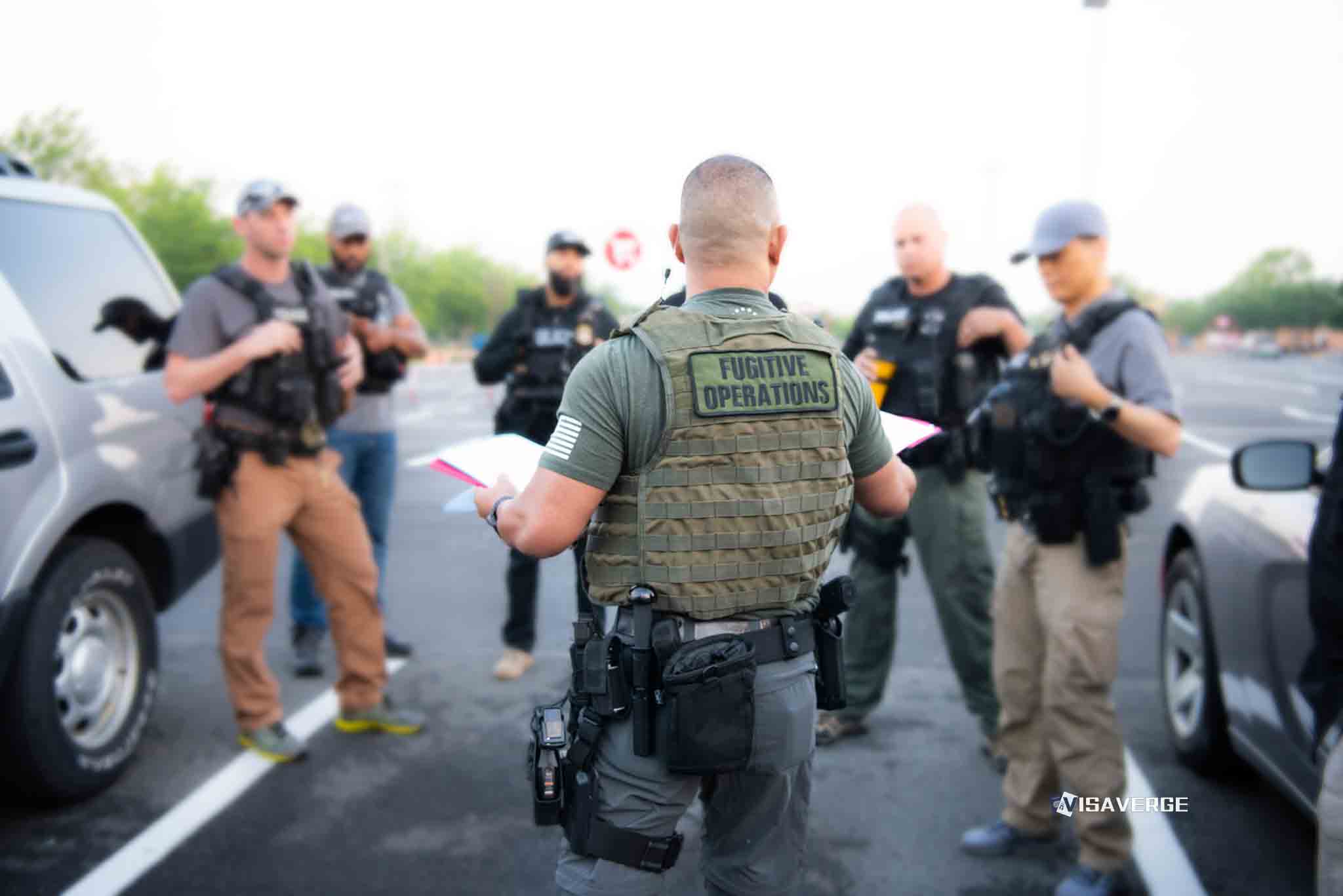
At the same time, officials assigned the tournament a high-level federal security designation similar to the Super Bowl. ICE agents deployed to stadiums, and counter-drone teams, also known as C-UAS teams, were assigned to protect all 78 U.S. matches.
Giuliani has pointed to wait-time reductions as evidence that the United States can tighten screening and still move people through the system faster. In Argentina, he said, B-1/B-2 visa wait times fell from 300 days to 2 days.
That reduction matters because the World Cup puts unusual pressure on consular operations. Fans, family members, sponsors, media crews, athletes and technical staff often need interviews and travel documents within a compressed period, and delays in visitor visas can ripple through ticket sales, team planning and match-day attendance.
Family travel can be especially affected when entry decisions split households or delegations. A player may be admitted while a support staff member is denied, or a ticket holder may clear screening while relatives remain stuck in long interview queues or face refusal at the consular stage.
Interview experiences have also become part of the story. FIFA PASS offers priority appointments, but it does not guarantee approval, and Artan’s case showed that clearance before travel does not prevent denial at the port of entry if federal authorities identify new concerns during inspection.
That distinction has long shaped U.S. immigration procedure. State Department officers issue visas abroad, while CBP officers decide whether to admit a traveler on arrival, and those decisions can diverge when security flags emerge late in the process or intelligence agencies share new information.
The administration’s public messaging has tried to hold both sides of that argument at once: invitation and exclusion, celebration and screening. Giuliani’s role has placed him at the center of that message, particularly because the World Cup task force was created to coordinate logistics, security and international outreach around a tournament that will draw attention far beyond soccer.
Federal agencies have laid out that framework in a series of public documents, including the State Department’s “Welcoming the World: U.S. Preparations for the FIFA World Cup 26,” the White House executive order creating the FIFA World Cup 2026 Task Force, CBP travel authorization guidance for the tournament and a Jan. 1, 2026 USCIS Policy Manual entry on review of benefit applications for high-risk countries.
USCIS does not handle visitor visa issuance, but its policy guidance forms part of the wider immigration posture that has surrounded the tournament. That posture has fed diplomatic criticism because every high-profile denial carries consequences beyond the individual traveler, especially when the person turned away is an official, an athlete or a symbol of national representation.
Somalia’s reaction to Artan’s removal underscored that point. A referee chosen for the world’s biggest soccer event became, instead, the face of a border decision, and the administration answered with a national security explanation that remains partly classified.
Giuliani has shown no sign of retreating from that position. His defense of those visa decisions suggests that, as the tournament continues, the White House will keep arguing that access to the World Cup starts with security screening, even when the people blocked are already inside the sport’s global system.