- Cape Verde goalkeeper Vozinha missed his mother’s presence during a historic World Cup draw due to visa costs.
- The U.S. Visa Bond Pilot Program requires up to $15,000 for travelers from specific high-overstay countries.
- Strict deadlines for fee waivers prevented family members from attending the tournament despite official ticket purchases.
(ATLANTA, GEORGIA) — Cape Verde goalkeeper Josimar “Vozinha” Dias said his mother missed his country’s World Cup draw with Spain because his family could not meet the cost tied to the U.S. Visa Bond Pilot Program, turning a standout night on the field into a public account of how U.S. entry rules can shape who gets to witness the tournament in person.
Dias, 40, made seven saves in Cape Verde’s 0-0 draw on June 15, 2026 at Atlanta Stadium and was named “Player of the Match.” He was in tears at full-time after Cape Verde’s first-ever World Cup game.
In his post-match interview, Dias said: “I cried because my mum didn’t manage to be here because of the visa. Because of the money we had to pay for the visa, we didn’t manage to [get it done] on time. I would like her to be here, but I’m also very happy. I have worked my whole life for this moment.”
Free toolCSPA Age-Out Calculator OnlineHis account landed in the middle of a tournament already shaped by a split image. The 2026 FIFA World Cup, co-hosted by the United States, Canada and Mexico, has been promoted as a global welcome, while U.S. immigration policy has imposed new financial and procedural barriers on some travelers trying to attend.
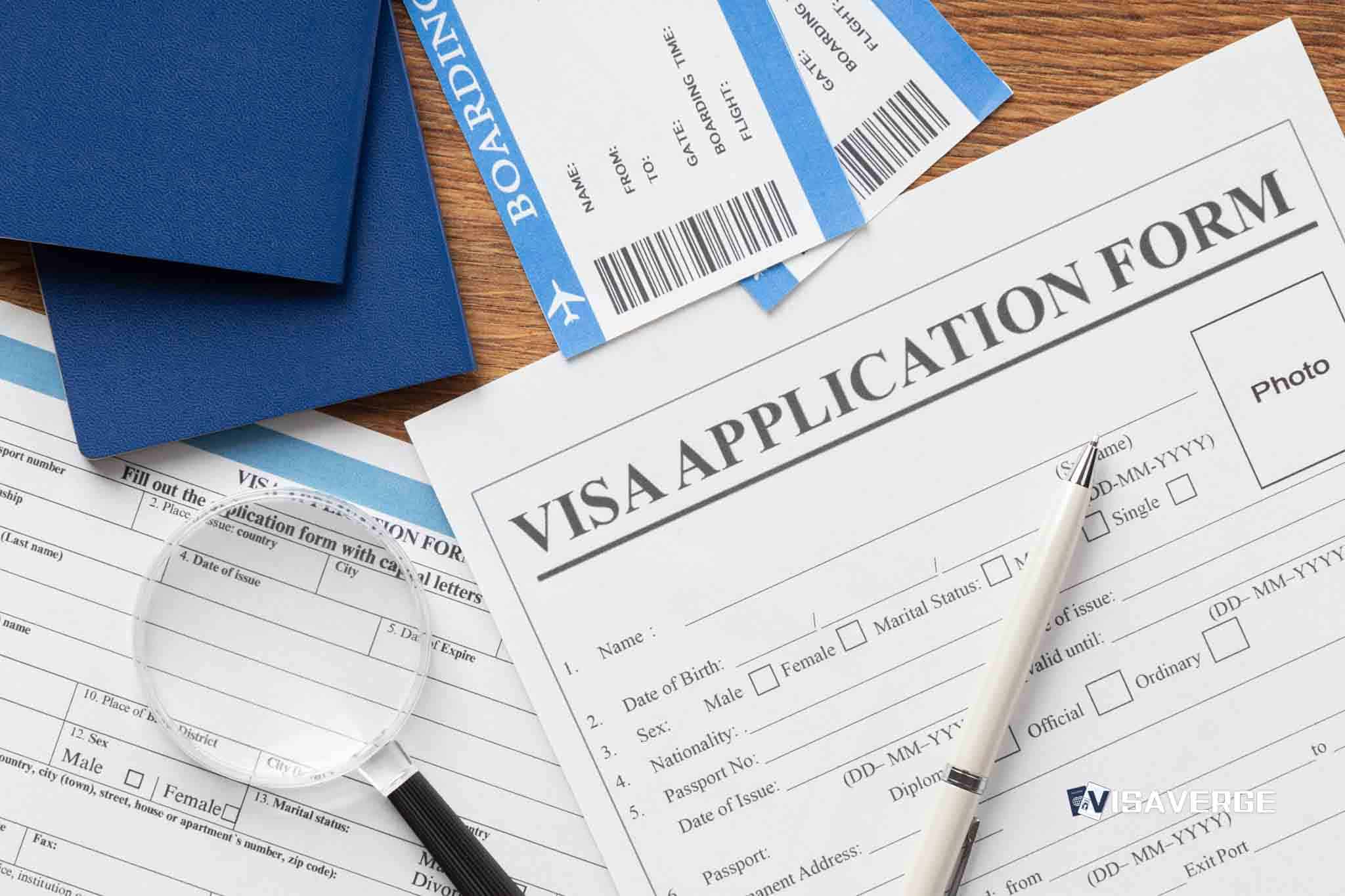
Washington launched the visa bond pilot in August 2025, requiring nationals from 50 countries with high visa overstay rates, including Cabo Verde, to post a refundable bond of $5,000 to $15,000 on top of standard visa fees. For Cape Verdean families, that meant a five-figure cost before travel, lodging or match tickets entered the picture.
During a Department press briefing on August 12, 2025, officials described the bond as a “targeted, common-sense measure [that] reinforces the administration’s commitment to U.S. immigration law while deterring visa overstays.” The policy put Cabo Verde on the list of countries whose citizens faced the added payment.
Pressure tied to the World Cup produced a limited change. On May 13, 2026, the U.S. government announced a narrow waiver for some World Cup travelers.
Assistant Secretary of State for Consular Affairs Mora Namdar said then: “We remain committed to strengthening U.S. national security priorities while facilitating legitimate travel for the upcoming World Cup tournament.” The State Department also said it would “waive the visa bond requirement for certain individuals traveling to the United States for the 2026 FIFA World Cup,” if they had purchased tickets and joined the FIFA Priority Appointment Scheduling System (PASS) by April 15, 2026.
That cutoff left little room for late plans, and the waiver did not cover everyone the same way. Players and coaching staff were automatically exempt, while family members and fans had to meet the April 15 deadline to avoid the bond.
Dias’s mother fell on the wrong side of that divide. His family said the bond for Cape Verdean citizens, set at $5,000 to $15,000 USD, was not something they could “manage to [get] done on time.”
Five World Cup-qualified nations were subject to the bond requirement: Cape Verde, Algeria, Ivory Coast, Senegal, and Tunisia. That list gave the policy a direct bearing on the tournament itself, not only on general travel or visa processing.
Travel to a sporting event rarely turns on one fee alone, but the bond stood out because it sat on top of ordinary visa charges. In Dias’s case, the barrier did not involve an irregular crossing or an attempt to evade inspection; it involved legal entry through a visa system that attached a large refundable payment to the application.
The issue also arrived as immigration costs rose elsewhere in the system. New USCIS fee rules took effect on May 29, 2026, increasing charges for various immigration-related benefits as part of annual inflation adjustments required by the “One Big Beautiful Bill Act”.
USCIS fees do not govern short-term spectator visas, but the broader rise added to an atmosphere in which immigration access carried higher costs across multiple categories, including family-based cases and other benefits handled by the agency. Families already dealing with consular appointments, document collection and travel planning faced another layer of expense during the tournament year.
Interview timing mattered as much as price. The World Cup waiver required both a ticket purchase and enrollment in PASS by April 15, 2026, a condition that turned the visa process into a race against the calendar for relatives and supporters who were not on official team lists.
Dias’s comments gave that deadline a human face. He had just held Spain scoreless with seven saves, claimed the match award and marked a personal milestone as the oldest player to make a debut in a nation’s first-ever World Cup game, yet the person he wanted in the stands was absent because the visa costs and timing did not line up.
Other participants also ran into U.S. entry problems. Somali referee Omar Artan and members of the Uruguayan national team faced visa denials or entry delays, adding to concern around whether tournament participants, relatives and support staff could move smoothly through the U.S. system during a competition spread across three host countries.
Those disputes have already fed discussion about venue planning. Immigration hurdles tied to the United States have pushed consideration of moving some future matches to Canada or Mexico, both of which share hosting duties and operate under different entry rules.
The contrast has been plain in Atlanta. Organizers fill stadiums with the language of openness and global celebration, while some travelers from bond-listed countries confront a process that can block attendance without a formal denial, simply by placing a refundable payment out of reach.
Family members sit at the center of that tension. Athletes and coaches can receive exemptions because their participation is integral to the event, but parents, spouses and children still move through standard visa channels, where interview appointments, supporting documents and fee demands can decide whether a once-in-a-lifetime trip happens.
Dias did not frame his comments as a legal argument or a political campaign. He described a missed moment, on the sport’s biggest stage, that came down to the cost of getting his mother into the country lawfully.
Anyone checking the current rules can review the State Department’s Countries Subject to Visa Bonds, USCIS Newsroom and Official Announcements, and the U.S. Embassy in Cabo Verde: Nonimmigrant Visa Information. For Cape Verde after a scoreless draw with Spain, the policy was no abstraction. Its goalkeeper left the field with the match award, and without his mother in the crowd.