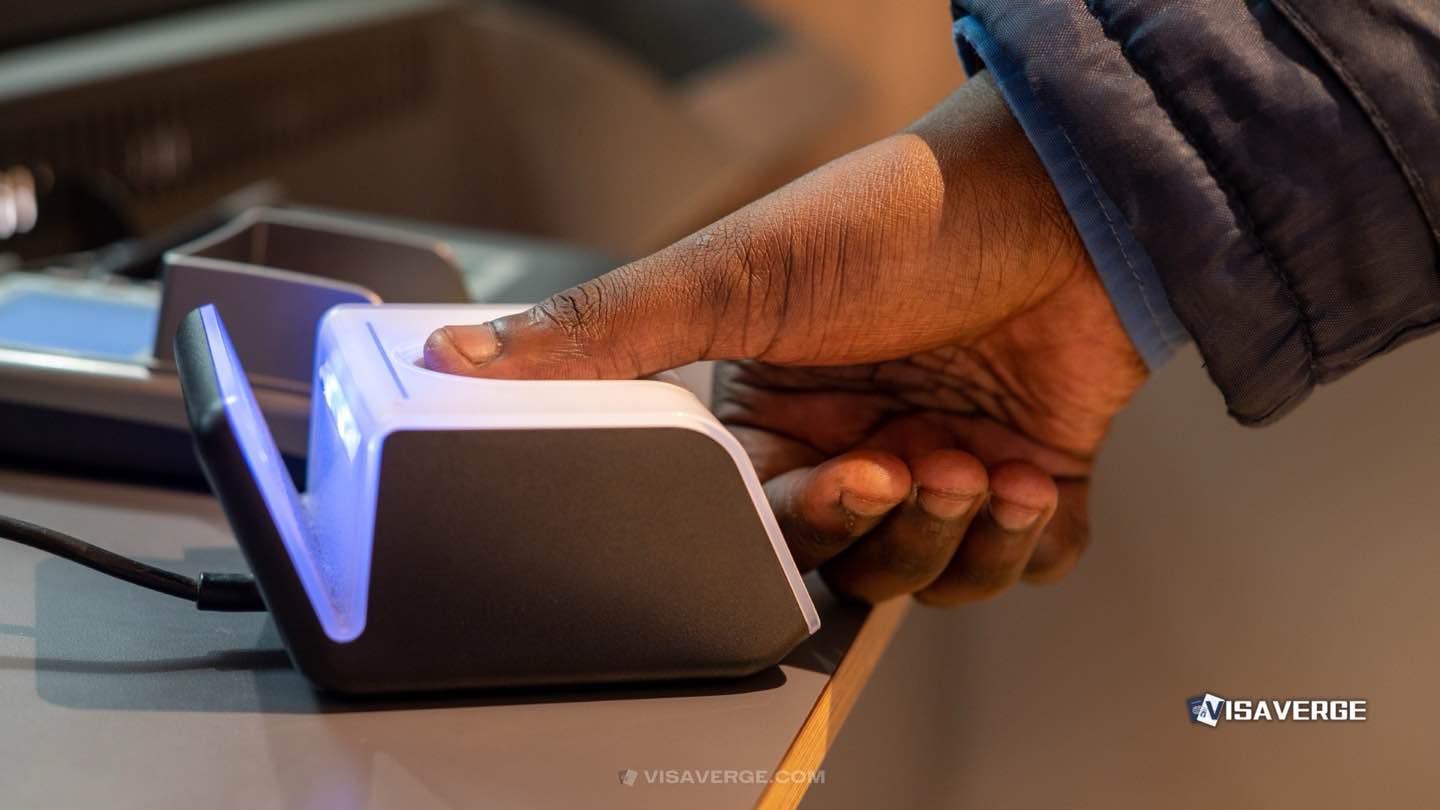
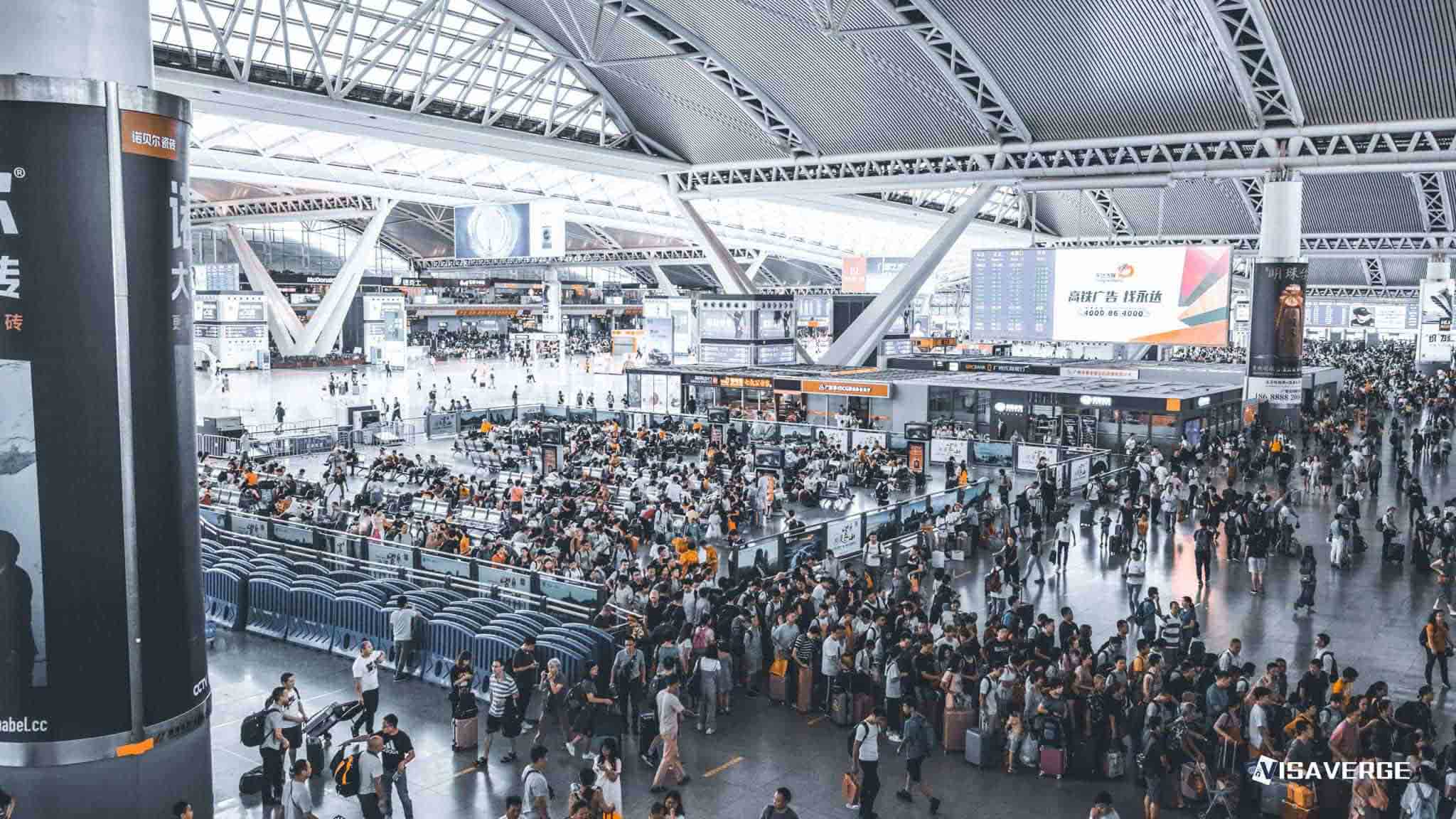
- Kolkata Airport launched four self-service biometric registration kiosks for first-time e-visa arrivals.
- The kiosk process reduces counter biometric capture from 6 to 7 minutes to under one minute.
- The rollout was already operational by September 5, 2026, alongside similar kiosks in major Indian airports.
Kolkata Airport put four self-service biometric registration kiosks into service for foreign nationals arriving on an e-visa for the first time, and the Bureau of Immigration is using them to speed arrival processing. The machines move the first biometric capture away from the immigration counter and into a self-service step. The opening scan no longer depends on a desk officer. Processing starts earlier.
The new flow cuts the biometric stage from 6–7 minutes per traveler to less than a minute at the counter after kiosk use, and passport checking and stamping take less than a minute. Those numbers matter because the old desk held up the line while biometrics were entered at the counter. The kiosk shifts that work before the counter. The counter is now the last stop, not the first choke point.
An immigration official described the old bottleneck this way.
“Though there are separate desks for e-visas, it used to take 6-7 minutes to capture the biometrics of a foreign national at the counter while others had to wait in the queue, irrespective of whether they were first time visitors to India or not. But now, passengers are required to complete the biometrics at the self-service kiosks before proceeding for immigration. When they reach the counter, their passport is checked and stamped in less than a minute”
November 2026 Final Action Dates
India China ROW EB-1 Feb 01, 2023 Aug 01, 2023 ▲31d Current EB-2 Nov 01, 2013 Oct 01, 2021 Apr 01, 2025 ▲90d EB-3 Jan 22, 2014 ▲21d Jan 22, 2022 ▲14d Jun 15, 2024 ▲31d F-1 Jan 22, 2021 ▲366d Jan 22, 2021 ▲366d Jan 22, 2021 ▲366d F-2A Oct 22, 2026 ▲30d Oct 22, 2026 ▲30d Oct 22, 2026 ▲30d
The official’s account shows the queue problem plainly. One traveler slowed the desk. Others waited behind them.
First-time arrivals now scan their passport at the kiosk, then capture a live photograph and fingerprints on the touchscreen. The machine prints a confirmation slip, and the traveler carries it to the immigration counter. There, officers check the passport and stamp it. The order is fixed. The kiosk handles the data capture before the final review.
The same equipment is already working at Netaji Subhas Chandra Bose International Airport in Kolkata. Similar kiosks are also in Delhi, Mumbai, and Thiruvananthapuram. That puts the airport in a wider rollout already visible at other major Indian gateways. The local setup is part of a pattern, not a one-off.
The first stop now happens at a kiosk
The kiosks sit alongside another automation track, the Fast Track Immigration–Trusted Traveller Programme. That programme uses biometrics for eligible Indian nationals and OCI cardholders. It serves a different group from first-time foreign visitors. The two systems are separate, but they point in the same direction. Immigration is shifting more routine work away from the desk.
That separation matters at arrivals. One system is for first-time foreign nationals who need the kiosk sequence. The other is for travelers already covered by the trusted traveller programme. Both reduce time spent at the counter. Both use biometric data. Both move routine checks earlier in the process. The airport’s front end is doing more work before the officer’s stamp.
The kiosk rollout was already in service by early September
A report dated September 5, 2026, said the kiosks were already operational by then. That fixes the rollout in time and shows the machines had moved from announcement to use. The date marks when the airport’s new entry step was already active. The system was already working.