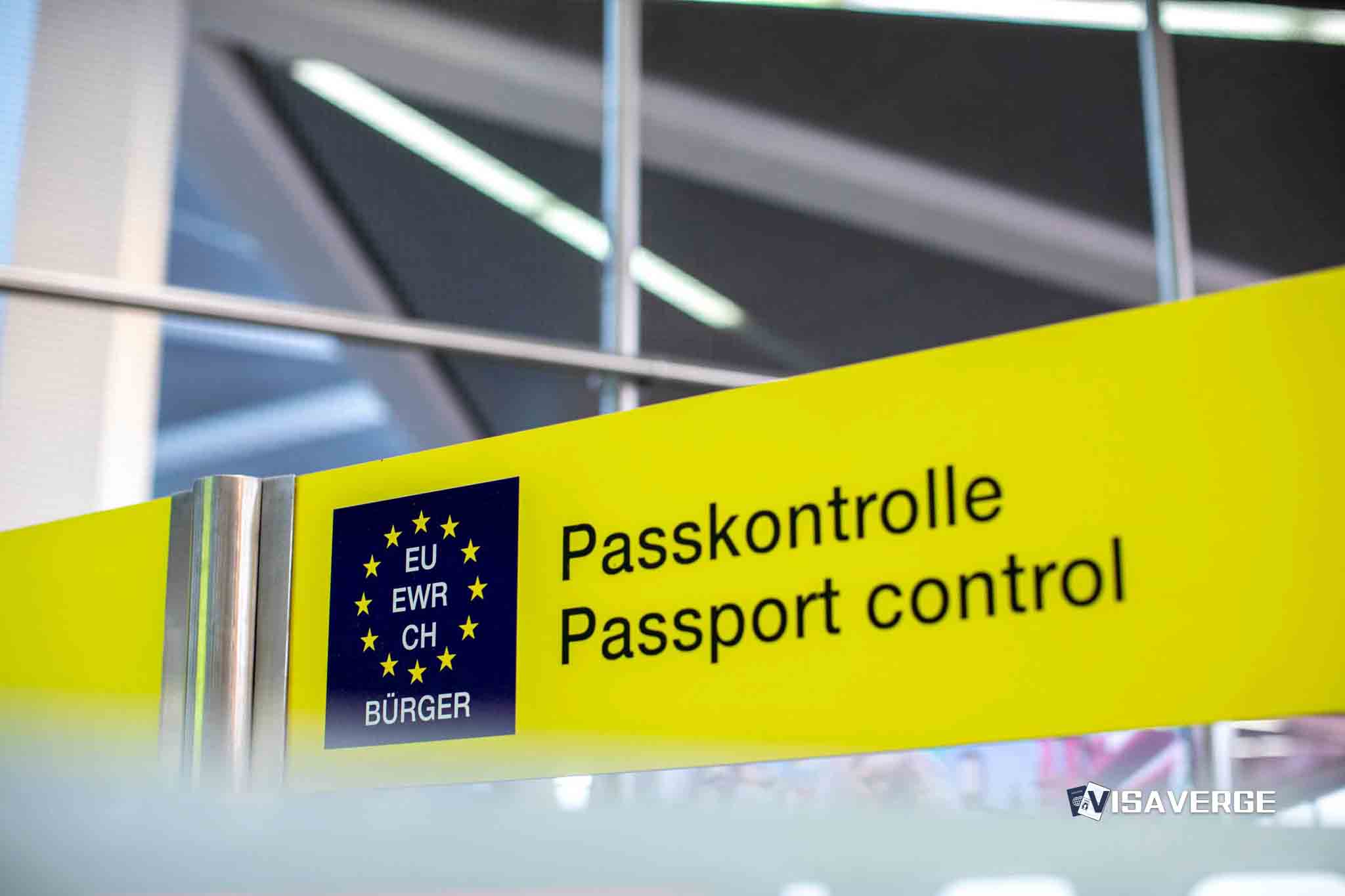
- IATA says non-EU passport checks now take about 90 seconds, up from 20 to 25 seconds.
- Emergency biometric suspension could end on 6 September 2026, reducing flexibility at busy borders.
- Munich and Amsterdam reported waits of up to 120 minutes during peak arrivals.
The International Air Transport Association says standard passport checks for non-EU travelers now take about 90 seconds, up from 20 to 25 seconds, as biometric registration expands at Europe’s external borders.
The increase comes just before a temporary congestion measure expires. On Sunday, 6 September 2026, border posts are due to lose the ability to suspend biometric checks when queues become severe.

That could leave busy airports with less room to ease lines. The change affects passengers subject to the EU’s Entry/Exit System, known as EES.
The checks are now roughly 3.6 to 4.5 times longer than the earlier process. First-time registrations can add several minutes for each passenger, while large arrival waves can push queues much higher.
Thomas Reynaert, Senior Vice President, External Affairs at IATA, called for the emergency flexibility to remain in place through the colder travel period.
“Extending the possibility of partial suspension beyond 6 September is absolutely necessary until the end of the winter season.”
Reynaert made the statement at a media briefing this week. The agency has warned that standard processing times do not capture the delays that can build when many aircraft arrive together.
Biometric registration is adding time at every standard check
EES requires biometric checks for third-country nationals entering or leaving the Schengen area through its external borders. Officers and travelers must complete more steps than a conventional passport check.
The system records the date, time, place, and biometric data connected to a non-EU national’s crossing. It uses fingerprints and facial images as part of the registration and verification process.
During the summer, authorities could temporarily stop collecting fingerprints and facial images during severe congestion. That option is ending Sunday.
The change will apply more consistently at Schengen external border posts. Longer processing can then continue even when passenger queues grow rapidly.
Busy hubs have already recorded waits of up to two hours
Recent airport reports show how quickly delays can spread. Munich Airport was cited with maximum waits of up to 60 minutes, while Amsterdam was cited with maximum waits of 120 minutes.
Some hotspots have already reached two to three hours or longer during peak periods. Those waits can occur when a large number of arriving passengers require registration at the same time.
The standard 90-second figure therefore does not represent every traveler’s total time at passport control. It describes the check itself, before unusually heavy arrival volumes extend the line.
The temporary congestion measure ends as the system reaches full operation
The EES entered operation in October 2025 and became fully operational at external Schengen border crossing points on 10 April 2026. The dispute now centers on the end of the congestion-based suspension mechanism, not the system’s initial launch.
Airlines and airport groups say the measure helped border authorities respond when queues became unmanageable. Once it ends, posts will have less discretion to pause biometric collection while lines build.
French authorities have been preparing alternatives. A ministry spokesperson said on 15 July 2026:
“The government has undertaken significant technical work to enable the widespread roll-out of pre-registration systems (kiosks and tablets), with a view to minimising the impact of EES on border control times as much as possible. This work will continue throughout the summer, with the aim of achieving a satisfactory level of performance and stability by September 6.”
Pre-registration systems are intended to move some steps away from the staffed border desk. Their rollout is part of the effort to reduce the effect of the new process on control times.
The coming deadline will test whether those systems can handle busy arrival periods. Airport queues have already varied widely between locations.
Airlines want the exception extended through winter
IATA’s request would keep partial suspension available beyond Sunday, rather than ending the measure at the start of the winter season. The proposal reflects the gap between the 90-second standard check and the much longer waits recorded at some hubs.
The current rule change is scheduled for 6 September 2026. Passengers arriving at external borders after that date may encounter the biometric process without the same congestion-based pause available during the summer.