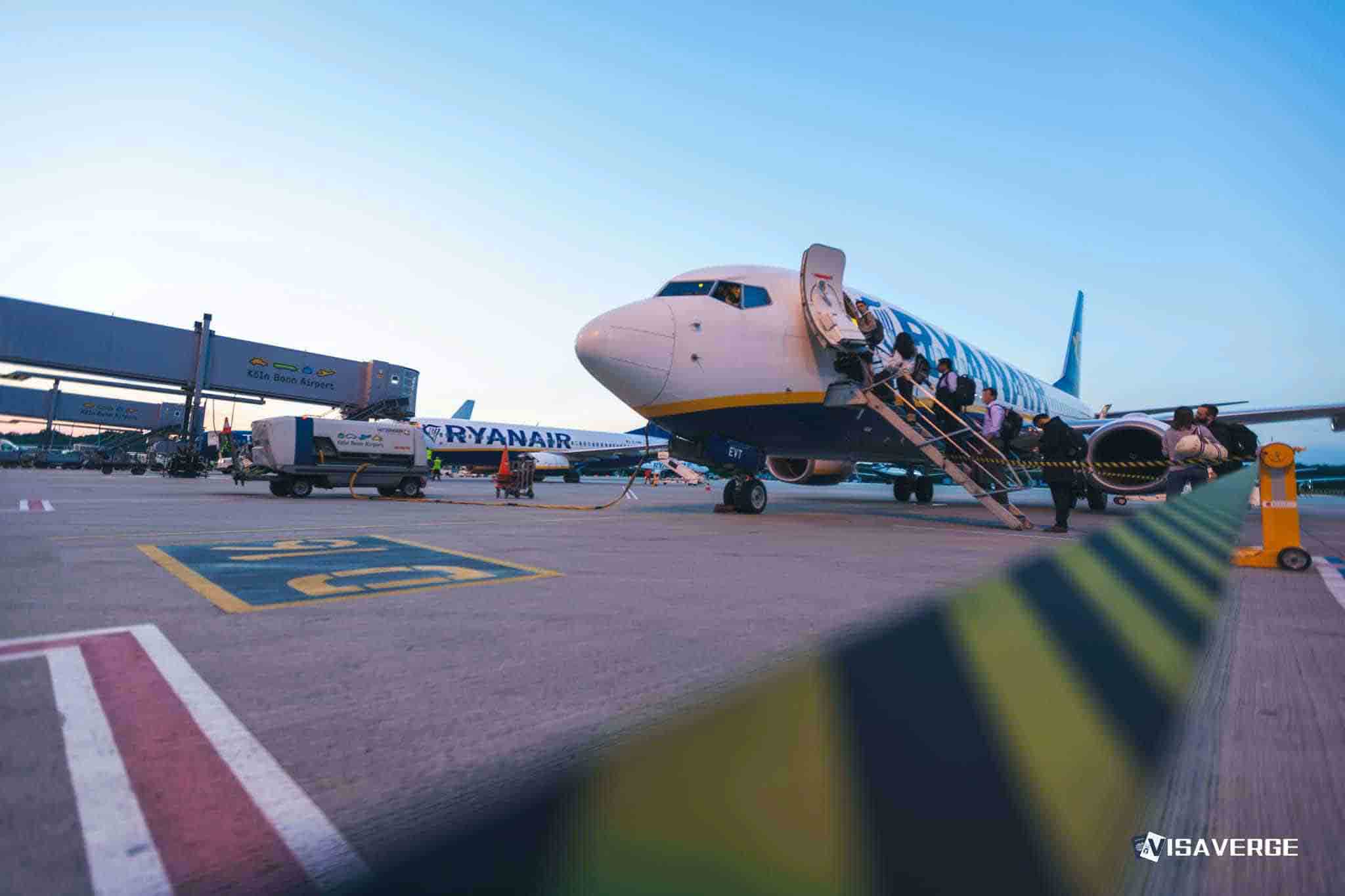
- The new Entry Exit System doubled peak waiting times at major European airports this summer.
- A critical enforcement deadline arrives on September sixth, twenty twenty-six, ending the current transition period.
- The United Kingdom government allocated twenty million pounds for Kent to improve biometric border infrastructure.
The new EU border system has doubled peak waiting times at two major European airports and stretched delays to four to six hours at the main juxtaposed controls this summer. The lines are longer. Travelers notice.
The EU's Entry/Exit System became fully operational on 10 April 2026, and British travellers are among the non-EU passengers now required to register fingerprints and a facial image on entry and exit. The Commission puts the wider pool at about 70 million annual visitors.
Free toolB1/B2 Tourist Visa Stay Calculator online
UK passport holders heading into the Schengen area are among those feeling the strain. The first crossings take longer. The clock starts on arrival.
First-time registrations have slowed the process further. What once took about 45 seconds can now take several minutes, and that extra time has built a backlog at St Pancras International. One lane can clog the rest.
Nichola Mallon, head of trade and devolved policy at Logistics UK, said the rollout still looks underprepared. She pointed to the missing digital help.
"lack of preparation is pretty shambolic"
On paper, the rules are short.
| Rule | Detail |
|---|---|
| Who is covered | UK passport holders on short stays of up to 90 days in any 180-day period |
| First entry | Travellers register fingerprints and a photo |
| Passport stamps | Manual passport stamping ends |
| Where it can happen | Dover, Eurotunnel and Eurostar can collect the data before departure from the UK |
| Children | Children aged 11 or younger do not have fingerprints scanned, though a photo can still be taken |
| Cost | Registration is free of charge |
September 6 is the next hard stop
A major enforcement deadline arrives on 6 September 2026, when the initial transition period ends. The relief valve is temporary. Border police can ease checks when queues become unmanageable, but that flexibility expires next month.
Nine EU member states have asked the Commission to extend the flexibility. They want more time. Aviation bodies have also warned of unsustainable pressure and asked for the power to completely suspend EES when passenger volumes overwhelm the facilities.
The app and the lanes are still under strain
Dual nationals have run into their own problems. Since 25 February 2026, the Home Office has required them to present specific proof of entitlement or a British passport, a change that has left some travellers stranded or delayed at airports. The paperwork is now part of the trip.
Long queues in hot weather have also led to reports of passengers fainting, and school groups and families have missed ferry or rail connections. The waits have become the journey. Efforts to push travellers onto the 'Travel to Europe' app have also run into low adoption and technical glitches. The app still stumbles.
In July 2026, the UK government announced £20 million in new funding for Kent to increase biometric kiosks and vehicle-holding capacity at the Port of Dover. Doug Bannister said he was "really grateful for all the support" but warned that the border infrastructure is under "unprecedented pressure". The port wants relief.
ETIAS is expected later this year
ETIAS is expected in autumn 2026, and the Commission had previously pointed to a launch in the last quarter of 2026. As of 23 August 2026, no live application process is open. Another layer is still coming.