- Section 4AA counts whole days abroad; departure and arrival dates are excluded.
- The Irish registration guide says up to 900 days may be considered when other requirements and UK links are met.
- Its worked example requires UK presence on 2 August 2020 for an application dated 1 August 2025.
Checked against GOV.UK
British citizenship applicants face a normal limit of 450 days outside the UK over five years on the general naturalisation route, or 270 days over three years for spouses and civil partners of British citizens. Both routes also use a 90-day limit for the final 12 months. Each qualifying period runs back from the application date.
Irish citizens registering under section 4AA and other British nationals registering under section 4(2) have separate rules, generally allowing 450 days over five years and 90 in the final year. Check both your total absences and your presence at the start of the relevant period before applying.

People comparing residence routes can read about UK residency requirements for Tier 1 Investor visa holders.
These are route-specific requirements under the British Nationality Act 1981 and Home Office guidance. The standard counts are not the only consideration: the rules also include discretion in some circumstances.
The qualifying period sets the standard absence allowance
The standard test depends on the route. The five-year and three-year counts are not interchangeable.
| Route | Applicants | Standard limit | Final 12 months |
|---|---|---|---|
| Section 6(1) | General naturalisation | 450 days over five years | 90 days |
| Section 6(2) | Spouses and civil partners of British citizens | 270 days over three years | 90 days |
| Section 4AA | Irish citizens registering after five years’ UK residence | 450 days over five years | 90 days |
| Section 4(2) | Specified British nationals registering | 450 days over five years | 90 days |
For the naturalisation routes, the period ends on the day the Home Office receives the application. The final-year threshold is an additional test, not a substitute for the overall total. The three-year requirements for spouses and civil partners appear in Schedule 1.
Naturalisation routes also require presence and valid immigration status
General-route applicants normally need five years’ residence and must have been physically present in the UK at the start of that period. They usually need to have been free from immigration time restrictions for 12 months before applying.
The spouse and civil-partner route uses three years. Applicants must have been in the UK at the beginning of that period, must not have breached immigration laws during it, and must be free from immigration time restrictions on the application date. They do not have the same 12-month wait after settlement.
A separate issue can arise on the general route if an applicant plans to live abroad for a continuous period of more than six months. Recognised exceptions may apply. A citizenship application does not itself give the applicant immigration status while it is pending.
Irish citizens and other British nationals use registration routes
Section 4AA lets Irish citizens of any age register after five years’ residence in the UK. The route was introduced by the British Nationality (Irish Citizens) Act 2024. Irish citizenship must be held when the application is made, although earlier lawful residence under another nationality can count. The Home Office guide for Irish citizens sets out the route.
Section 4(2) covers British Overseas Territories citizens, British Nationals (Overseas), British Overseas citizens, British subjects and British protected persons. Some British Overseas Territories citizens may instead qualify under section 4A without UK residence. The Home Office’s Guide B2 also permits postal applications using Form B(OTA) for section 4(2). Applicants on that route must keep valid permission to stay while waiting for a decision and their citizenship ceremony.
Discretion can cover some excess days, depending on the route
Naturalisation guidance describes discretion beyond the standard totals. It normally disregards up to 480 days on the five-year route and 300 on the spouse route. It may allow up to 900 days, or 540 on the spouse route, where the applicant has a home, family and a substantial part of their estate in the UK. Those figures are discretionary thresholds, not the standard allowance.
Sam Jubb, a solicitor at Latitude Law, summarised the normal limits this way:
“450 days over five years, 270 days over three years if you are married to a British citizen, and no more than 90 days in the final twelve months”
For section 4AA, the Home Office guide lists 480 days as the level normally disregarded across five years. Up to 900 may be considered if other requirements are met and the applicant has strong UK links. It says longer prior residence is expected at higher totals. In the final year, 100 days may normally be disregarded; 101–179 days requires specified conditions, including strong UK links or compelling occupational or compassionate reasons. More than 180 days can be exceptionally difficult where other requirements are not met.
Crown service, unavoidable work travel and compelling occupational or compassionate circumstances can be relevant. Absences above 900 days are very rarely disregarded. Schedule 1 also provides a service-related waiver for a section 6(2) applicant whose British spouse or civil partner serves in specified service and was recruited in the UK.
Presence on the first day can determine when an application is ready
Applicants must check the day their qualifying period begins, not just add up travel days. The general naturalisation route requires presence in the UK on the day exactly five years before the Home Office receives the application. The spouse route has a corresponding three-year start-date test.
For section 4AA, Home Office staff guidance dated July 9, 2025, calculates the relevant day as the day after the application date minus five years. Its example says an application filed on 1 August 2025 requires lawful presence in the UK on 2 August 2020.
An applicant who misses the first-day test may be refused. In suitable cases, the Home Office can use a later date, but that can delay the application or mean paying the fee in force on that later date. It is not guaranteed.
Applicants should record every absence and explain special circumstances
Applications require details of all absences in the qualifying period. Before filing:
- Count days across the full qualifying period and separately across its final 12 months.
- Check that you were physically present in the UK on the relevant first day.
- Disclose every absence and explain any special circumstances. For section 4AA, count whole days abroad; departure and arrival dates do not count.
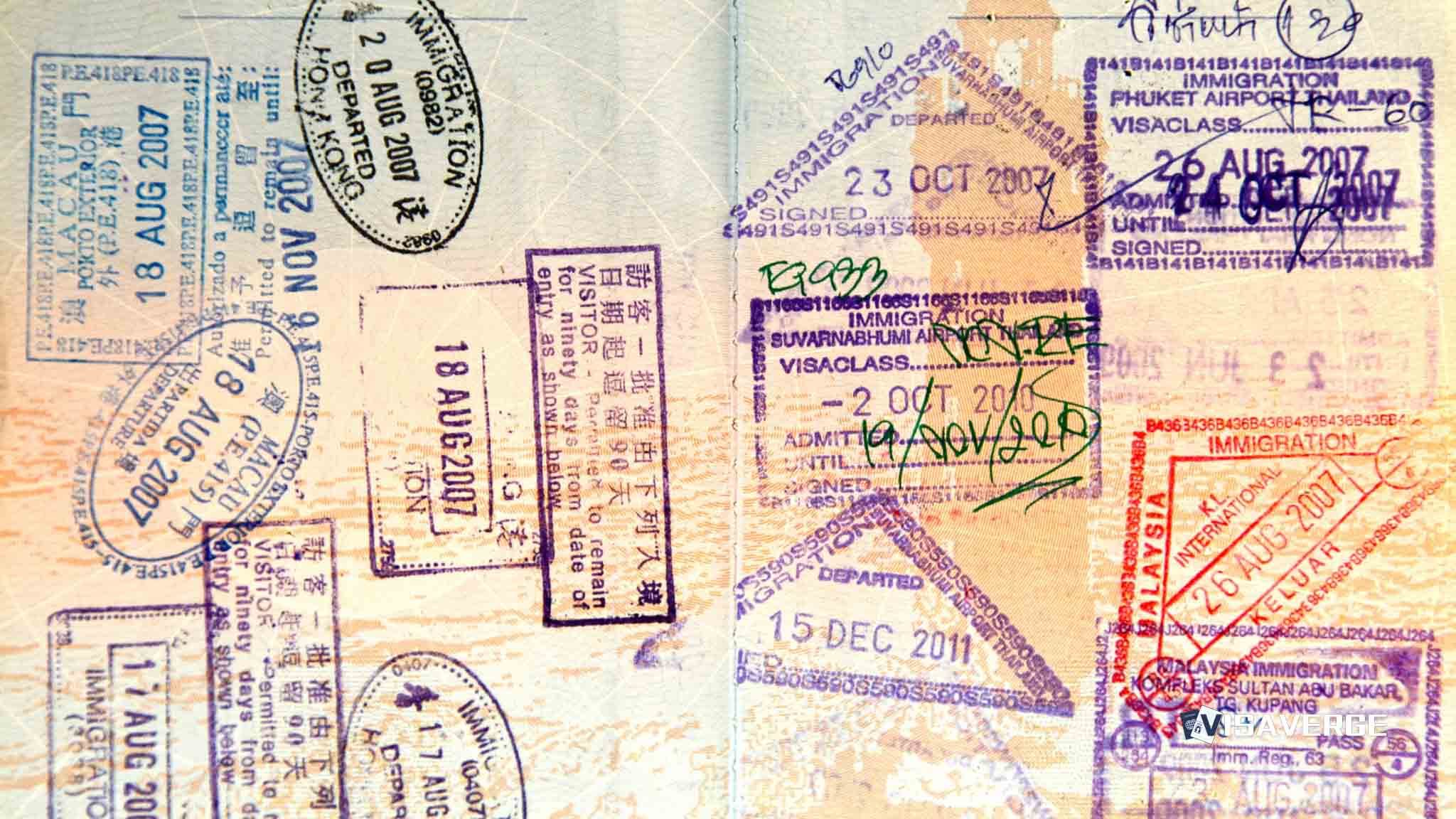
- Compare your records with passports and other travel documents. Home Office staff check travel documents against their records; employer or tax letters may help where passports do not cover the whole period.
- If an Irish registration form has too little space, attach the remaining absences or provide them on loose paper. Armed-forces applicants asking for residence requirements to be overlooked must provide employer confirmation of service dates.
The Home Office guide recommends online submission for Irish registration. Applicants should settle the qualifying-period start date and complete absence record before sending the application.