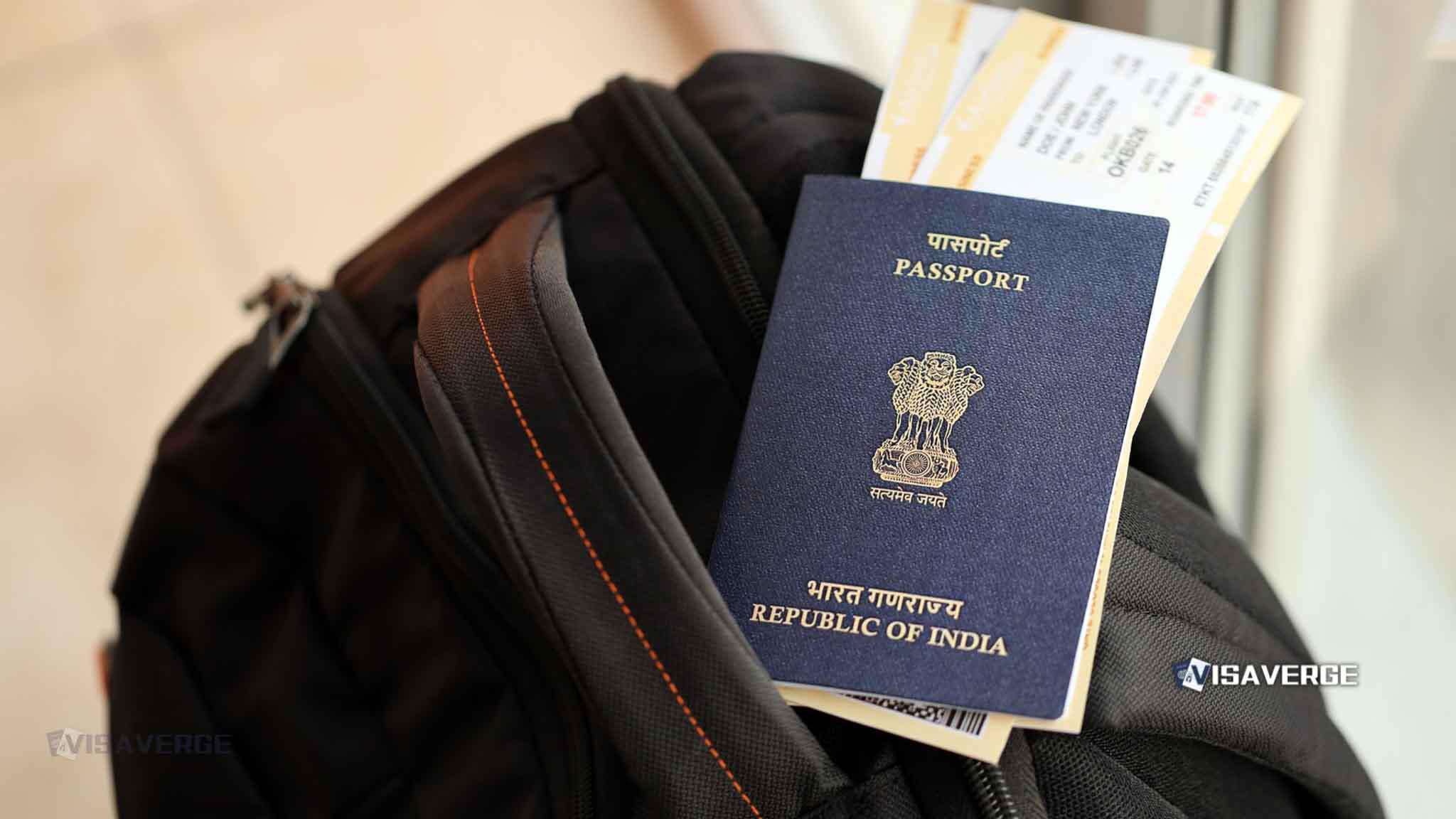
- India has opened eleven new entry ports for e-visa holders starting August tenth, twenty twenty-six.
- The expansion includes the Attari Road land crossing on the border between India and Pakistan.
- A total of eighty-eight authorized entry points now facilitate travel for citizens from one hundred seventy-two countries.
India opened the Attari border and 10 other international ports for e-visa holders on August 10, 2026, widening the country’s electronic entry map for foreign arrivals. The change puts a land crossing with Pakistan into the mix. The move was immediate.
The Ministry of Home Affairs linked the expansion to a broader effort to simplify entry rules. The release paired facilitation with security. In a press note through the Press Information Bureau in Delhi, it said:
Free toolDS-160 Form Filling Online Helper Tool
"Under the guidance of Prime Minister Shri Narendra Modi and leadership of Union Home Minister Shri Amit Shah, Government of India has taken a number of significant initiatives over the last few years to liberalize, streamline and simplify visa regime with a view to facilitate the legitimate foreign travelers while simultaneously ramping up the technological infrastructure to enhance internal security."
The same release folded 11 new ports into the system at once. It pushed the authorized network to 88 entry points. That total now includes 37 airports, 38 seaports and 13 land ports.
Attari (Road) in Punjab sits on the India-Pakistan border and stands out among the land entries. The other land openings stretch across Tripura, Assam, West Bengal, Meghalaya and Manipur. Bhopal in Madhya Pradesh and Tirupati in Andhra Pradesh are the two airport additions. One serves pilgrims.
Tirupati gives international pilgrims a direct airport route to one of the country's most visited religious sites. The Attari crossing is different. It now lets foreign tourists who are not Pakistani citizens cross between the two countries on an electronic visa for the first time. That route is new.
The e-visa facility now covers citizens of 172 countries across 17 sub-categories. Tourist, Business, Medical and Student are among them. The list is broad. It is not open to everyone.
Nine land ports and two airports join the network
| Port type | Port | State or note |
|---|---|---|
| Land | Attari (Road) | Punjab, India-Pakistan border |
| Land | Agartala | Tripura |
| Land | Darranga | Assam |
| Land | Gede | West Bengal |
| Land | Ghojadanga | West Bengal |
| Land | Haridaspur | West Bengal |
| Land | Jaigaon | West Bengal |
| Land | Dawki | Meghalaya |
| Land | Moreh | Manipur |
| Air | Bhopal | Madhya Pradesh |
| Air | Tirupati | Andhra Pradesh |
The ministry says applications are moving quickly. About 95% are processed in less than 72 hours. E-visas now make up roughly 78% of all visas issued by the country. That share is already large.
The broader rollout fits the Immigration and Foreigners Act, 2025 framework. Air, sea and land all sit under the same frame. The new ports bring that framework to the border and the runway. Both are covered.
The facility still excludes Pakistani passport holders and persons of Pakistani origin. They must continue to apply for regular paper visas at an Indian Mission. The rule remains unchanged.