- Finland has rejected eighty-seven percent of seasonal visa applications for wild-berry pickers due to employer non-compliance.
- The Finnish Ministry for Foreign Affairs processed one thousand six hundred cases, issuing one thousand four hundred refusals.
- Most applications originated in Thailand, highlighting severe labor shortages for the upcoming twenty twenty-six harvest season.
(FINLAND) – The Finnish Ministry for Foreign Affairs said on July 7, 2026 that it had refused the majority of seasonal work visa applications filed for wild-berry pickers, blocking most of the labor force that usually travels to Finland for the harvest.
The ministry said it had received approximately 2,200 applications for a seasonal work visa tied to wild-berry picking and had processed about 1,600 of them so far. About 1,400 applications were refused, or roughly 87% of the processed cases.

“The primary reason for refusal is that the mission processing the application is not satisfied that the employer will be able to fulfil its obligations as an employer,” said Katja Luopajärvi, Director of the Visa Unit at the Ministry for Foreign Affairs.
Free toolDS-160 Form Filling Online Helper ToolMost of the cases were handled in Thailand. The ministry said about 2,100 applications were processed at the Finnish Embassy in Bangkok, with smaller numbers handled in Kazakhstan, Kenya, Vietnam, Nepal, and India.
Policy Shift in 2025
The refusals follow a policy shift that started in February 2025, when Finland brought wild-berry picking under the Seasonal Workers Act. That change moved the sector into a formal seasonal work visa system and replaced an older model that had treated berry picking under “everyman’s rights.”
Under the older system, foreign pickers often entered Finland without a standard employment relationship and gathered berries in forests under broad public access rules. The new framework requires a contractual employment relationship, a change Finnish authorities tied to concerns about labor abuse, trafficking risks, and unpaid wages.
Employer Compliance and Scrutiny
Officials used reports from the 2025 berry season during the current review cycle. Those reports, issued by the Finnish Supervisory Agency, identified a high risk of worker exploitation and shortcomings in whether employers could meet their statutory obligations.
Visa adjudicators also weighed ongoing legal proceedings and allegations of serious criminal offenses in the wild-berry sector while reviewing applications. The ministry cast the refusals as an employer-compliance issue, not a dispute over whether the work itself qualifies under the law.
Disruption to Finland’s Berry Industry
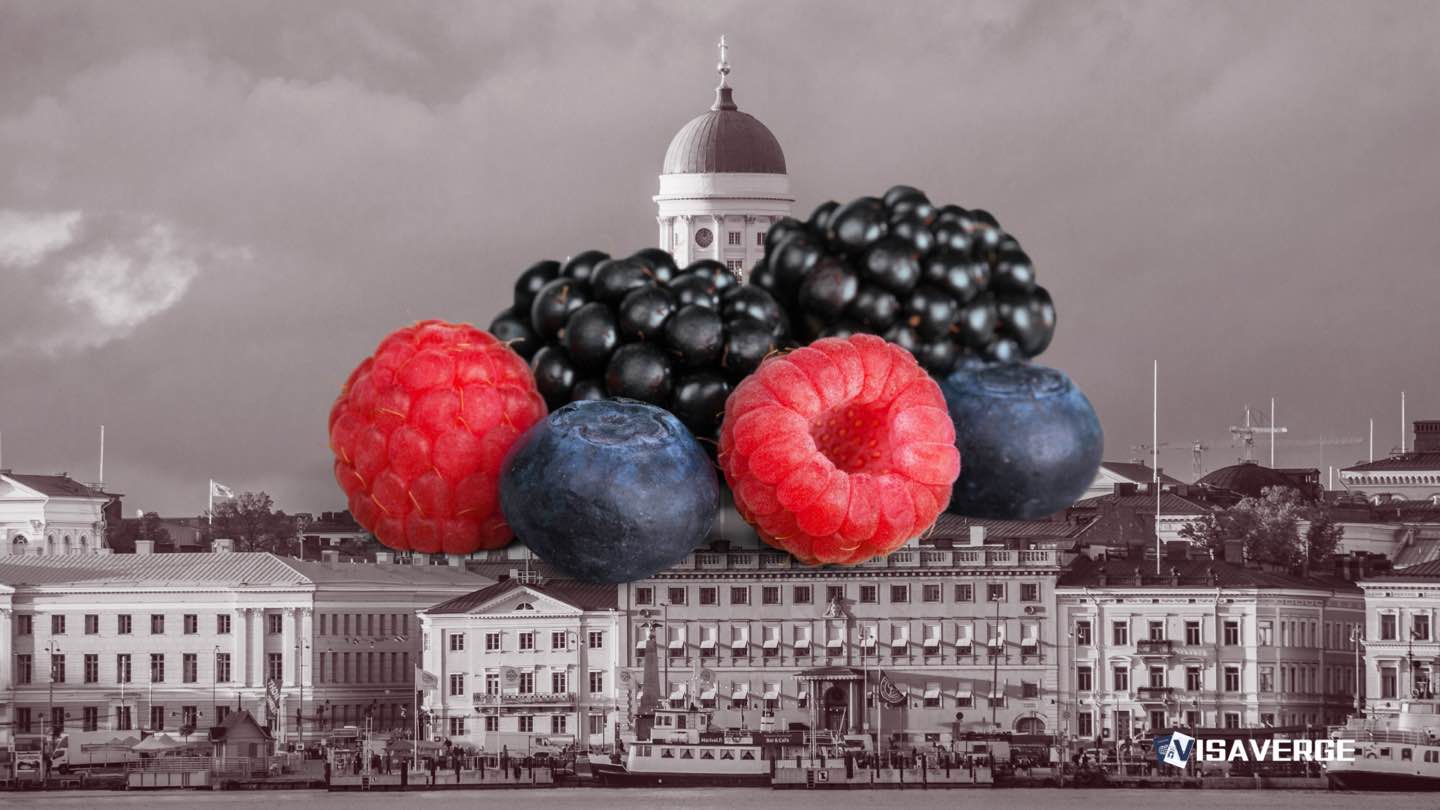
The numbers point to a sharp disruption for Finland’s berry industry in 2026. Wild-berry harvesting has depended heavily on workers from Thailand, and the rejection of most applications leaves growers and intermediaries facing a severe labor shortage as the picking season approaches.
Thai workers stand to lose income they had expected to earn during the harvest. Some also risk losing recruitment fees already paid to intermediaries before their seasonal work visa applications were decided.
That cost is likely to fall on people who have long treated berry picking in Finland as a recurring source of seasonal wages. The ministry’s action also sends a message to recruiters and employers that labor supply will not outweigh compliance checks when authorities see evidence of exploitation risks.
Hard Enforcement Approach
European officials have not framed the move as a routine administrative adjustment. The refusal rate and the reasoning behind it show a hard enforcement approach in a sector that has drawn scrutiny over how foreign laborers are recruited, housed, and paid.
Luopajärvi’s statement placed the burden squarely on employers to prove they can meet legal duties before workers receive visas. In practice, that means the central test in these cases was not demand for pickers but whether the embassy was satisfied the employer relationship would meet Finnish labor standards.
Concentration in Thailand
The Bangkok caseload also shows how concentrated the trade has become. With about 2,100 of the roughly 2,200 applications handled there, Thailand remained the main source country for the wild-berry workforce even as applications were also filed in several other countries.
Comparison with U.S. Temporary Labor Programs
Finland’s decision comes as other immigration systems tighten scrutiny of temporary labor routes. In the United States, USCIS and the Department of Labor have also increased scrutiny in 2026 of seasonal worker programs tied to the H-2A and H-2B visa categories.
On June 17, 2026, USCIS issued Policy Memorandum PM-602-0200, which clarified that dairy work can qualify for H-2A status if an employer shows a temporary or seasonal need, even though dairy operations run year-round. That guidance addressed how U.S. agencies assess labor need under a visa program built for temporary agricultural jobs.
USCIS also announced on July 2, 2026 the sentencing of people involved in a visa fraud conspiracy, part of what the agency described as a broader effort to ensure the integrity of H-visa programs during a period of high labor demand. The U.S. actions involve a different legal system and different visa categories, but they point in the same direction: closer review of employers, recruiters, and the conditions under which foreign workers are brought in.
Key Differences in Legal Frameworks
The Finnish case differs from the U.S. H-2A and H-2B structure in one basic respect. Finland’s wild-berry market had long relied on a model that sat outside a standard employment contract, while U.S. seasonal visa programs are built around employer petitions, labor certifications, and documented job terms from the start.
Still, both systems now place employer conduct at the center of visa decisions. Finland’s refusal statistics show how quickly that review can reshape a labor market when authorities conclude that safeguards around wages, recruitment, and working conditions are not strong enough.
Immediate Impact on 2026 Berry Season
The immediate effect in Finland is likely to be felt in forests and buying stations rather than courtrooms or ministry offices. With about 1,400 refusals already issued from roughly 1,600 processed applications, the country’s 2026 berry season will begin under a cloud of missing labor, lost earnings, and a warning from the Finnish Ministry for Foreign Affairs that employer obligations in the wild-berry trade will be tested before workers are allowed to enter.