- Nebraska pork producer Livingston Enterprises faces a federal RICO lawsuit over alleged J-1 visa labor exploitation.
- Authorities identified over ten thousand foreign students linked to suspect employers using the student visa OPT program.
- The investigation targets companies bypassing guestworker regulations to use exchange programs for dangerous physical labor.
(NEBRASKA) — Livingston Enterprises Inc. faces a federal lawsuit in the District of Nebraska that accuses the pork producer of using J-1 visas to bring Guatemalan agronomists into dangerous labor in hog facilities, widening scrutiny of how meat companies use student visas and exchange programs for low-wage work.
The suit, filed in May/June 2026, says Livingston Enterprises Inc., also known as LEI, worked with Worldwide Farmers Exchange to recruit workers for what plaintiffs expected would be cultural exchange and agricultural training. Instead, the complaint alleges, the men were funneled into “dangerous, untrained physical labor” that included tail docking and farrowing under coercive conditions.

Federal authorities have tied that case to a broader crackdown on visa fraud that now reaches beyond one Nebraska company. JBS, Tyson, and Smithfield have also faced scrutiny as investigators examine whether employers used non-immigrant visa programs to fill labor needs while avoiding tighter rules tied to other categories.
Free toolOPT Timeline Calculator OnlineActing ICE Director Todd Lyons described that approach in stark terms at a press conference on May 12, 2026, when he outlined a multi-agency investigation into the Optional Practical Training and J-1 Exchange Visitor programs. “The OPT program, originally created to provide temporary work experience to foreign students, has ballooned into an uncontrolled guestworker pipeline. Today, we are announcing that we have identified over 10,000 foreign students who claim to be working for highly suspect employers.”
Lyons added: “We’ve discovered empty buildings and locked doors at addresses where hundreds of foreign students are allegedly employed. We have found phantom employees. this is only the beginning.” ICE’s Homeland Security Investigations unit and USCIS Fraud Detection and National Security officers flagged 10,000+ STEM OPT students as tied to suspect employers.
That inquiry has landed in a part of the immigration system that normally sits outside the public fights around seasonal labor visas. Authorities argue companies in meatpacking and dairy used F-1 and J-1 programs to bypass the statutory caps and wage requirements attached to H-2A and H-2B visas.
F-1 status allows some foreign students to work through Optional Practical Training after or during their studies. J-1 status covers exchange visitors in programs framed around training or cultural exchange. The Nebraska lawsuit argues those channels were used not for study or exchange, but to build an exploitative labor pipeline.
Plaintiffs brought claims under the RICO Act and the Trafficking Victims Protection Reauthorization Act, often called the TVPRA. The complaint says the visa programs were “weaponized” to move workers into jobs they had not agreed to perform.
Workers described bait-and-switch schemes that left them paying thousands in fees for supposed training before they arrived. Once in the United States, the suit says, they ended up in hazardous slaughterhouse work rather than the cultural exchange or agricultural instruction they had been promised.
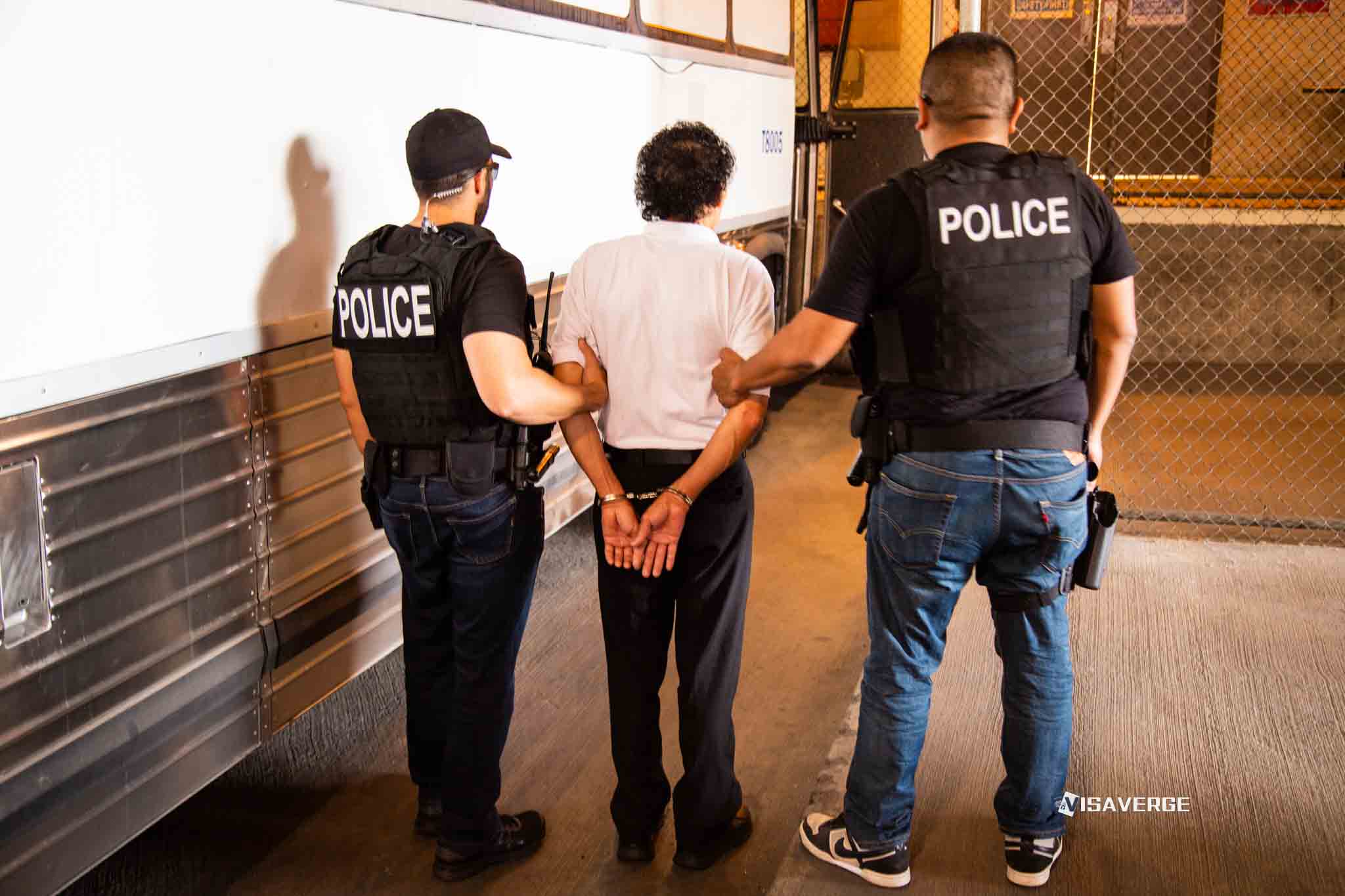
Legitimate F-1 and J-1 holders now face collateral risk as the government widens those investigations. If an employer is flagged as fraudulent, foreign nationals tied to that company may receive notices to appear and could enter removal proceedings even if they did not know the business was operating as a phantom employer.
Those concerns extend to foreign graduates using STEM Optional Practical Training, a program that has become central to early-career work authorization after school. A student who accepted a job in good faith can still face immigration consequences if federal officers later decide the employer existed mostly on paper.
USCIS has also added pressure with policy changes beyond the fraud probes. A recent policy memorandum, PM 602-0199, may force more non-immigrants to seek consular processing abroad rather than adjust status inside the United States, leaving some workers with fewer options if their current path collapses.
That possibility matters in industries where employers have long searched for labor outside the traditional H-2 system. H-2A covers agricultural work and H-2B covers seasonal nonagricultural jobs, but both programs carry caps or wage rules that authorities say some companies tried to avoid by leaning on student visas and J-1 placements.
Federal enforcement had already been building before the Nebraska lawsuit surfaced. The crackdown dates to May 2024 and intensified again in 2026, with immigration authorities presenting the latest actions as part of a nationwide effort to police suspect employers and visa intermediaries.
One of the clearest signs of that wider campaign came in July 2025, when JBS fired 200 workers in Iowa after their humanitarian parole or visa status was revoked. That action signaled how quickly enforcement can move from an administrative review of paperwork to job losses on plant floors.
The Nebraska allegations also sharpen a legal question that has followed labor-intensive industries for years: whether a visa category built for education, training, or cultural exchange can become a substitute for a regulated guestworker program. In this case, federal investigators and civil plaintiffs both point to the same pattern, recruiters offering one kind of opportunity and workers ending up in another.
Livingston Enterprises Inc. now sits at the center of that dispute, but the government’s language suggests the inquiry reaches far beyond one employer. Lyons called the discovery of empty worksites and phantom employees “only the beginning,” a warning that the crackdown on student visas, Optional Practical Training, and exchange programs will continue through the meat industry and beyond.