- U.S. authorities have intensified OPT fraud scrutiny in 2026, leading to a 37% increase in detected cases.
- Students using fake employers face immediate SEVIS termination, deportation, and potential long-term bans from the United States.
- A 33% approval rate for victim status adjustments highlights the heavy burden of proof required for students.
U.S. authorities intensified scrutiny of Optional Practical Training cases in 2026 as international students on F-1 visas faced rising risks from OPT fraud, fake employers and SEVIS reporting failures that can lead to status loss, deportation proceedings and long-term bars on returning to the United States.
USCIS data shows a 37% increase in detected OPT fraud cases since 2023, with the trend continuing into 2026. Students caught in sham employment arrangements can face F-1 status termination, unlawful presence accrual, removal proceedings and future immigration benefit denials.
Rogue consultancies and fake employers have targeted students seeking post-graduation work authorization by offering what appear to be legitimate OPT or STEM OPT positions. Some provided forged employment verification letters, phantom payrolls or nominal training without real duties, while students believed they were meeting OPT rules requiring 20 hours weekly of related employment.
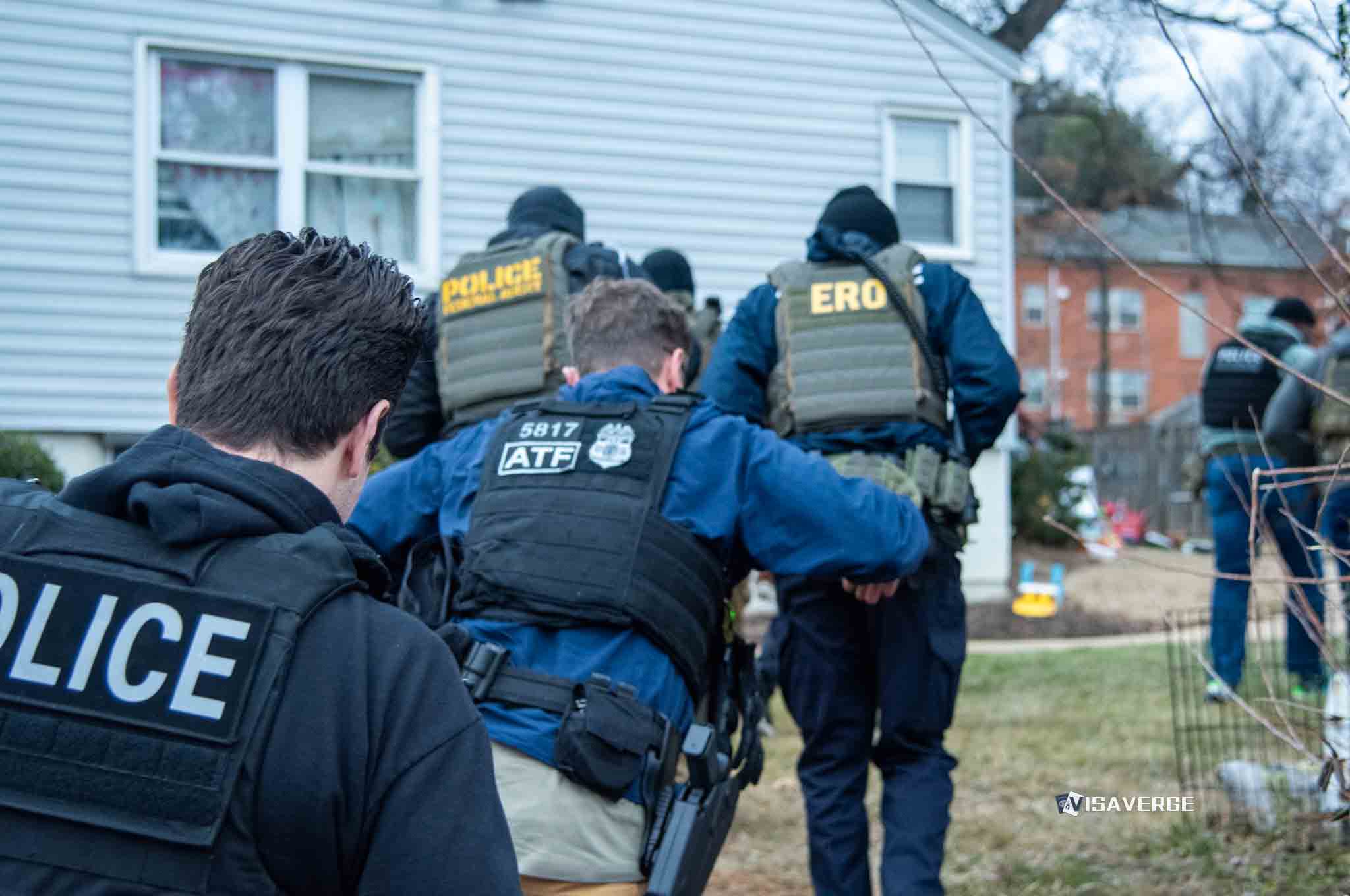
Free toolOPT Timeline Calculator OnlineThe risks have widened as the administration tightened immigration enforcement in 2026. Expanded ICE raids under “Operation Catch of the Day” and similar initiatives have targeted worksites, including those employing OPT students, raising the odds that fraudulent job arrangements will come to light.
Social media vetting also expanded. As of December 15, 2025, mandatory screening for F-1 renewals and H-1B transitions flags suspicious job-related posts and can expose past fraud associations.
A hallmark of the current wave of OPT fraud is the spread of fake consultancies posing as E-Verify compliant employers. These entities submit sham Form I-983 Training Plans for STEM OPT or basic OPT reports to Designated School Officials, falsifying hours, wages and supervision details in SEVIS, the Student and Exchange Visitor Information System.
Students have shown up for “orientation” only to find no real work, minimal pay through cash apps or periods of benching without pay. Those conditions can amount to violations that trigger automatic F-1 lapses.
SEVIS reporting failures have compounded the problem. Designated School Officials, or DSOs, sometimes delay terminations despite red flags such as address mismatches or zero-wage updates, allowing status violations to continue unnoticed until a later review or worksite inspection.
USCIS launched a new fraud detection algorithm on January 15, 2025, that cross-references SEVIS data with IRS payrolls and site visits. The agency says the system flags 25% more anomalies than pre-2025 levels.
Enhanced employer site visits, now routine for OPT approvals, have led to over 500 revocations in Q1 2026 alone. Students who discover mid-OPT that an employer is fraudulent can face immediate SEVIS termination, which halts work authorization and starts the unlawful presence clock.
The consequences can escalate quickly. Unauthorized employment voids F-1 status instantly upon detection under 8 CFR 214.2(f)(9), and no grace period applies after termination.
Each day in the United States after that loss of status counts toward the 180-day or 1-year bars under INA §212(a)(9)(B). A terminated SEVIS record also blocks reinstatement applications through Form I-539 unless a student can prove extraordinary circumstances, relief that is rarely granted in fraud cases.
ICE has given OPT violators priority in removal dockets during the 2026 enforcement surge. Federal charges against 17 fraud ring operators by February 28, 2025, yielded student deportations, and that number climbed to 45 by March 2026.
Fraud findings can also shadow later applications. H-1B lotteries, now wage-favoring as of 2025, green card adjustments and naturalization applications all face added scrutiny once a fraud flag appears in the record.
AILA’s January 2025 survey found that 72% of attorneys reported heightened H-1B scrutiny. The same survey, cited in 2026 enforcement discussions, also showed 84% reporting delays and 63% reporting interview scrutiny.
Risk rises further for some students from countries covered by Proclamation 10998, effective January 1, 2026. The measure bans entry for 39 nations including Syria, Yemen and new additions like Burkina Faso.
Even students already in the United States can face expedited removal if authorities catch them in violation. At the same time, a January 21, 2026 pause affecting immigrant visas for 75 countries has complicated later consular processing for some who hope to move from OPT to H-1B or other statuses.
USCIS has built those enforcement efforts into what it describes as a wider 2026 framework. Mandatory in-person interviews now apply to all STEM OPT extensions, with questioning focused on whether employment is genuine.
The USCIS Vetting Center, announced December 5, 2025, centralizes fraud screening and integrates social media and travel history. DHS task force prosecutions had produced 25+ indictments by April 2026.
Another pressure point is the shortened work authorization period. Since December 4, 2025, Employment Authorization Documents have been limited to 18 months maximum, forcing more frequent reverifications and giving officers more chances to spot discrepancies.
The government has also rolled out a narrow relief path for people who can show they were victims rather than participants. The “OPT Fraud Victim Status Adjustment” policy took effect February 1, 2025, and USCIS updated it on March 15, 2026, to include vetting center data.
To qualify, students must show they were unaware of the fraud, report it within 30 days of discovery to a DSO, USCIS or the ICE tip line at 1-866-DHS-2ICE, cooperate fully with investigators and have no more than 180 days of unlawful presence. Approval restores F-1 status, forgives unlawful presence and allows OPT to resume.
The numbers show both demand and strict screening. From February 1 to March 1, 2025, USCIS processed 1,243 applications and approved 412, a 33% rate.
By April 1, 2026, total filings had reached 5,800 and approvals stood at 1,920, also 33%. The steady rate suggests no broad expansion of relief even as enforcement has tightened.
Students who lose on those requests cannot appeal. Some leave voluntarily instead.
Lawyers say the burden of proof is heavy. “The burden is total—students need narratives backed by timestamps, or they’re presumed complicit,” attorney Sarah Chen said.
That burden falls hardest on students who have little to show beyond informal messages, weak payroll records or recruiter promises made through social media and ethnic networks. Fake consultancies have charged up to $10,000 for what they called guaranteed jobs, arrangements that often collapsed under scrutiny.
Approval rates have dipped to 28% for non-STEM cases in 2026. Victims are expected to assemble job search logs predating the fraud, employer emails or advertisements, any available timesheets and affidavits from DSOs confirming they did not know the employment was fake.
The practical damage can extend beyond immigration status. Students who thought they were following the rules may see H-1B plans unravel because fraud concerns have attached to their file, even if they later win some form of relief.
That challenge has grown more visible as the April 2026 Visa Bulletin made EB-2 and EB-3 current for most countries except China and India, drawing more OPT-to-H-1B filers into vetting. At the same time, proposed Department of Labor wage hikes in March 2026 would raise entry-level thresholds 30%, adding pressure on employers and making sham OPT-to-H-1B pipelines harder to sustain.
A bipartisan “Keep Innovators in America Act,” introduced in March 2026, seeks to codify OPT. Its prospects remain uncertain while raids and fraud investigations continue.
Universities have tried to respond by tightening oversight. NAFSA’s 2026 toolkits call for mandatory webinars on red flags such as upfront fees and the absence of E-Verify, along with verified employer databases and SEVIS audit training.
Some schools have also expanded partnerships with technology firms that offer vetted OPT roles. Those efforts aim to reduce dependence on consultancies that advertise aggressively but provide little or no lawful work.
For students already affected, the immediate steps are unforgiving. They need to cut ties with the employer, preserve emails, contracts, pay records and SEVIS printouts, and notify a DSO quickly enough for an annotation in the system while making a fraud report to federal authorities.
Many also turn to AILA-member lawyers for reinstatement or status adjustment filings. Legal fees can run about $5,000+.
Alternative options can be narrow. Some students may try to transfer schools or seek a Cap-Gap extension to September 30 while monitoring the Visa Bulletin for a possible H-1B path, but each option depends on keeping their record as clean as possible after the fraud is discovered.
The 2026 crackdown has left little margin for error. Site visits, data matching, mandatory interviews and broader vetting have made sham employment harder to hide, while SEVIS reporting mistakes can turn a bad situation into a fast-moving immigration case.
For international students, the lesson is blunt: a fake job can become a real deportation risk. Chen’s warning captures the stakes for those trying to prove they were duped rather than involved: “The burden is total—students need narratives backed by timestamps, or they’re presumed complicit.”