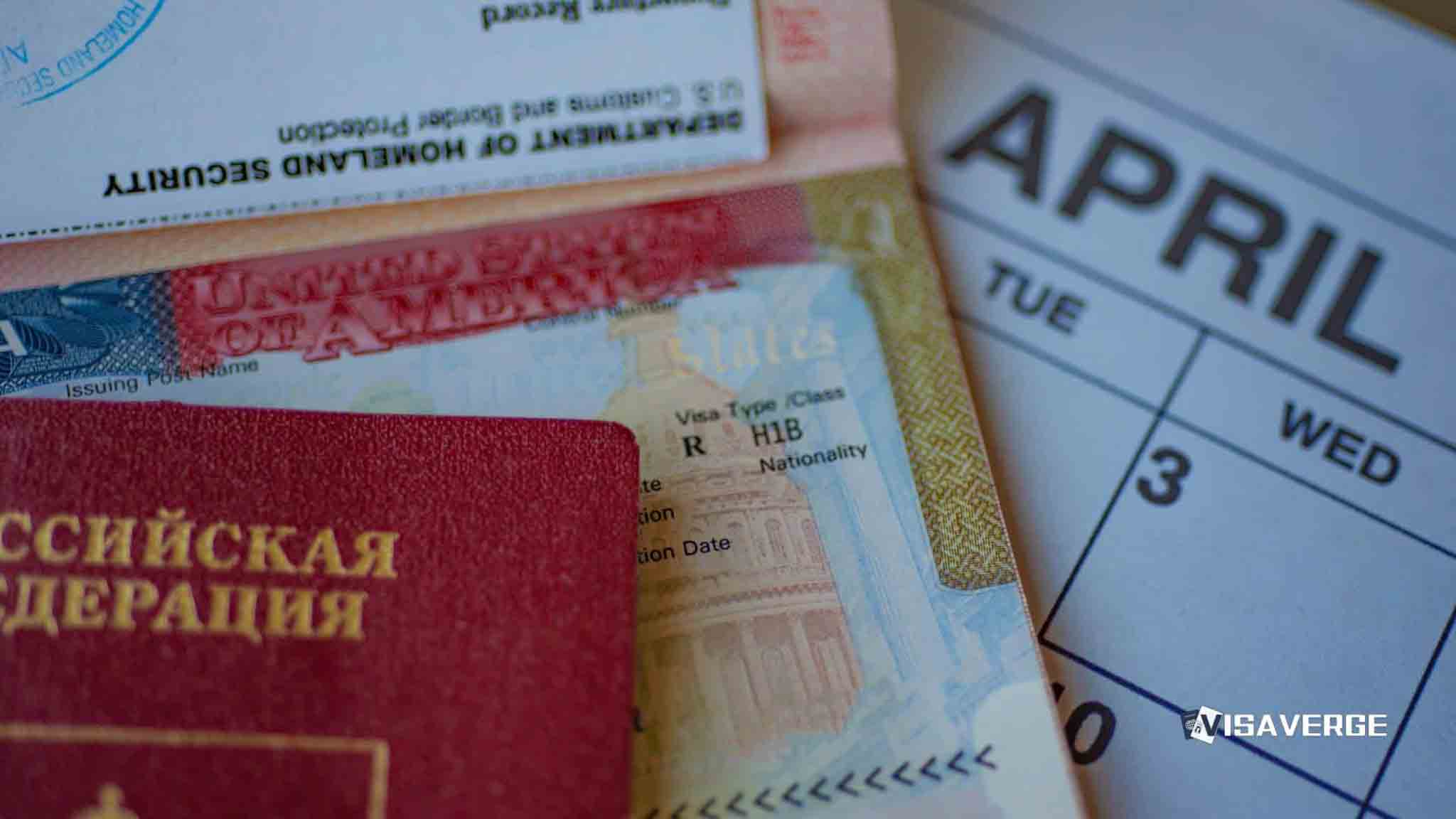
- Starting September 2026, DHS mandates supplemental fees for same-employer H-1B and L-1 visa extensions.
- The new rule targets companies with 50+ employees where over half the workforce holds H-1B or L-1 status.
- Qualifying employers must pay four thousand dollars for H-1B extensions and four thousand five hundred for L-1 extensions.
The Department of Homeland Security published a final rule Monday requiring certain employers to pay a supplemental biometric fee on same-employer H-1B and L-1 status extensions. The rule takes effect September 9, 2026, 30 days after its Federal Register publication.
The charge will apply to qualifying H-1B, L-1A and L-1B petitions. Employers will pay $4,000 for each H-1B petition and $4,500 for each L-1 petition.
Free toolH-1B Cost Calculator Online
The rule targets a narrower group of companies. An employer must have at least 50 employees in the United States and more than 50% of its U.S. workforce must hold H-1B or L-1 nonimmigrant status.
The agency is changing how it reads the statutory fee requirement. The new policy reaches routine H-1B and L-1 extensions filed for workers who remain with the same employer.
“The regulatory changes correct DHS's interpretation of statutory language to require that covered employers submit the 9-11 Biometric Fee for all extension of status petitions, regardless of whether the related fraud prevention and detection fee applies, which includes extension of status petitions that do not involve a change of employer.”
DHS included that explanation in the final rule, titled “9-11 Response and Biometric Entry-Exit Fee for H-1B and L-1 Visas.” The notice appeared in the Federal Register on August 10, 2026, as 91 FR 51360.
Same-employer renewals now join initial and transfer filings
Before the change, the government generally collected the fee for initial grants of status and change-of-employer petitions. Same-employer extensions generally escaped the charge because they did not require the separate fraud prevention and detection fee.
The final rule separates the two fees. Covered employers must now pay for three types of filings:
- Initial petitions, which already carried the charge.
- Change-of-employer petitions, which also already carried the charge.
- Extension-of-status petitions for workers staying with the same employer, which the rule newly covers.
The rule preserves one exception. An amended petition that does not request an extension of stay remains exempt from the fee.
The agency said the revised interpretation will “.help DHS comply with its congressional mandate to implement a biometric entry-exit system.” The charge is connected to that federal mandate.
The 50/50 test controls which companies owe the money
Meeting only one requirement will not place an employer inside the covered group. The company must satisfy both tests at the same time: a U.S. workforce of 50 or more employees, and a workforce in which more than half hold H-1B or L-1 status.
That formula reaches companies with both a large headcount and heavy reliance on these visa categories. Large technology firms, global consulting providers and IT services companies are among the businesses identified as likely to face the new cost.
Some of those employers depend on high percentages of H-1B and L-1 workers. The rule therefore adds a recurring expense to visa renewals that previously did not carry the supplemental charge.
The amount will vary with the number and category of qualifying petitions. An H-1B extension carries the lower of the two listed amounts, while an L-1 extension carries the higher charge.
| Petition category | Fee per qualifying petition |
|---|---|
| H-1B | $4,000 |
| L-1A or L-1B | $4,500 |
Employers pay, but renewal decisions may change
The employer bears the fee. The worker does not submit it as the petitioner.
The added expense could affect corporate choices about visa renewals, permanent-residency sponsorship and offshoring, according to the policy details accompanying the rule. Companies that file large numbers of extensions could face millions of dollars in additional annual costs for routine renewals.
That pressure is likely to be greatest among employers that satisfy both parts of the 50/50 test. A company outside either threshold is not covered by the rule described in the final notice.
The change also creates a compliance question for employers preparing extension filings after the effective date. They must determine whether their U.S. headcount and H-1B or L-1 workforce share place them within the covered category before submitting a qualifying petition.
The rule reaches three visa classifications
The affected categories are H-1B, L-1A and L-1B. The policy applies to status extensions, not only to workers changing employers.
An H-1B worker remaining with the same company can therefore fall within the new requirement if the employer meets the two-part test. The same structure applies to L-1A and L-1B workers seeking extensions of status.
Initial petitions and changes of employer remain covered as before. The new element is the addition of same-employer extension petitions.
Amended filings occupy a separate position. When an amended petition does not request an extension of stay, the employer remains exempt from this fee.
CBP contact is listed for questions about the final rule
The Federal Register notice lists Larry Panetta of the Office of Field Operations at U.S. Customs and Border Protection as the official contact. The notice provides the agency contact alongside the final rule.
The new requirement begins September 9. Employers filing renewal petitions must account for the date, the worker’s classification and the company’s U.S. workforce profile when assessing the charge.