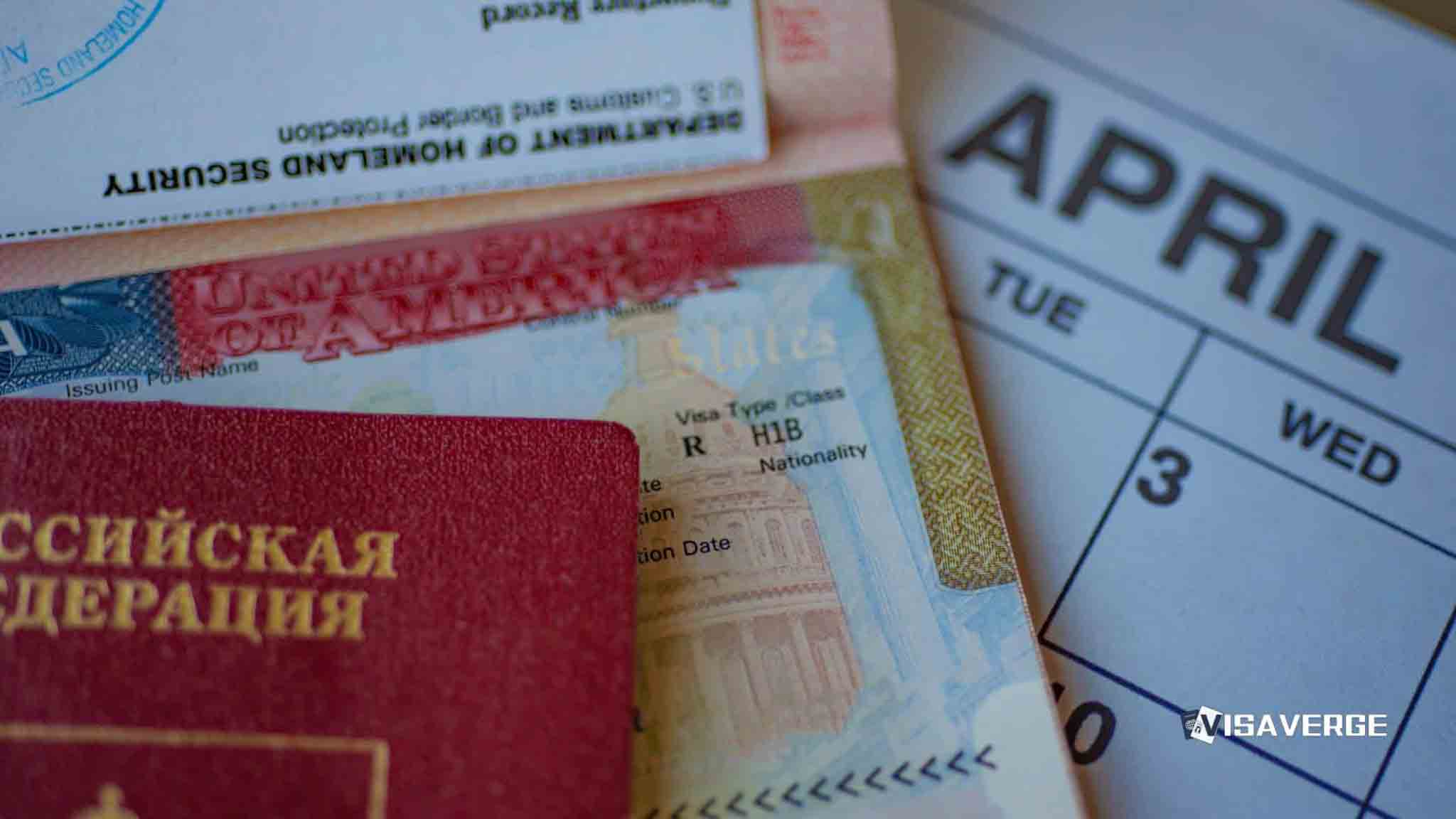
- Starting September ninth, twenty twenty-six, DHS will impose new visa surcharges on H-1B and L-1 extensions.
- Fees of four thousand to forty-five hundred dollars apply if half the workforce holds specific visas.
- The expansion aims to fund biometric entry-exit systems, generating over one hundred fifty-seven million dollars annually.
The Department of Homeland Security will require covered employers to pay new surcharges on H-1B extension and L-1 extension petitions beginning September 9, 2026, including cases where workers remain with the same company.
The department published the final rule August 10 in the Federal Register as 91 FR 51360. The regulation expands the 9-11 Response and Biometric Entry-Exit Fee to filings that previously avoided the charge because they involved routine extensions of status.
Free toolH-1B Cost Calculator Online
The added charge will be $4,000 for covered H-1B petitions and $4,500 for covered L-1 petitions. The employer submits the petition and pays the fee when the rule applies.
DHS limited the new requirement to a defined group of companies. A covered employer must have 50 or more employees in the United States and more than 50% of its U.S. workforce in H-1B, L-1A or L-1B nonimmigrant status.
The department said the rule reflects a revised reading of the statutory fee requirement.
“The regulatory changes correct DHS's interpretation of statutory language to require that covered employers submit the 9-11 Biometric Fee for all extension of status petitions, regardless of whether the related fraud prevention and detection fee applies, which includes extension of status petitions that do not involve a change of employer.”
The agency also said the revisions help it comply with Congress’s mandate to implement a biometric entry-exit system. It said it now considers its earlier interpretation of congressional intent incorrect.
Routine renewals will enter the fee system
Before the regulation takes effect, the biometric fee applied to initial grants of status or petitions involving a change of employer. The expansion reaches all covered extension-of-stay petitions, including renewals for workers who remain with an existing company.
One category remains outside the expansion. An amended petition that does not request an extension of stay remains exempt.
| Petition or filing type | Additional fee from September 9, 2026 | Covered employer test |
|---|---|---|
| H-1B extension of stay | $4,000 | 50 or more U.S. employees and more than 50% in H-1B, L-1A or L-1B status |
| L-1 extension of stay | $4,500 | 50 or more U.S. employees and more than 50% in H-1B, L-1A or L-1B status |
| Amended petition without an extension of stay | Exempt from this expansion | The petition must not request an extension of stay |
The filing must therefore satisfy two separate conditions before the additional charge applies. The employer must meet the workforce thresholds, and the petition must request an extension of stay.
A company that fails either workforce test does not fall within the covered group described in the rule. The exemption for amended petitions also depends on what the filing requests.
The fee will create a recurring cost for some companies
Large technology companies, global consulting firms and Indian IT services providers with high H-1B and L-1 populations are expected to face higher recurring expenses. H-1B status is typically granted in three-year increments.
That schedule can bring the charge back. An eligible employer would owe the $4,000 amount each time a covered worker’s H-1B status is extended, according to the policy details accompanying the rule.
Immigration experts suggest the added cost could prompt affected companies to reassess their reliance on H-1B and L-1 workers. Some employers may also accelerate permanent-residency processing for employees to reduce repeated extension costs.
Those potential decisions will depend on the company’s workforce composition and the petitions it submits. The rule’s coverage tests remain tied to U.S. headcount and the share of workers in the specified nonimmigrant classifications.
The fee will support biometric entry-exit programs
Congress established the 9-11 Biometric Fee through Public Law 114-113 in December 2015. The department estimates that applying it to extension petitions will generate approximately $157.3 million annually.
The revenue will be divided evenly. 50% will go to the 9-11 Biometric Account, while the remaining 50% will go to the general fund of the Treasury.
The account supports implementation of a biometric entry-exit system, including facial recognition and overstay monitoring. The fee also supports U.S. Customs and Border Protection programs that track and verify the identity of foreign nationals entering and exiting the country.
The department described the expansion as a correction to its interpretation of the statutory language governing the fee. The rule’s stated purpose is tied to funding and implementing the biometric entry-exit system.
The rule differs from the vacated $100,000 proposal
The biometric-fee expansion is separate from the $100,000 H-1B payment requirement proposed in late 2025. That measure faced significant court challenges and was vacated in June 2026.
The new rule rests on the department’s stated statutory correction and is expected to proceed on September 9. Employers preparing extension petitions will need to assess their employee counts, workforce percentages and requested extension before filing.
Larry Panetta, of the Office of Field Operations at U.S. Customs and Border Protection, is listed as the contact for the rule. The listed telephone number is (202) 344-1253. The Federal Register notice sets out the regulation published August 10.