- China’s K visa allows young STEM talent to enter without a pre-arranged employer invitation.
- The program targets AI and biotech specialists under 35 with multiple-entry validity up to 5 years.
- The process is fully digitalized with an average processing time of 45 days in 2026.
(CHINA) China’s K visa is now one of the clearest signals that Beijing wants young STEM talent on a faster track. Launched on October 1, 2025, and fully active in 2026, the visa gives qualified applicants access to study, research, startups, and cultural projects without a pre-arranged employer invitation.
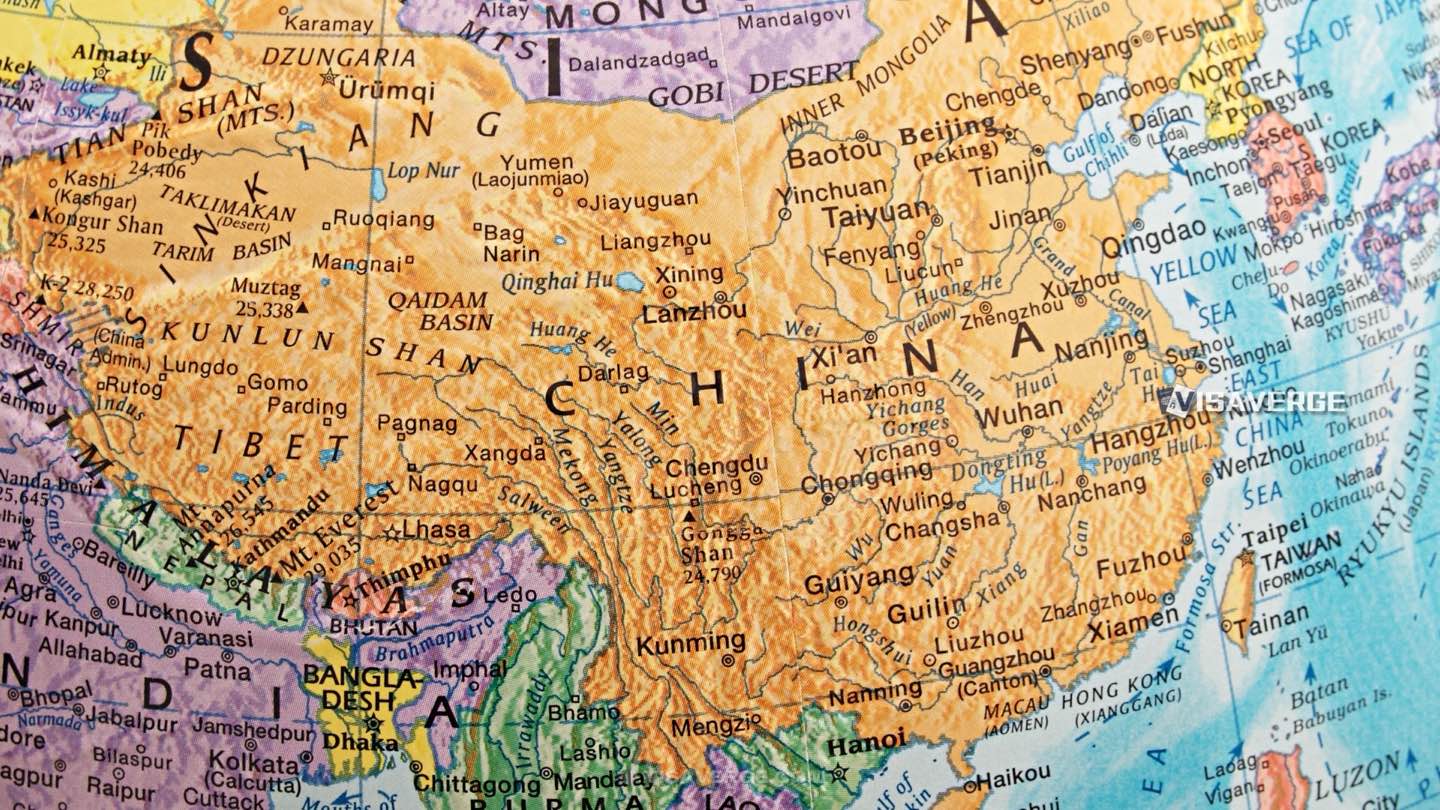
By April 2026, the National Immigration Administration reported more than 15,000 applications processed, with detailed rules finalized on September 15, 2025 and a fully digital system now running across Chinese missions abroad. VisaVerge.com reports that the program’s multiple-entry validity now reaches up to 5 years, while city pilots in Shenzhen, Shanghai, Hangzhou, and Beijing add local incentives that make the route more attractive than many older work-visa paths.
A visa built for young STEM talent
The K visa sits between a student route and a work permit, but it is not tied to one employer. That matters. Applicants under 35, and up to 40 for some PhD holders in priority fields, can enter China for education, research, entrepreneurship, and approved cultural-tech work. The program covers AI, biotech, quantum tech, new energy, and advanced manufacturing.
Free toolREAL ID Requirements Checker toolThat wider scope is important because the visa now reaches beyond classrooms and laboratories. Holders can join graduate programs, work with research teams, take part in accelerators, or contribute to projects that mix technology and culture. Under the updated rules, cultural projects also include VR and AR development.
Official information on the program sits on the National Immigration Administration website, while applications move through the K visa portal at the Ministry of Foreign Affairs application site.
How the application journey works
The process is fully digital, and it begins before travel plans are fixed. Applicants register online, upload files, pay the fee, and wait for consular review. No initial in-person interview is required, though video verification can happen later.
The main steps are:
- Check eligibility through the National Immigration Administration self-assessment tool.
- Create an online account and choose the local Chinese mission.
- Upload documents in PDF or JPG format, with each file under 10MB.
- Pay the USD 140 fee, which is non-refundable.
- Respond to follow-up requests within 7 days if the consulate asks for more evidence.
- Receive approval by email, then collect the sticker visa or use the e-visa entry option.
- Register locally within 24 hours after arrival at the public security bureau.
Processing has become faster as the system matured. NIA data showed an average of 45 days in March 2026, while the Q1 average stood at 42 days. Peak demand in January created short backlogs, but those delays were later cleared. Applicants are advised to apply 3 to 6 months before travel.
Documents that support approval
The file list is straightforward, but it rewards careful preparation. Applicants need a passport with at least 6 months’ validity and 2 blank pages, a completed online form, academic records, and clear proof of professional activity.
The most common supporting items include:
- Degree diploma and transcripts, with notarized English or Chinese translations
- A CV focused on STEM work
- A bank statement or sponsor affidavit showing financial self-sufficiency
- A white-background photo, 33x48mm
- A health declaration, with medical checks completed after arrival if the stay exceeds 30 days
Professional proof matters most. The accepted evidence includes a supervisor letter, one publication or PubMed link, a conference abstract, a patent certificate, a project report, code samples, or a business plan. GitHub repositories are accepted, and a PhD candidate can submit a thesis summary.
Digital signatures are now accepted, and some US and EU consulates are piloting blockchain checks for degrees. That has reduced document disputes and made remote filing smoother for many applicants.
Who qualifies, and who does not
The K visa is designed for early-stage talent, not senior managers. The clearest path goes to younger graduates with strong STEM records and concrete project evidence. NIA rules require at least one publication or project example, plus a clean criminal record and proof of funds worth about USD 10,000 or a scholarship.
The strongest candidates are coming from India, the United States, South Korea, Europe, and ASEAN states. NIA’s March 2026 report showed 18,200 applications received and 12,500 approvals. It also showed that 65% of approvals went to applicants aged 25 to 30.
Some applicants are ruled out early. Prior overstays in China, work in sensitive sectors such as defense, or ties to restricted countries all create problems. Families remain outside the program for now. Spouses and children still need separate visitor visas.
Multiple-entry validity and longer stays
The visa’s multiple-entry validity is one of its most attractive features. Initial grants now run for 2 years, and holders can extend them up to 5 years if they continue the approved activity. Local public security bureaus handle those extensions, and NIA said first-quarter success reached 92%.
That gives holders room to move across cities and projects. A researcher can start in Beijing, join a startup incubator in Shenzhen, and later attend a conference in Hangzhou without restarting the visa process. For China, that mobility supports its Talent Power Strategy. For applicants, it removes much of the delay that usually comes with employer-linked visas.
City pilots are adding more pull
National rules stay the same, but local governments have moved fast to compete for K visa holders. Shenzhen launched USD 5,000 startup grants and free co-working space for 6 months. Shanghai began offering housing subsidies of up to RMB 3,000 a month for researchers. Hangzhou added biotech lab access and longer extensions, while Beijing tied the visa to networking events and 20% tax breaks for entrepreneurs.
Those local measures do not replace national policy, but they shape where applicants choose to settle. According to analysis by VisaVerge.com, these city-level offers help explain why so many early K visa holders stay beyond their first term.
What happens after arrival
Arrival brings a second round of compliance. Holders must register their address, open a bank account, and secure health insurance with at least RMB 400K coverage. Those planning full employment still need to shift into a Z visa or another work category after the permitted period of activity.
The visa is not a family settlement route, and it does not create permanent residency on its own. Still, it gives China a direct way to recruit young researchers and founders at a time when other countries are tightening their own pathways. That is why the K visa has drawn strong interest from applicants who want flexibility, speed, and room to move between projects.