- Belgium granted restricted twenty-four-hour visas to a five-member Taliban delegation for technical migration talks.
- The meetings focused on repatriating Afghan nationals who lack legal status or pose security risks.
- Human rights groups warn the engagement undermines European credibility regarding humanitarian standards in Afghanistan.
(BRUSSELS, BELGIUM) — Belgium issued restricted one-day visas to a five-member Taliban delegation on June 22, 2026, allowing the group to enter Brussels for technical European Union migration talks scheduled for Tuesday, June 23, 2026.
The visas were valid for 24 hours and for Belgian territory only, the Belgian Foreign Ministry said, barring travel across the wider Schengen area. A ministry spokesperson said, “These are visas with limited territorial validity and limited duration: only for Belgium. and only for a single day.”

Belgian security agencies screened the delegates before the visit. Belgium’s State Security Service and military intelligence, ADIV, found no information that the members of the Taliban delegation posed a threat to Belgium.
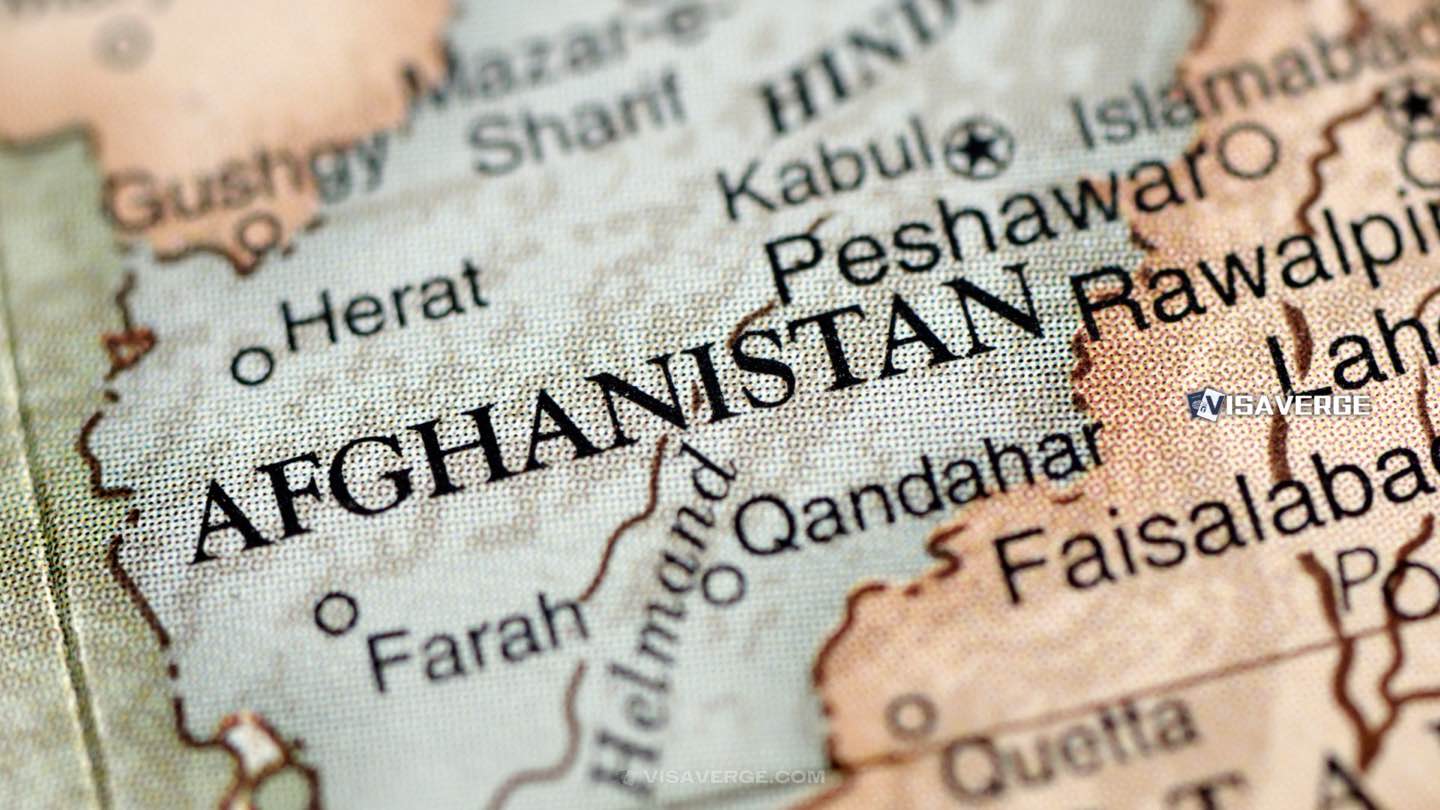
Free toolDS-160 Form Filling Online Helper ToolThe meeting marks the first time the EU has hosted the group since the Taliban returned to power in August 2021. The talks center on the return and readmission of Afghan nationals who do not have a legal right to remain in the bloc, with a focus on people considered security threats or those whose asylum claims were rejected.
Maxime Prévot, Belgium’s foreign minister, said he opposed the invitation but argued that Belgium’s role as host to EU institutions limited its room to refuse entry. “As the host country of institutions such as the European Union, Belgium cannot refuse invitations from those institutions to representatives of regimes that it does not itself recognize,” Prévot said on June 18, 2026.
Prévot repeated that position on Tuesday while drawing a line between allowing access and conferring status. “Belgium cannot confer legitimacy on a regime accused of serious human rights violations,” he said on June 23, 2026.
European Commission spokesperson Markus Lammert described the Brussels meeting as a technical exercise requested by member states rather than a political opening. “Member States are looking into ways to return persons who have committed serious crimes and who are possibly a security threat. So this is the initiative that the Commission is now following up on,” Lammert said on June 22, 2026.
Lammert said again on Tuesday that the contact did not amount to formal recognition of the Taliban authorities. “This does not by any means constitute a recognition. [it is] operational engagement with de facto authorities in Afghanistan,” he said.
The five-member team included Abdul Qahar Balkhi, a spokesperson for the Taliban’s Foreign Ministry. Belgian officials limited the visit tightly, both in duration and geography, a sign of how narrowly the government sought to define the encounter.
That narrow framing has not prevented the trip from carrying diplomatic weight. Even with Belgium insisting the one-day visas were a host-country obligation and the European Commission calling the talks technical, the visit is being seen as a small crack in the Taliban’s international isolation.
The EU has tried to keep its language precise since the Taliban takeover in 2021, speaking of dealings with de facto authorities rather than a recognized government. Brussels has maintained that distinction while still opening channels on migration, a subject that has forced practical contacts with authorities the bloc does not formally recognize.
The immediate purpose of Tuesday’s session was return policy. EU member states want arrangements for Afghans without legal stay in Europe, especially people identified as security threats and those who have exhausted asylum claims, and the Commission said it was following up on that demand.
Human rights groups condemned the talks, arguing that any push to resume returns to Afghanistan ignores the risks faced by people sent back under Taliban rule. Amnesty International and Human Rights Watch criticized the engagement, warning that cooperation on deportations cuts against Europe’s public stance on rights abuses in Afghanistan.
Fereshta Abbasi of Human Rights Watch said on June 22, “EU countries are undermining their credibility by condemning Taliban abuses. while cooperating with the Taliban to forcibly return Afghans.” Her statement captured the central objection from rights groups: that practical migration deals can blur into political accommodation.
Critics also say the talks could open the way to systematic deportations of thousands of Afghans from Europe. They argue that returnees face arbitrary detention and persecution, particularly after earlier European decisions halted returns to Afghanistan because of “gender-based persecution” under the Taliban.
Belgium’s move has also drawn attention because the visas were designed to be as limited as possible. The government did not issue Schengen-wide entry permission, but rather one-day visas confined to Belgium, a legal and political distinction intended to contain the visit to a single technical meeting in Brussels.
The arrangement exposed the tension between host-country obligations and national policy. Belgium does not recognize the Taliban, and Prévot said so in direct terms, yet Belgium also hosts the institutions that convened the meeting and chose to let it go forward under strict conditions.
The Commission’s public line has been similarly careful. By calling the meeting operational and linking it to returns of people accused of serious crimes or deemed security threats, officials framed the contact as a matter of migration management rather than a shift in diplomatic status.
Even so, the optics are hard to separate from the substance. A Taliban delegation in Brussels, traveling on Belgian visas and sitting down with EU officials, marks a level of access the group has not had from the bloc since August 2021, however narrow the format and however short the stay.
The episode also stands in contrast with the current U.S. immigration approach toward Afghans. Under Presidential Proclamation 10998 and USCIS Policy Memorandum PM-602-0194, effective Jan 1, 2026, the United States has placed an “indefinite pause” and “hold and review” on all immigration benefit requests from Afghan nationals.
That policy applies even to Afghan nationals already in the United States if they arrived after January 20, 2021. No direct DHS or USCIS statement was issued on Belgium’s one-day visas, but the broader American posture in June 2026 remained highly restrictive.
The contrast is not a simple split between engagement and isolation. In Brussels, EU officials are engaging the Taliban on a single operational issue, migration returns, while insisting they are not recognizing the regime; in Washington, immigration policy toward Afghan nationals has tightened through an indefinite administrative pause.
Belgium’s decision will likely be judged as much by what follows as by the one-day visit itself. If Tuesday’s talks produce a durable channel on return and readmission, the visas issued on June 22, 2026 may come to be seen less as an isolated exception than as the first formal EU-hosted contact with the Taliban since 2021.
For now, Belgian officials have tied the case to legal obligation, territorial limits and security screening, while rights groups have tied it to the danger facing Afghans who could be sent back. Between those positions sat a five-member Taliban delegation in Brussels, admitted on visas that lasted a single day and carried far more diplomatic weight than their 24-hour validity suggested.