- EU governments are finalizing a scaled-back visa ban targeting former Russian military personnel who participated in combat.
- France and Italy successfully narrowed the proposal’s scope to exclude administrative staff and non-combat logistics personnel.
- The measure focusing on short-stay Schengen visas is part of the bloc’s twenty-first sanctions package due mid-July.
(EUROPEAN UNION) — European Union governments are finalizing a scaled-back visa ban on former Russian military personnel as part of the bloc’s 21st sanctions package, after Italy and France pushed back against a broader entry restriction.
The revised draft under discussion on July 9, 2026 narrows a proposal that European Commission President Ursula von der Leyen unveiled on June 9, 2026.

Instead of covering anyone who has served in the Russian Armed Forces since the start of the invasion in February 2022, the new version would target those who directly participated in combat operations in Ukraine.
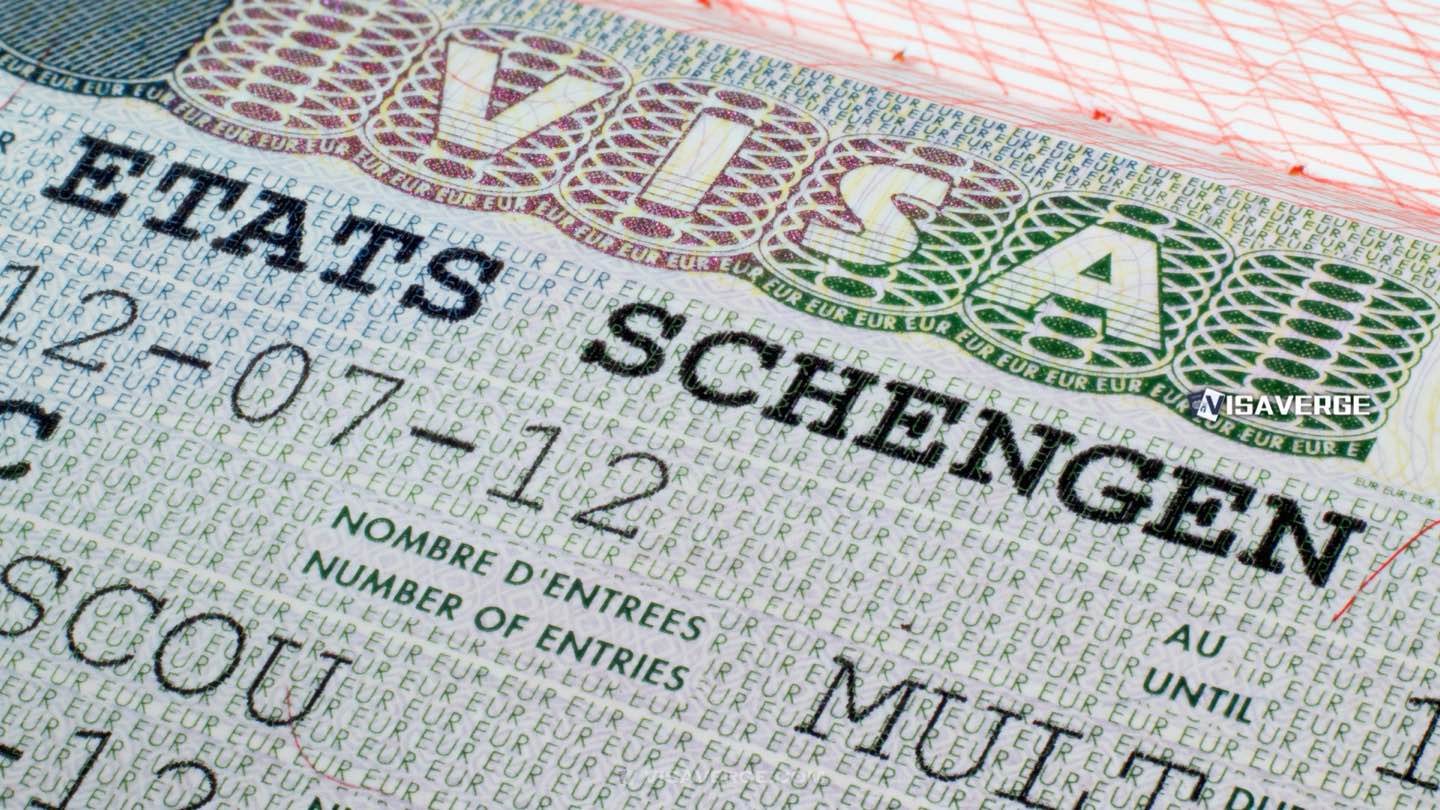
Free toolDS-160 Form Filling Online Helper ToolThat shift would limit the measure to short-stay visas, also known as Schengen visas, rather than all forms of entry.
It also removes a presumption that applicants took part in fighting and broadens exceptions for humanitarian reasons, the interest of the state, or international obligations.
“For the first time, we propose to ban from entry into the EU anyone who has served in the Russian Armed Forces since the beginning of the war. Europe stays off limits for anyone who has participated in the invasion of Ukraine. As simple as that.”
Ursula von der Leyen, European Commission President, framing the original plan
Italy and France, which receive the highest volumes of Russian visa applications, objected that the initial wording was too broad and difficult to enforce.
Officials in Rome and Paris argued that mandatory military service in Russia, which applies to men aged 18–30, risked turning the measure into what they saw as a blanket ban in practice.
They also questioned whether consular officers could reliably determine who had directly participated in combat.
Identifying battlefield roles, they argued, is an intelligence task that does not fit easily into day-to-day visa processing.
Rome and Paris also pressed a procedural point. They said restrictions of this kind should be handled through visa policy rather than folded into a sanctions package.
Those objections reshaped the file. The revised text now focuses on direct combat participants after February 2022, not administrative staff, logistics personnel, or other former service members whose roles did not involve fighting.
The practical effect is a much narrower pool of people.
The original proposal would have touched an estimated 1.5 million Russian veterans; the scaled-back version cuts that figure by excluding non-combat roles and those seeking long-term residency through national visas.
Supporters of a tougher line, including Baltic and Nordic states, have argued that the ban is a “common sense security measure” aimed at reducing the risk that Russian combatants could enter the bloc and take part in hybrid warfare.
Opponents have warned that sweeping restrictions hand the Kremlin an argument that Europe is “Russophobic.”
EU ambassadors are scheduled to discuss the final text on Wednesday, July 15, 2026, as governments try to wrap the full 21st sanctions package by mid-July.
The visa measure has become one of the package’s most contested elements because it sits at the intersection of border policy, sanctions law, and diplomacy.
The debate is unfolding alongside a separate U.S. track on Russian travel and immigration controls.
On January 21, 2026, the U.S. Department of State imposed an indefinite pause on issuing immigrant visas for nationals of 75 countries, including Russia, citing public charge concerns and national security risks.
That U.S. policy did not mirror the EU proposal, but it showed how Western governments were tightening entry rules on different legal grounds.
Washington also changed course in court and at the agency level during the same period.
On June 5, 2026, the U.S. District Court for the District of Rhode Island vacated several USCIS hold policies, including PM 602-0194, that had frozen benefit applications for Russians and other nationals deemed high risk.
In a June 11, 2026 statement, the USCIS Office of the Director said it “strongly disagrees with the Court’s order but will follow its terms.”
USCIS had announced another change weeks earlier.
On May 22, 2026, USCIS spokesman Zach Kahler said the agency would return to “the original intent of the law,” requiring most nonimmigrants, including people on tourist or student visas, to leave and apply for Green Cards through consular processing rather than adjust status inside the United States.
That broader Western backdrop has not settled the European argument over how to treat Russians with military ties.
Inside the EU, the central dispute is less about whether ex-combatants should face scrutiny than about how wide the net should be and who should carry the burden of proof.
Under the revised draft, that burden no longer falls on applicants to prove they did not fight in Ukraine.
Governments pressing for changes said that presumption was too blunt and too hard to defend, especially in a system that processes high volumes of short-stay visa requests.
The narrowed text also preserves space for exceptions.
Humanitarian cases, entries judged to be in the interest of the state, and obligations under international law would remain possible even if an applicant fell within the new rule.
That balance matters most in capitals handling the largest caseloads.
France and Italy have argued that visa systems need clear, workable tests, not a standard that depends on proving battlefield conduct from consular windows far from the front.
Other governments have pressed the opposite concern.
They want the EU to close what they see as an obvious gap by barring people who fought in Ukraine from short-term travel across the Schengen area, even if broader restrictions prove politically or legally unattainable.
The outcome now points to a compromise rather than the sweeping ban von der Leyen first presented in June.
Brussels is still moving toward restrictions, but the measure taking shape would be narrower, tied to direct combat participation, and built around visa control rather than a broad presumption against anyone who once wore a Russian uniform.
As diplomats prepare for the July 15, 2026 meeting, the question is no longer whether the bloc will act.
It is how tightly the final text defines participation in war, and how far Europe is willing to push a sanctions package into the territory of migration control.