- Eleven European nations urged the European Commission to implement mandatory, binding visa restrictions for Russian citizens.
- The coalition aims to eliminate visa shopping where travelers use more lenient consulates to access the Schengen area.
- Parallel U.S. policies in 2026 have suspended immigrant visa issuance and placed holds on Russian benefit applications.
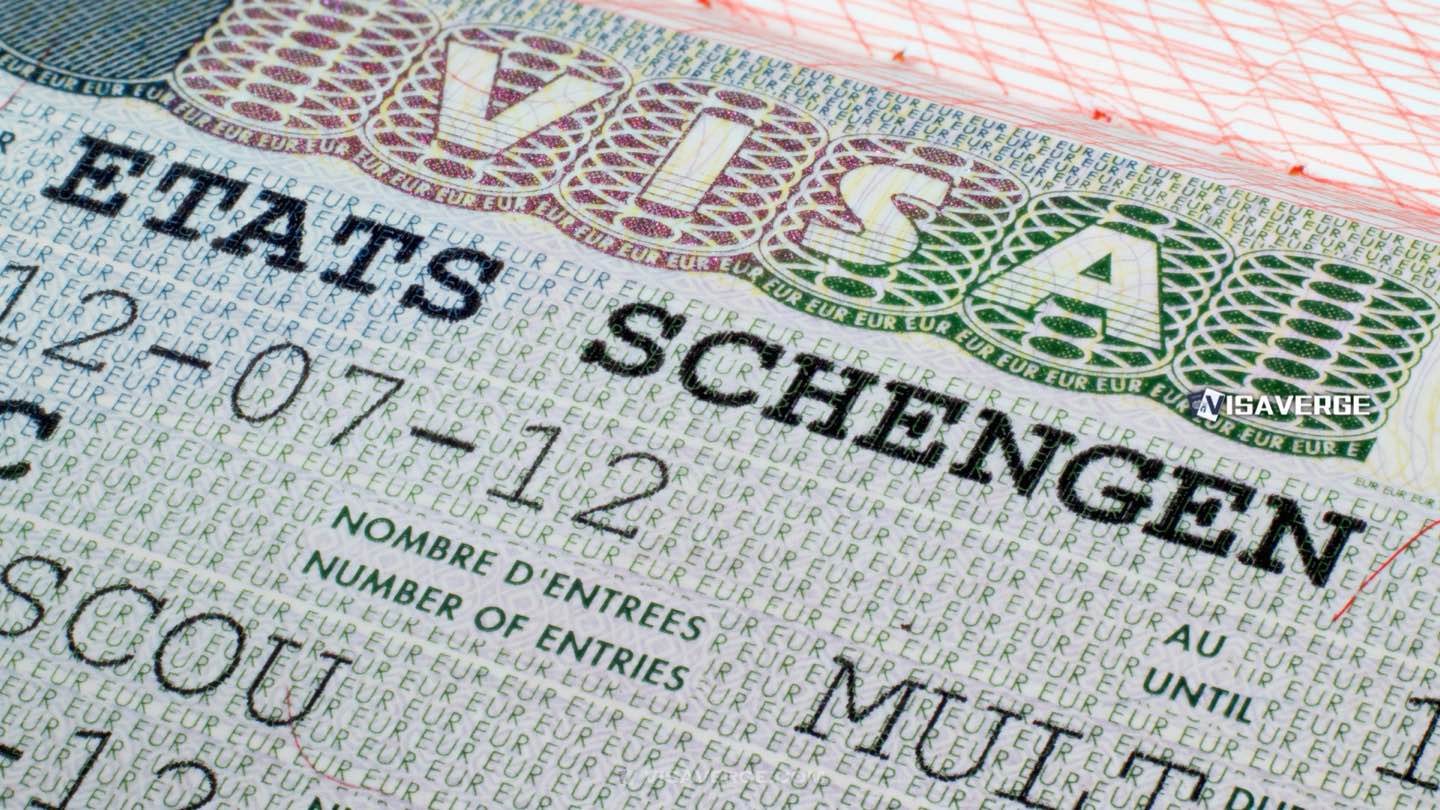
(EUROPE) — 11 European countries asked the European Commission to tighten EU visa rules for Russian nationals, pressing Brussels to make restrictions binding across the bloc and to stop what they described as “visa shopping” through more lenient consulates.
Poland, Sweden, the Czech Republic, Denmark, Estonia, Finland, Latvia, Lithuania, the Netherlands, Norway, and Iceland sent a joint letter to EU High Representative Kaja Kallas and Migration Commissioner Magnus Brunner on June 3–4, 2026. The group urged an amendment to the EU Visa Code that would introduce “restrictive and mandatory” measures.

The ministers focused on Russians who apply through Southern European consulates and then move within the border-free Schengen area. Their letter said that route lets applicants reach countries that have pushed for tougher controls, even when those countries have already tightened access at their own consulates or borders.
The appeal landed after a year in which nearly 478,000 Schengen visas were issued to Russian citizens for tourism in 2025, many of them multiple-entry permits. That figure gave the coalition a concrete target in arguing that national steps alone no longer work inside a shared travel area.
The ministers wrote that it is “deeply troubling to witness increasing numbers of Russian tourists enjoying leisure travel on European beaches. while missiles and drones continue to strike civilians. in Ukraine.” They tied the visa push directly to the war and to what they see as a gap between the bloc’s political stance and its border practice.
The proposal would push the commission to rewrite common rules rather than leave the issue to national discretion. A binding change to the Visa Code would matter because Schengen visa policy is shared, while consular practice can differ from one member state to another.
Several of the governments behind the letter have argued for stricter Russian travel limits since the invasion of Ukraine, but the latest move broadens that pressure into a coordinated request to Brussels. Norway and Iceland joined the initiative even though they are not EU members, reflecting Schengen’s wider footprint beyond the union itself.
The letter also targeted multiple-entry tourist visas, which allow repeated visits over the life of the permit. The coalition said broad access of that kind clashes with the security and political reality created by the war.
A further tightening could extend beyond tourist travel if one proposal now circulating among the countries gains support. A measure described as the “Estonian initiative” would identify and block former combatants, a step that would push the restrictions closer to a near-total ban on leisure travel.
The commission has not yet set out a response, but the request places visa policy back on the EU agenda at a moment when national governments remain divided over how far travel restrictions should go. Southern consulates, named by the coalition as the route used for “visa shopping,” sit at the center of that dispute.
Outside Europe, a parallel hardening in U.S. policy toward Russian nationals emerged earlier this year. On January 1, 2026, U.S. Citizenship and Immigration Services issued Policy Memorandum PM-602-0194, titled “Hold and Review of USCIS Benefit Applications Filed by Aliens from Additional High-Risk Countries.”
That memorandum instructs USCIS officers to “place a hold on all pending benefit applications” for nationals of listed countries, including Russia. It also requires a full re-review of immigration benefits approved on or after January 20, 2021, under heightened national security standards.
The memorandum says the agency is acting to ensure USCIS “exercises its full authority to investigate immigration benefit requests filed by or for aliens who may pose risks to the national security and public safety of the United States.” In practical terms, Russian nationals face adjudicative holds on pending `Form I-485` and `Form N-400` cases, while people approved in the last five years face mandatory re-interviews or secondary vetting.
Another U.S. step took effect on January 21, 2026, when the State Department, in coordination with the Department of Homeland Security, paused immigrant visa issuances for nationals of 75 countries, including Russia. Applicants can still attend interviews, but no immigrant visas will be issued until the suspension ends.
The policy aims to ensure that “immigrants from high-risk countries do not unlawfully utilize welfare in the United States or become a public charge.” There are no automatic exceptions for spouses of U.S. citizens under that pause, leaving some international families separated.
USCIS added another restriction on May 21, 2026, stating in a memorandum that applying for Adjustment of Status from temporary nonimmigrant status inside the United States will be treated as a discretionary benefit available only in “extraordinary circumstances.” In a press release dated May 22, 2026, USCIS called that policy a “significant departure from longstanding practice” intended to prioritize security and procedural integrity.
The European push and the U.S. measures differ in legal structure and scope, but both center on Russian nationals and on tighter official scrutiny in 2026. In Europe, the immediate fight concerns Schengen tourist access and whether a traveler can still obtain a visa through a more permissive consulate; in the United States, the actions described here reach immigration benefits, immigrant visas, and green card processing.
Brussels now faces a request from 11 European countries to replace uneven national restrictions with common rules that would bind the whole bloc. Nearly 478,000 Schengen visas issued to Russian citizens in 2025, and the coalition’s warning about Russians on “European beaches” while attacks continue in Ukraine, gave that demand its sharpest expression.