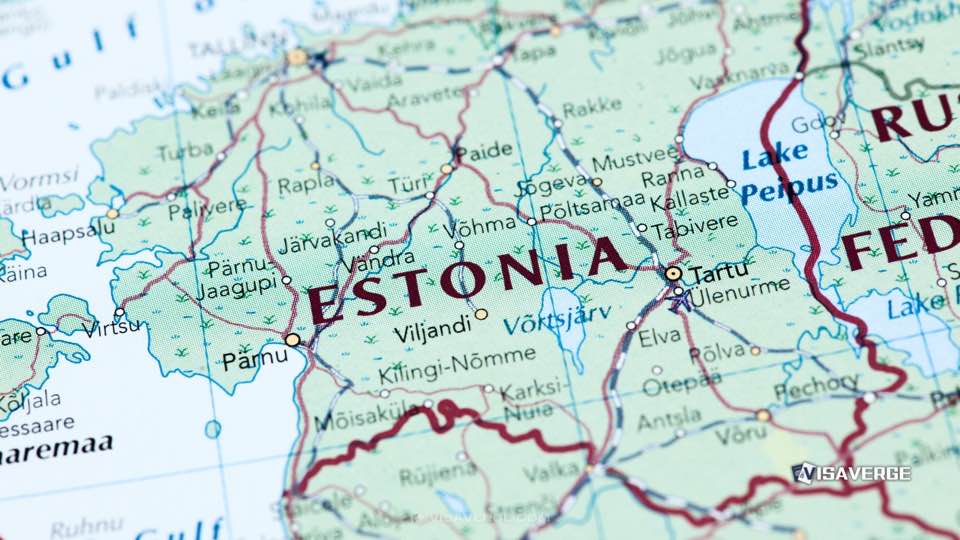
- Estonia strictly forbids visas on arrival for all travelers, requiring all documentation prior to boarding flights.
- The digital Entry and Exit System replaced manual passport stamping at all Estonian borders on April 10, 2026.
- Short-term stays remain capped at ninety days within 180 days across the entire Schengen Area.
Estonia confirmed that it does not offer visa on arrival at any border point, keeping travelers from the United States, United Kingdom, Canada, Australia, Japan and other visa-exempt countries in the same pre-departure lane. Anyone who does not qualify for visa-free entry needs the right visa before boarding. The rule is not a border shortcut. It is a stop sign. For short trips, the country still leans on Schengen rules, which leave no room for last-minute paperwork at the airport.
For tourism, business and family visits, the clock stays capped at 90 days in any 180-day period. That count runs across the Schengen Area, so time spent in one member state eats into time elsewhere. Estonia does not run a separate local timer. It uses the bloc’s common one. A traveler who spends a month in Spain and two months in Estonia has used the same pool. No extra days appear at the border. The calendar is the real gatekeeper.
Passports also need to clear entry checks before anyone reaches passport control. One 2026 guide says travel documents should stay valid for at least three months after the planned departure date from Schengen and have been issued within the last 10 years. That knocks out expired or old documents even when the traveler otherwise qualifies for visa-free entry. The document has to survive the trip. Not just the arrival.
Border control is more digital now. The Entry/Exit System became fully functional at all Estonian and Schengen external borders on April 10, 2026. It replaces manual passport stamping and records a traveler's facial image and four fingerprints. That does not change the stay limit, but it does change how the first contact at the border works. The stamp pad is gone. The scanner is not. Travelers should expect the new system to see them before the old passport ink would have dried.
The Estonian Ministry of Foreign Affairs repeated the warning on July 20, 2026.
"The decision [to enter] happens long before you reach immigration,"
It said airlines will deny boarding to anyone without the correct digital authorization. That warning reaches beyond the airport counter. It starts at check-in. A traveler can lose the trip before the plane leaves the gate. That is the new pressure point.
ETIAS will add a pre-boarding step later
Free toolSchengen Short-Stay Visa CalculatorSeveral 2026 travel guides say visa-exempt visitors will need ETIAS before boarding once it starts. The launch is slated for the last quarter of 2026. One note puts the fee at €20, after an earlier €7 proposal. Another says applicants should file at least 96 hours before travel. The new authorization sits upstream of the flight, not after landing. Dual citizens also need to use the same passport for the application and border entry. That detail matters when one document opens the trip and another sits in the drawer at home. The extra screen is coming. It is not here yet.
A narrow Russia exception still runs on another track
A separate 2026 source says Estonia still keeps restrictions on certain Russian travelers entering through the external Schengen border. Entry is allowed only under specific exceptions, including residence permits, EU citizenship, family-member status and other documented grounds. That is a different lane from the visa-exempt traveler’s path, but it sits in the same border system. The rules do not flatten out for everyone. They remain selective.
Tallinn airport is no exception
If a traveler shows up expecting a border visa, Tallinn airport will not provide one. Neither will any other Estonian border point. The correct passport still comes first, the Schengen count comes second and the coming pre-travel authorization comes third. That order does not change because a flight is late or an itinerary is tight. Estonia’s answer stays the same at the checkpoint. No visa on arrival.
A separate 2026 source says Russian travelers who do qualify for entry still need one of the listed exceptions, including residence permits, EU citizenship, family-member status or other documented grounds. The border stays narrow.