- David Streever sued ICE and DHS for alleged retaliation following a critical political email sent in early 2026.
- The lawsuit claims agents tracked his location and visited his home to deliver warnings while he was abroad.
- Advocates argue the government is punishing protected political speech by mislabeling hyperbole as a criminal threat.
(NEW YORK, USA) – A New York man, David Streever, filed a July 6, 2026 lawsuit in the U.S. District Court for the District of Columbia.
The suit alleges ICE and DHS retaliated against him for a critical email by sending agents to his home, tracking him after his return to the United States, and delivering a warning to his wife.

Streever, a U.S. citizen from Rochester, New York, named DHS Secretary Markwayne Mullin and former acting ICE director Todd Lyons as defendants.
Free toolI-94 Expiration Calculator OnlineThe suit says federal officials violated the First Amendment after he sent a sharply worded political message on January 26, 2026.
His complaint ties the dispute to immigration enforcement in Minneapolis, where he criticized actions linked to Operation Metro Surge.
Lawyers for Streever say the government treated protected political speech as a threat.
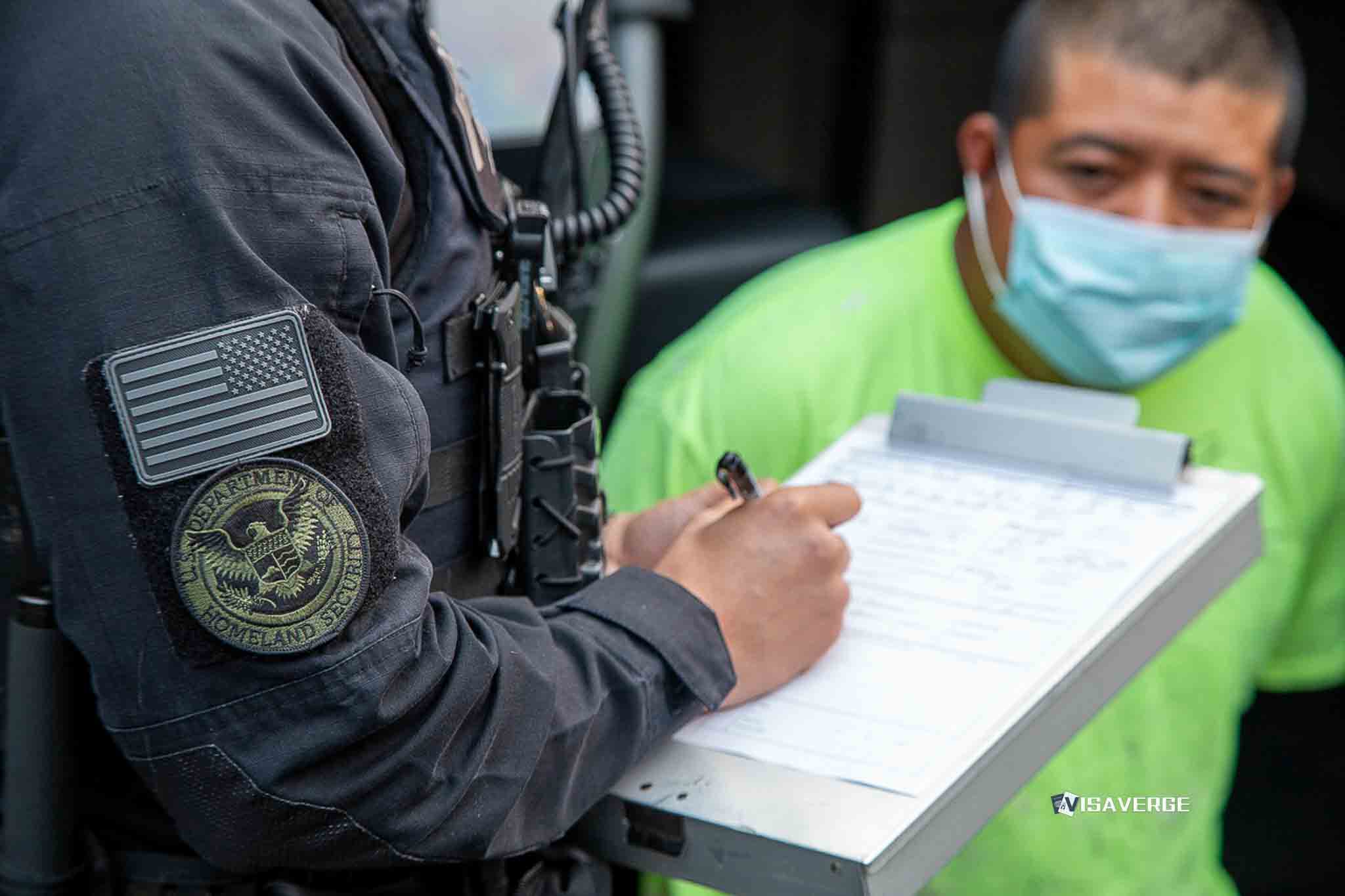
June brought the first face-to-face contact alleged in the suit. While Streever was in Finland, two HSI (Homeland Security Investigations) agents went to his home in Rochester and left a warning notice with his wife, the complaint says.
After he returned to the United States, the suit alleges, agents tracked him to a hotel in New York City, left voicemails, and tried to obtain a signed acknowledgment stating that his email could be treated as a federal crime.
The complaint says that sequence amounted to retaliation, not a legitimate law enforcement response.
FIRE (Foundation for Individual Rights and Expression), which represents Streever, argues the email was political hyperbole aimed at public officials and federal policy.
Its filing says the message did not amount to a true threat, a legal category with far less constitutional protection.
| Date | Event | Participants/Entities | Location |
|---|---|---|---|
| May 12, 2025 | Leaked Home Entry Memo reportedly issued | ICE; DHS | United States |
| January 26, 2026 | Critical email sent to Todd Lyons | David Streever; Todd Lyons | Rochester, New York |
| June 2026 | HSI agents visit Streever’s home and deliver warning notice to his wife | HSI agents; Streever’s wife | Rochester, New York |
| June 2026 | Agents allegedly track Streever to hotel and leave voicemails | Federal agents; David Streever | New York City |
| July 6, 2026 | Lawsuit filed in federal court | David Streever; DHS; ICE; Markwayne Mullin; Todd Lyons | District of Columbia |
Streever’s email, as described in the complaint, criticized immigration enforcement in Minneapolis in severe personal terms.
The filing says the message was sent to Lyons during public anger over Operation Metro Surge, a federal crackdown in the Twin Cities that drew protests and civil liberties criticism.
DHS rejected the allegation that the Department of Homeland Security was punishing dissent. In a July 6, 2026 statement, the department said: “Any allegation DHS and its components are attempting to ‘squash’ free speech is categorically FALSE. Anyone who assaults or threatens our law enforcement officers will face the consequences.”
ICE declined to discuss the warning notice and related actions, citing an ongoing investigation.
Mullin’s statement framed the matter as one involving threats against officers, while Streever’s suit says the government is recasting political criticism as criminal conduct.
⚠️ Note to readers: this case involves sensitive First Amendment issues and ongoing investigation; quotes reflect official statements as of publication.
✅ What readers should monitor: any forthcoming court filings, official DHS/ICE statements, and potential policy clarifications on limits to government inquiries into political speech.
FIRE’s complaint asks the court to block any further action against Streever tied to the email and to declare the alleged surveillance and warning unconstitutional.
The group says federal agents cannot use home visits, location tracking, and repeated contact to chill criticism of public officials.
That claim rests on a familiar constitutional line. The First Amendment generally protects harsh, insulting, and even extreme political expression unless the government can show a true threat or another narrow exception recognized by courts.
| Party/Entity | Role | Claim or Statement |
|---|---|---|
| David Streever | Plaintiff; U.S. citizen from Rochester, New York | Alleges ICE and DHS retaliated against him for a January 26, 2026 email |
| Markwayne Mullin | DHS Secretary; defendant | DHS said allegations of suppressing speech are “categorically FALSE” |
| Todd Lyons | Former acting ICE director; defendant | Received the email at issue in the lawsuit |
| FIRE (Foundation for Individual Rights and Expression) | Legal counsel for Streever | Argues the email was protected political speech, not a true threat |
| ICE | Federal immigration enforcement agency | Declined comment due to an ongoing investigation |
| HSI (Homeland Security Investigations) | Investigative arm involved in home visit | Agents allegedly delivered warning notice in June 2026 |
The case arrives amid broader scrutiny of DHS and ICE enforcement methods.
Operation Metro Surge became a flashpoint in part because it coincided with reports of more aggressive arrest tactics and wider use of administrative authority during immigration operations.
Streever’s complaint also lands after circulation of the so-called Home Entry Memo, dated May 12, 2025.
That leaked document reportedly authorized entries into homes using administrative paperwork, including Form I-205, rather than a judicial warrant, a practice that drew criticism from civil liberties advocates and immigration lawyers.
No claim in Streever’s suit turns on an entry into his home under that memo. Still, the memo’s existence gives the dispute a wider frame inside DHS and ICE policy debates, especially where internal enforcement guidance and civilian rights intersect.
The complaint may test how far federal immigration agencies can go when a U.S. citizen sends hostile political speech to agency leadership.
A home visit, warnings relayed through a spouse, and alleged location tracking raise separate privacy concerns even before a court reaches the First Amendment claim.
Government agencies often have latitude to investigate threats. That authority does not erase constitutional limits, and the court may focus on whether officials had a factual basis to treat the email as criminal rather than political.
Future filings may clarify what records, instructions, and internal communications led to the June 2026 contact and the later attempts to secure a signed acknowledgment.
Those details may shape how the case is viewed inside broader debates over ICE, the Department of Homeland Security, and retaliation claims tied to speech about immigration enforcement.
This article involves legal claims and ongoing investigations; language should be precise and cautious.
Information reflects statements from plaintiffs, defendants, and official sources; do not imply established fact beyond sources.