- President Trump nominated Lance Schroyer as the first Senate-confirmed ICE Director in nearly ten years.
- Schroyer brings twenty-nine years of experience as a former Oklahoma State Trooper and U.S. Marine.
- The nomination emphasizes expanding two eighty-seven gee partnerships between federal immigration authorities and local law enforcement.
(UNITED STATES) — President Donald Trump announced the nomination of Lance Schroyer as Director of U.S. Immigration and Customs Enforcement on June 27, 2026. A former Oklahoma State Trooper and U.S. Marine, Schroyer brings 29 years of operational experience to the role.
ICE has cycled through acting and interim leadership for nearly a decade. The nomination signals the administration’s intent to deepen integration between federal immigration authorities and local police departments nationwide.
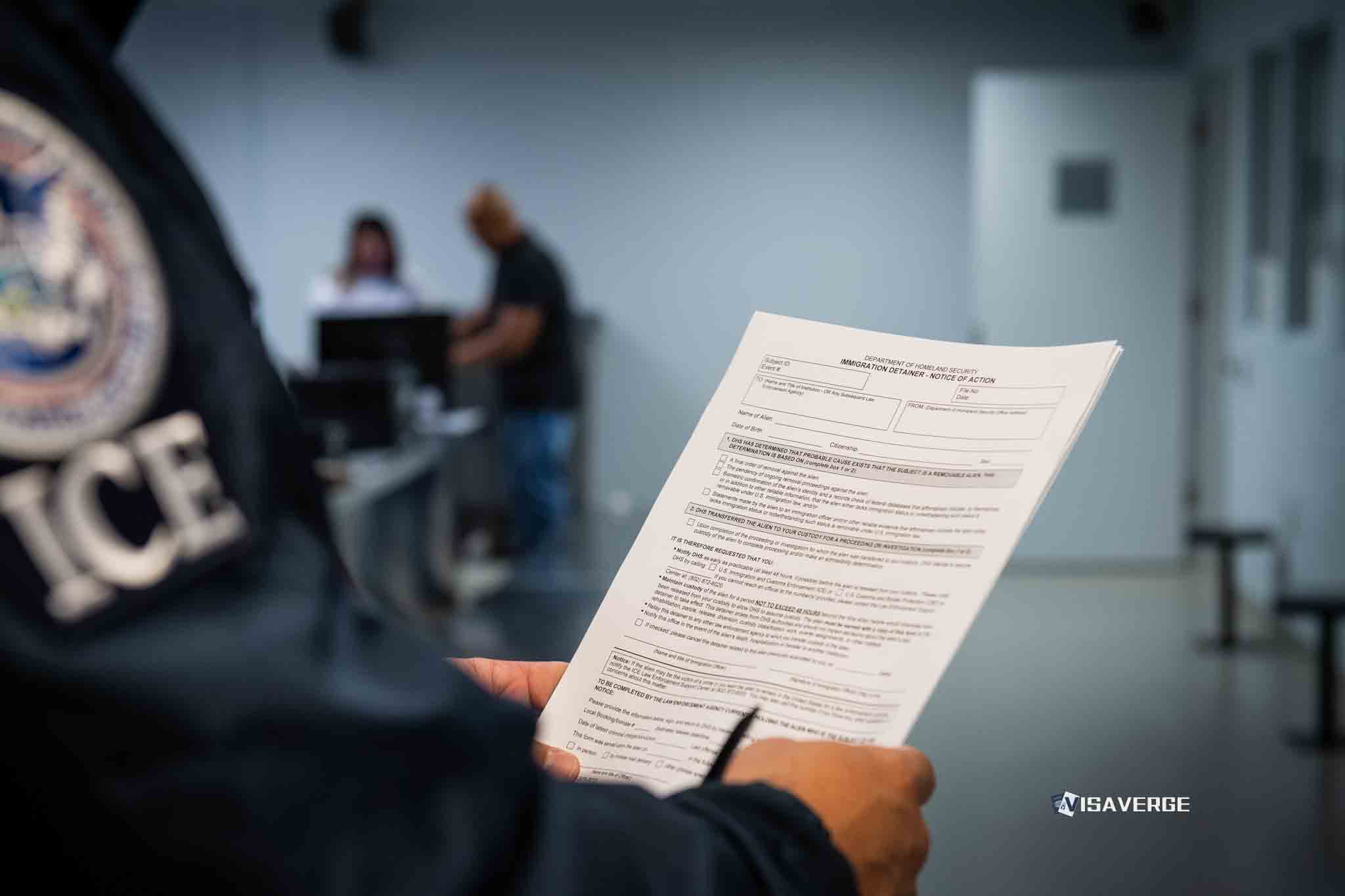
Schroyer rose through the ranks of the Oklahoma Department of Public Safety, ultimately serving as Major and leading its Emergency Services Unit. His career has centered on interagency coordination, a skill set the administration views as essential to scaling its deportation agenda.
Free toolI-94 Expiration Calculator OnlineSince March 2026, he has served as Senior Advisor to the Secretary of Homeland Security. In that capacity, he acted as a liaison between local, regional, and federal law enforcement agencies.
Statements from the Administration
Trump announced the nomination on Truth Social, praising Schroyer’s operational record. “Lance is a former Oklahoma State Trooper, and United States Marine,” the president wrote. “He is a PATRIOT with real operational experience, and proven leader with DECADES of experience locking up the worst of the worst, including spearheading 287g Law Enforcement partnerships with ICE!”
The emphasis on 287(g) partnerships placed the program at the center of the nomination’s stated rationale. DHS Secretary Markwayne Mullin echoed that framing in an official press release the same day.
“With over 29 years of law enforcement experience, Lance will play a vital role in helping deliver on the President’s mandate from the American people to target, arrest, and deport illegal aliens,” Mullin said. He expressed confidence that Schroyer’s leadership would “empower the men and women of ICE to deport criminal illegal aliens, secure the homeland, and protect the American people.”
Leadership Gap and Program Expertise
If confirmed, Schroyer would become the first Senate-confirmed ICE director since early 2017. He would succeed interim director David Venturella, who took over after acting director Todd Lyons resigned in May 2026. The leadership gap spanning nearly a decade has meant ICE operated under successive temporary appointments.
Both enforcement advocates and agency oversight bodies have criticized that arrangement, arguing it undermines accountability and long-term strategic planning. A confirmed director would have institutional authority that acting officials lack, including clearer standing in interagency negotiations and congressional appropriations discussions.
Schroyer’s specialization in the 287(g) program aligns directly with the administration’s enforcement strategy. Section 287(g) of the Immigration and Nationality Act allows ICE to delegate federal immigration enforcement authority to state and local officers.
Participating departments enter formal agreements, and trained officers operate under ICE supervision during enforcement activities. The mechanism extends federal immigration enforcement into routine local policing, including traffic stops and jail intake processing. Under these agreements, local officers effectively serve as an extension of federal immigration authority.
| Metric | Starting Point | As of June 2026 | Notes |
|---|---|---|---|
| Participating 287(g) agencies | 135 | 2,033 | Fifteenfold increase during current term |
| States covered | 16 | 39 | More than doubled |
| New officer hiring | Pre-appropriation baseline | 12,000 | Funded by $75 billion appropriation |
| Detention capacity | Pre-expansion baseline | Expanded | Funded by same appropriation |
Expansion and Funding
The 287(g) program has grown dramatically under the current administration. At the start of the term, 135 participating agencies across 16 states were enrolled. As of late June 2026, that number reached 2,033 agencies covering 39 states.
The expansion represents a fifteenfold increase in participating jurisdictions. Schroyer’s nomination reflects a strategic decision to place someone with direct 287(g) experience at the helm of the agency responsible for managing those partnerships.
Funding for the expansion comes from a $75 billion appropriation approved the previous year. Those funds have supported the hiring of 12,000 new officers and a large increase in detention capacity.
The combination of expanded local partnerships, additional personnel, and greater detention infrastructure forms the operational backbone of the administration’s deportation agenda. Schroyer’s interagency experience positions him to coordinate these resources across federal, state, and local levels simultaneously.
Enforcement Impact and Civil Rights Concerns
Expanded 287(g) partnerships mean individuals may encounter immigration enforcement during routine interactions with local police. Traffic stops, jail bookings, and other standard law enforcement activities can trigger immigration status checks under these agreements.
The administration states its priority remains individuals with criminal records, describing them as “the worst of the worst.” Enforcement under 287(g) agreements typically occurs during bookings at local jails and through dedicated officer deployments rather than neighborhood sweeps.
⚠️ Human rights advocates have raised concerns about the 287(g) program’s rapid expansion, citing risks of civil rights violations, insufficient training for local officers performing federal duties, and increased tensions in communities with high immigrant populations.
Civil rights organizations have questioned whether local officers receive adequate training for federal immigration duties. Community groups in areas with high immigrant populations report increased fear of contacting police, even for emergency assistance.
Civil rights organizations have documented instances of racial profiling and due process concerns in jurisdictions that previously operated under 287(g) agreements. The debate reflects a tension between federal enforcement priorities and community policing models that depend on trust between residents and local law enforcement.
Several jurisdictions withdrew from 287(g) agreements in past years, citing these concerns.
Official Government Sources
Official information about the nomination and 287(g) program is available through government channels. The DHS press release dated June 27, 2026 provides Secretary Mullin’s full statement on the nomination. The ICE official website offers current data on participating agencies and program operations.
✅ Readers seeking official statements should consult the DHS Press Release (dhs.gov/news/2026/06/27/secretary-mullin-praises-president-trumps-nominee-director-immigration-and) and the ICE official site (ice.gov).
This article discusses ongoing government personnel decisions and enforcement policies. Readers should consider potential legal and civil rights implications and consult official sources for the latest information.