

(MCCOOK, NEBRASKA) — ACLU of Nebraska filed a lawsuit on January 26, 2026, challenging an ICE policy that denies bond hearings by labeling nearly all detained immigrants as mandatorily detained.
Section 1: Case background and parties
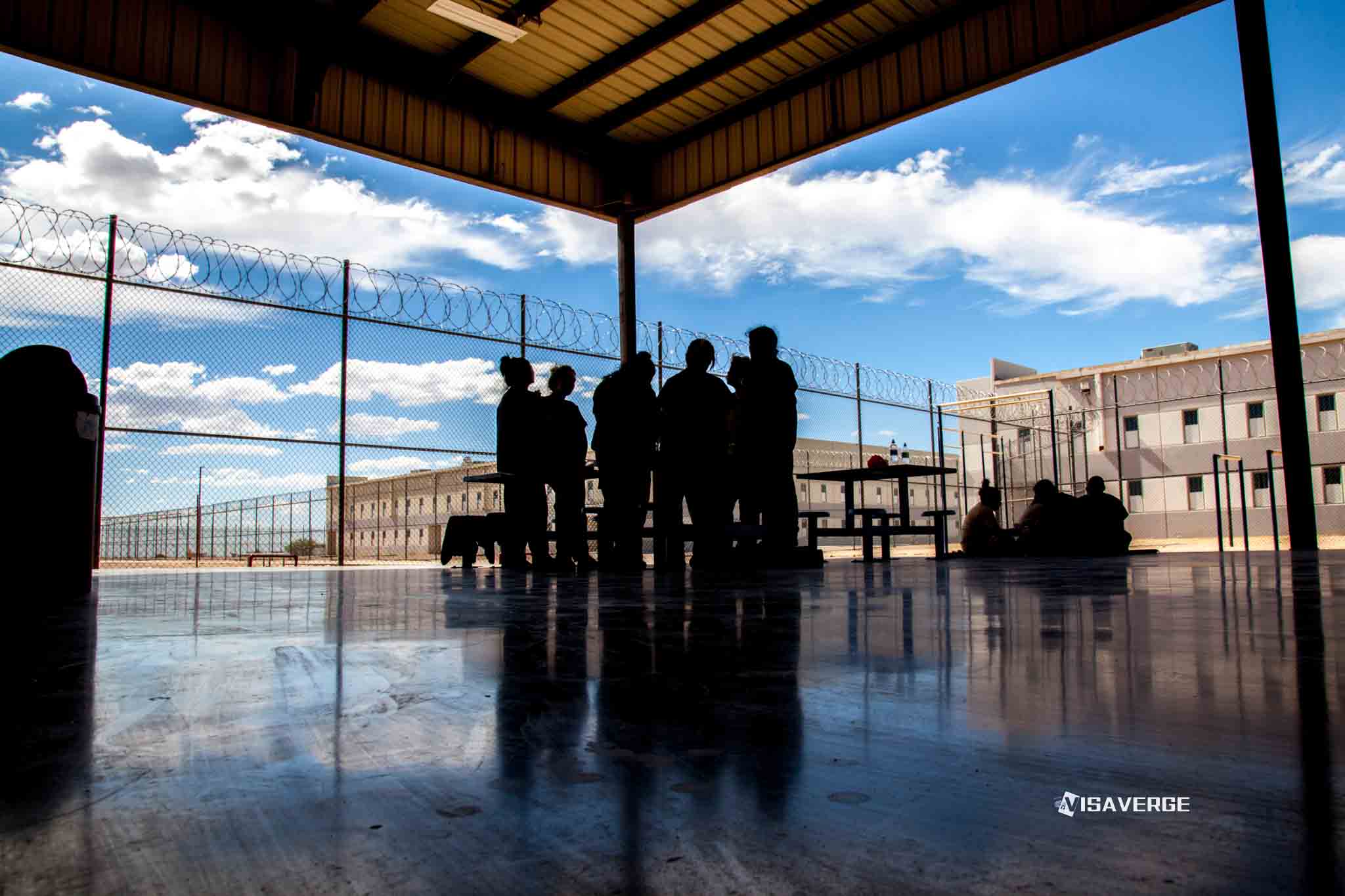
Carlos Chang, a Guatemalan citizen, is the named plaintiff. ICE is detaining him in McCook, Nebraska.
He has lived in the United States for over 20 years, since 2005, and his lawsuit centers on whether he can ask an immigration judge for release on bond while his immigration case proceeds.
ACLU of Nebraska brought the case against federal and state officials in functional roles tied to detention and custody decisions. That includes officials responsible for ICE detention determinations and for implementing positions that affect whether an immigration judge can hold a bond hearing.
The core allegation is straightforward: the government treated Chang as subject to mandatory detention and used that label to block a bond hearing.
Mandatory detention is not a separate “charge.” It is a custody category. When ICE claims a person is in mandatory detention, the agency position is typically that the person cannot get a bond hearing at all.
That means no immigration judge weighs flight risk or danger in a custody hearing, even if the person has deep ties in the United States.
Section 2: Policy context and legal framework
July 2025 marked the turning point for many detainees. DHS and DOJ issued interim guidance that reclassified undocumented immigrants encountered after residing in the U.S. for over two years as “arriving aliens.”
That label usually applies to people seeking admission at the border or a port of entry. In bond practice, it matters because “arriving alien” classification has often been used to argue that immigration judges lack authority to conduct bond hearings, or that bond is barred under a mandatory detention reading.
Under the Immigration and Nationality Act (INA), bond authority and custody rules depend on statutory categories and procedural posture. In many cases, a person placed in removal proceedings can request a bond hearing before an immigration judge.
ICE may oppose release, but the judge can still assess evidence and set bond. Mandatory detention, by contrast, is treated as a no-bond rule for covered categories. The practical result is immediate: detention continues without a bond hearing, even when the underlying removal case may take months.
In Fall 2025, the Board of Immigration Appeals (BIA) issued a decision that expanded the interpretation of mandatory detention nationwide in a way that aligned with the interim guidance. Because the BIA is the highest administrative tribunal for immigration cases, its interpretations shape what immigration judges do in day-to-day custody disputes.
Many detainees felt the change fast. Bond windows closed. Court orders have cut the other direction, creating a conflict between agency practice and federal rulings.
A California federal court issued a final judgment in late 2025 for a nationwide class-action case brought by the ACLU (national), ACLU of Southern California, Northwest Immigrant Rights Project, and USC Gould School of Law Immigration Clinic.
That judgment affirmed bond rights for the nationwide class and vacated the DHS memo tied to the policy shift. Even so, immigration judges have continued to deny bond hearings in many cases.
Earlier this month, the top immigration court official instructed judges to disregard the class-action order. That instruction sits at the center of the current dispute.
The lawsuit argues that people detained inside the country cannot be swept into a no-bond category through a labeling approach that contradicts the INA and a nationwide federal court order.
For readers trying to place themselves in this issue, the people most affected tend to share a few traits. Many have long residence in the United States, many were arrested well inside the country, not at a border, and many face detention decisions that turn on how ICE classifies them, not on an individualized custody assessment.
Section 3: Timeline of events leading to the suit
December 2025 is when Chang’s detention began, in Des Moines, Iowa. ICE later transferred him to the facility in McCook, Nebraska.
Transfers matter in practice. They can change which immigration court handles hearings and can shift which federal district court becomes the venue for emergency litigation over detention.
January 26, 2026, is the filing date for the new ACLU of Nebraska case. It is also the organization’s fourth lawsuit in the same dispute area.
In the three prior Nebraska cases, judges ordered ICE to accept bonds and release clients despite initial denials. Those earlier results did not end the conflict, but they did show how quickly the legal question can reach federal court once ICE blocks a bond hearing.
Chang’s lawsuit ties that local history to the national class-action posture. The suit claims the government is continuing a practice federal courts have already declared unlawful, and that people like Chang are being kept in custody without the hearing Congress contemplated.
Section 4: Relief sought and key statements
Chang is asking the court for one of two outcomes: immediate release, or a bond hearing within seven days. Each form of relief has a different practical effect.
Immediate release would end detention without waiting for immigration court to schedule a custody hearing. A bond hearing, by contrast, would put the question to an immigration judge.
The judge could deny release, set bond at an amount the judge finds appropriate, or impose conditions where permitted. Either way, a hearing forces an individualized custody decision. Time is the point; detention without a hearing can last weeks or months.
“Courts have clearly and repeatedly stated that immigration officials cannot wholesale deny people the right to seek release on bond if they are detained within our country. At its most basic level, this is about ensuring the rule of law and protecting a fundamental right.”
This statement was made by ACLU Staff Attorney Grant Friedman, framing the request as an enforcement question as much as a rights question.
Chang, speaking through a Spanish interpreter, described his detention as unjust and said he hopes to be free. His statement matches what drives many bond disputes: detention separates families and interrupts work, housing, and medical care.
| Relief sought | Practical meaning | Timing considerations |
|---|---|---|
| Immediate release | Detention ends without a custody hearing, subject to any court-ordered conditions | Fastest path if granted; can occur as soon as the court issues an order |
| Bond hearing | An immigration judge holds a custody hearing and decides whether release is allowed and on what terms | Chang requests a hearing within seven days; scheduling and agency compliance can affect speed |
The lawsuit asks for release or a bond hearing within seven days. Watch for a court order adopting that timeline, and then for DHS/DOJ and ICE responses that show whether the agency will comply promptly or keep disputing bond authority.
Section 5: Broader impact in Nebraska
Since last summer, 30 similar lawsuits have been filed in the District of Nebraska. They have been spread across all five federal judges.
Results have varied. Many detainees have been released after rulings that found unconstitutional detention. Some decisions have sided with ICE. That split matters for expectations: a person’s custody fate may turn on how a judge reads the INA, the effect of the nationwide class-action judgment, and the weight given to BIA interpretations.
Earlier ACLU of Nebraska cases also reflect how detention fights connect to family separation. Prior litigation included cases involving separations tied to an Omaha ICE raid, and those cases resulted in releases.
Those outcomes form part of the backdrop for Chang’s lawsuit, even though his detention began in Des Moines, Iowa and later moved to McCook, Nebraska. The Nebraska split does not resolve the national questions and continues to produce varied judicial outcomes.
For readers who want to look up the governing law, the INA’s immigration provisions are commonly referenced through the U.S. Code, including at https://www.law.cornell.edu/uscode/text/8. Federal government litigation positions and announcements may also appear through DOJ channels, including https://www.justice.gov.
Those references do not resolve the Nebraska split by themselves. They help explain why fights about “mandatory detention” often come down to statutory interpretation plus compliance with federal court orders.
Section 6: National context and judiciary responses
Nebraska is not isolated. Nationally, over 220 judges in hundreds of cases have rejected the policy as contrary to the INA and due process. Yet thousands remain detained without hearings.
That gap between rulings and real-world custody conditions is a central feature of the current moment. Implementation lags can happen for several reasons: agencies may interpret a decision narrowly, treat class-wide orders as nonbinding in individual immigration courtrooms, or rely on conflicting instructions.
The recent instruction for judges to disregard the class-action order illustrates that tension in direct terms. Procedurally, the next steps usually come in concrete documents, not rhetoric.
Readers can watch for court orders setting deadlines, agency filings explaining why ICE believes mandatory detention applies, and any direction on whether immigration judges must provide bond hearings despite “arriving alien” classifications. Each of those steps shapes whether bond hearings become routine again for long-term residents arrested inside the United States.
This case, at its core, asks whether ICE can turn a broad swath of detainees into “mandatory detention” cases through classification, even after a nationwide federal judgment rejected that approach. The answer will affect who gets a bond hearing at all.
This article discusses ongoing legal proceedings and immigration policy. Readers should consult qualified legal counsel for personalized advice.
Legal standards and agency actions are subject to change pending court rulings and new guidance.


