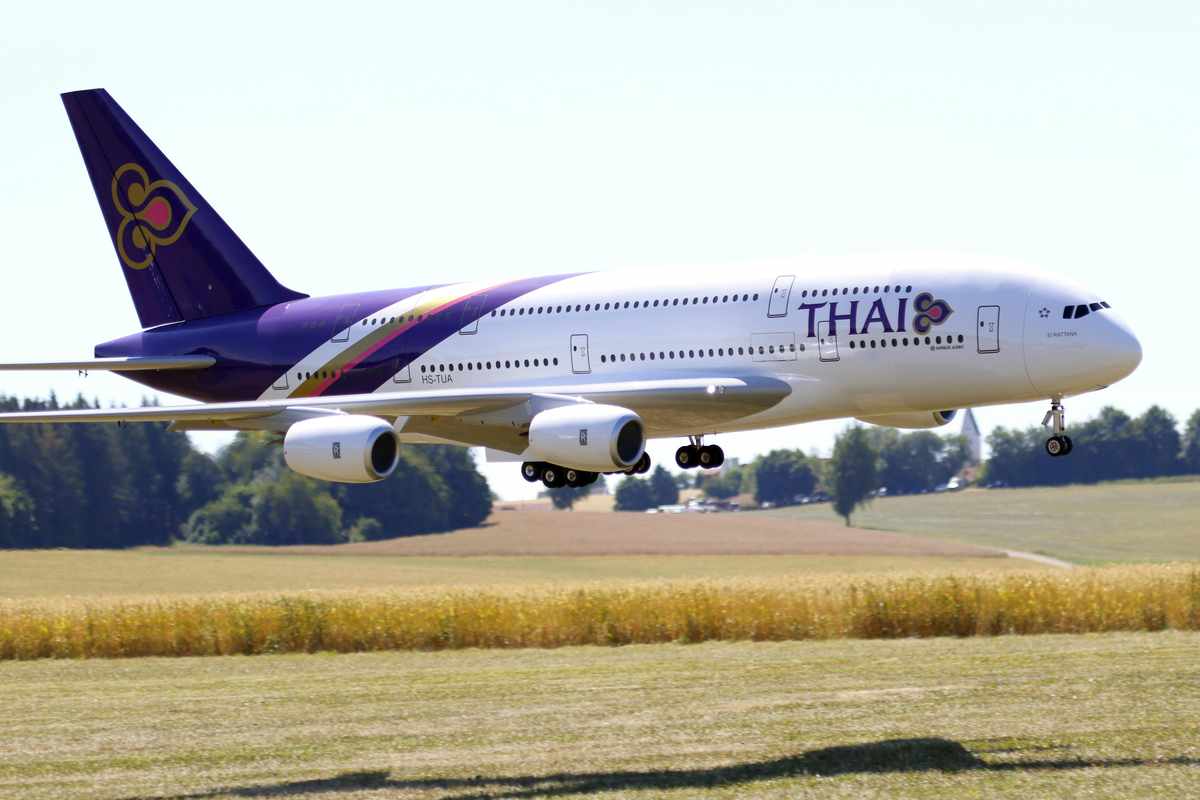
- Thai Airways cut dozens of flights across North Asia and Europe due to high fuel costs in May 2026.
- Major hubs like Seoul and Beijing saw significant frequency reductions, impacting daily travel options and connection stability.
- Travelers must choose between premium full-service comfort on Thai Airways or lower-cost, less flexible budget carrier alternatives.
(THAILAND) — Thai Airways is the better bet if you need a premium long-haul seat and can live with fewer frequencies; Thai Lion Air, Nok Air, Thai AirAsia, and Thai AirAsia X may be the fallback if schedule flexibility matters more than a full-service experience. The catch is simple: May’s fuel crisis forced cuts across Thailand’s skies, so your best option now depends on whether you value schedule choice, connections, or a smoother cabin.
Thai Airways trimmed dozens of flights in May 2026 instead of removing thousands of seats outright. The steepest cuts hit North Asia and a handful of European routes, where higher fuel costs and softer demand squeezed margins. That left fewer daily departures on some of the airline’s most useful business and leisure corridors.

The reductions were not evenly spread. Seoul, Beijing, Shanghai, Tokyo, Taipei, and Hong Kong all saw lower frequencies. Kaohsiung was suspended for part of the month. Frankfurt, Munich, Copenhagen, and Stockholm also lost daily service and dropped to 5 flights a week.
That matters because Thai Airways has long sold itself as the network carrier with the most convenient one-stop links through Bangkok. Fewer departures mean tighter connection banks, less backup when delays hit, and fewer same-day options if your plans change.
The timing also affects frequent flyers. Fewer flights usually mean tighter award inventory and fewer upgrade chances on the routes that stay open. If you are using Royal Orchid Plus or booking on a partner ticket, schedule changes can force reroutes or rebooking well before departure.
Here is the clearest side-by-side comparison of the May 2026 picture.
| Carrier | May 2026 pattern | Network effect | Best fit |
|---|---|---|---|
| Thai Airways | Dozens of cuts, with reduced North Asia and European frequencies | Fewer daily options, but full-service long-haul remains | Travelers who want premium cabins and through-ticketing |
| Thai Lion Air | Also suspended or reduced some routes | Lower-cost backup on selected markets | Price-sensitive travelers |
| Nok Air | Also suspended or reduced some routes | Regional fallback with fewer international links | Domestic and short-haul travelers |
| Thai AirAsia | Also suspended or reduced some routes | Budget network still broad, but less stable | Travelers chasing low fares |
| Thai AirAsia X | Also suspended or reduced some routes | Long-haul low-cost options became thinner | Travelers who can trade comfort for price |
The biggest Thai Airways cuts landed in North Asia. Seoul Incheon went from 3 daily flights to 1 daily flight from May 8 to May 31. Beijing and Shanghai dropped from 2 daily flights to 1 daily flight for most of May. Tokyo Narita fell from 3 daily flights to 2 daily flights.
Taipei also lost one daily departure, moving from 3 daily services to 2 daily services. Hong Kong dropped from 4 daily flights to 3 daily flights. Kaohsiung was suspended entirely from May 8 to May 31.
Those cuts make a real difference if you travel on business routes where schedule choice matters more than fare alone. A reduction from three or four daily flights to one or two leaves fewer options for same-day return trips and tighter connections through Bangkok.
The European network also shifted. Frankfurt, Munich, Copenhagen, and Stockholm were cut to 5 flights a week, down from daily service. That is a smaller frequency pool for travelers heading to Germany, Scandinavia, or beyond, especially if they connect onward from Bangkok.
Thai Airways President Chai Eamsiri described the period as one of careful cost management. The airline has delayed non-essential investment and tightened spending to preserve liquidity. Fuel costs and lower demand were named as the main pressures behind the changes.
That financial caution is not unusual in a fuel shock, but it does change how travelers should read the schedule. Daily frequencies are often the first thing to go when airlines protect cash. Once a route is trimmed, award space, connection convenience, and reaccommodation options usually shrink with it.
The wider Thai market felt the same squeeze. Thai Lion Air, Nok Air, Thai AirAsia, and Thai AirAsia X also suspended or reduced routes to South Korea, China, India, and Japan. The cuts show that this was not a single-airline issue. It was an industry response to a more expensive operating environment.
That creates a useful comparison for travelers deciding where to book. Thai Airways still offers the stronger long-haul network, better for one-ticket itineraries and premium cabins. The low-cost carriers can be cheaper, but they usually give up flexibility, baggage inclusion, and schedule depth when markets weaken.
| Factor | Thai Airways | Thai Lion Air / Nok Air / Thai AirAsia / Thai AirAsia X |
|---|---|---|
| Cabin experience | Full-service, better for long-haul comfort | Budget-oriented, fewer extras |
| Schedule depth | Reduced, but still stronger on major hubs | Also reduced on several Asia routes |
| Miles and points | Better for elite credit and award planning | Usually less rewarding, especially on lowest fares |
| Rebooking options | Stronger on through-tickets and interline-style itineraries | More limited when disruptions hit |
| Best value | Premium travel and complex itineraries | Lowest upfront fare |
Miles and points are part of the calculation too. Thai Airways cuts on high-demand routes can make award seats harder to find, especially in business class. When an airline trims frequencies, the number of seats available for redemption usually tightens as well.
That is especially relevant on Bangkok-to-Europe itineraries, where travelers often target one-stop premium awards. Fewer flights on Frankfurt, Munich, Copenhagen, and Stockholm reduce the number of dates that fit cleanly into award searches. If you are sitting on transferable points, flexibility matters more than ever.
Travelers who need South Korea, China, or Japan should watch for schedule changes through the rest of the year. The May cuts were tied to higher fuel costs and softer demand, but those pressures do not disappear quickly. Airlines often rebuild service only after costs stabilize and bookings firm up.
The practical move is to check your booking before you buy, not after. If Thai Airways has shifted your route from daily to less frequent service, compare alternatives on the same city pair, then look at connection times through Bangkok. A cheaper fare is not a bargain if it leaves you with a six-hour airport wait or an overnight layover.
Choose Thai Airways if you need a one-ticket long-haul itinerary, a better cabin, or a stronger shot at mileage credit. Choose a low-cost Thai carrier if your priority is the lowest cash fare and you can tolerate fewer frills. On the affected North Asia routes, that tradeoff has become sharper because the schedules are thinner on both sides.
The best booking strategy now is to keep one eye on the fare and one on the timetable. If your route touches Seoul, Beijing, Shanghai, Tokyo, Taipei, Hong Kong, or Europe, secure the itinerary that gives you the most backup options now, before another round of fuel-driven changes pushes frequencies even lower.