- France registers non-EU visitors in the biometric Entry/Exit System, fully operational since April 10, 2026, instead of stamping passports.
- ETIAS is not required yet. The EU removed its 2026 launch target in July 2026 and is collecting no applications.
- Your passport must be issued within the last 10 years and valid three months past your planned exit from the Schengen area.
(FRANCE) The French border no longer runs on ink. Since April 10, 2026, every non-EU visitor arriving in France is registered in the EU’s biometric Entry/Exit System (EES), and the passport stamp that used to prove when you arrived has been replaced by a digital record. The paperwork you carry has not changed much. What has changed is that a computer now counts your days for you, and it does not forget.
The second thing to know is what has not happened. ETIAS, the pre-travel authorization that visa-free visitors will eventually need, is still not in force. You cannot apply for it, you do not need it to fly to Paris today, and any website charging you for one right now is selling you nothing.

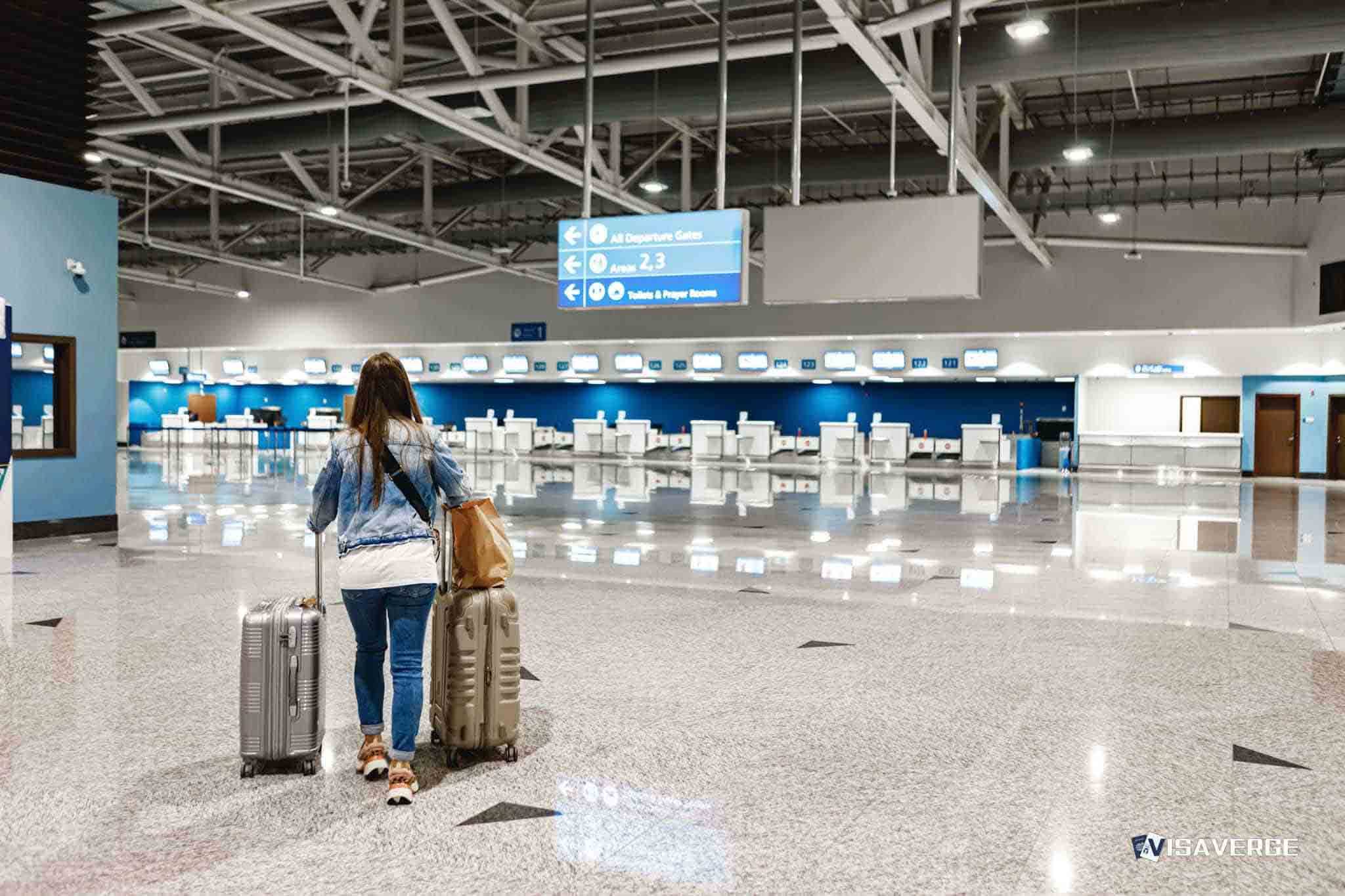
France is the world’s most visited country, and its border officers work fast. At Paris-Charles de Gaulle, Orly, Nice, Lyon and Marseille, the difference between a two-minute clearance and a secondary interview is usually whether you can produce three things without hunting for them: where you are staying, how you are leaving, and how you are paying.
Free toolB1/B2 Tourist Visa Stay Calculator onlineWhat actually changed at the French border
The Entry/Exit System is an EU-wide database that records every entry and exit by a non-EU national making a short stay. France began registering travelers at Paris-Charles de Gaulle and Orly on October 12, 2025, the first day of the phased rollout, and completed the switch on April 10, 2026, when EES became fully operational across all 29 participating countries.
On your first crossing after the switch, officers or a self-service kiosk capture a facial image and four fingerprints, along with your passport data and the date and place of entry. Children under 12 give a facial image but no fingerprints. That first registration takes roughly six minutes. After that, your record is reused, and later crossings are quick.
Your EES record stays valid for three years, so a traveler who registers on a summer 2026 trip will not repeat the full enrolment until 2029. France’s Interior Ministry installed hundreds of pre-registration kiosks to absorb the load, with roughly 320 between Charles de Gaulle and Orly alone, but arrivals halls have still seen 60 to 120 minute waits at peak long-haul banks. Build the time into connections.
EU, EEA and Swiss citizens are exempt from EES, as are nationals of Andorra, Monaco, San Marino and the Holy See, and anyone holding a French or other Schengen residence permit or long-stay visa. If you live in France on a carte de sejour, you keep using your normal lane.
ETIAS: not required, not open, no date
This is where most France travel checklists are now wrong. ETIAS was designed to sit on top of EES: a cheap online screening that visa-free visitors complete before boarding. It has slipped repeatedly, and in mid-July 2026 the EU removed the “last quarter of 2026” target from its official ETIAS page altogether. That page now states plainly that ETIAS is not in operation and that no applications for travel authorizations are being collected.
The EU has committed to announcing the real start date several months before launch, so nobody will be caught out overnight. Reporting on eu-LISA, the agency building the system, points to a revised timeline after its September 2026 board meeting and a launch in 2027. The EES queues of spring and summer 2026 are the stated reason: regulators are not willing to layer a second new system on top of an unstable one.
When ETIAS does open, the shape of it is already fixed. The fee is 20 euros, tripled from the original 7 euros by a Commission decision in July 2025, and it is free for applicants under 18 and over 70. An approved authorization is valid for three years or until your passport expires, whichever comes first, and covers 30 European countries. There is also a transitional period of at least six months after launch, during which travelers who meet all other entry conditions can still cross without one.
The passport rule that gets people turned away
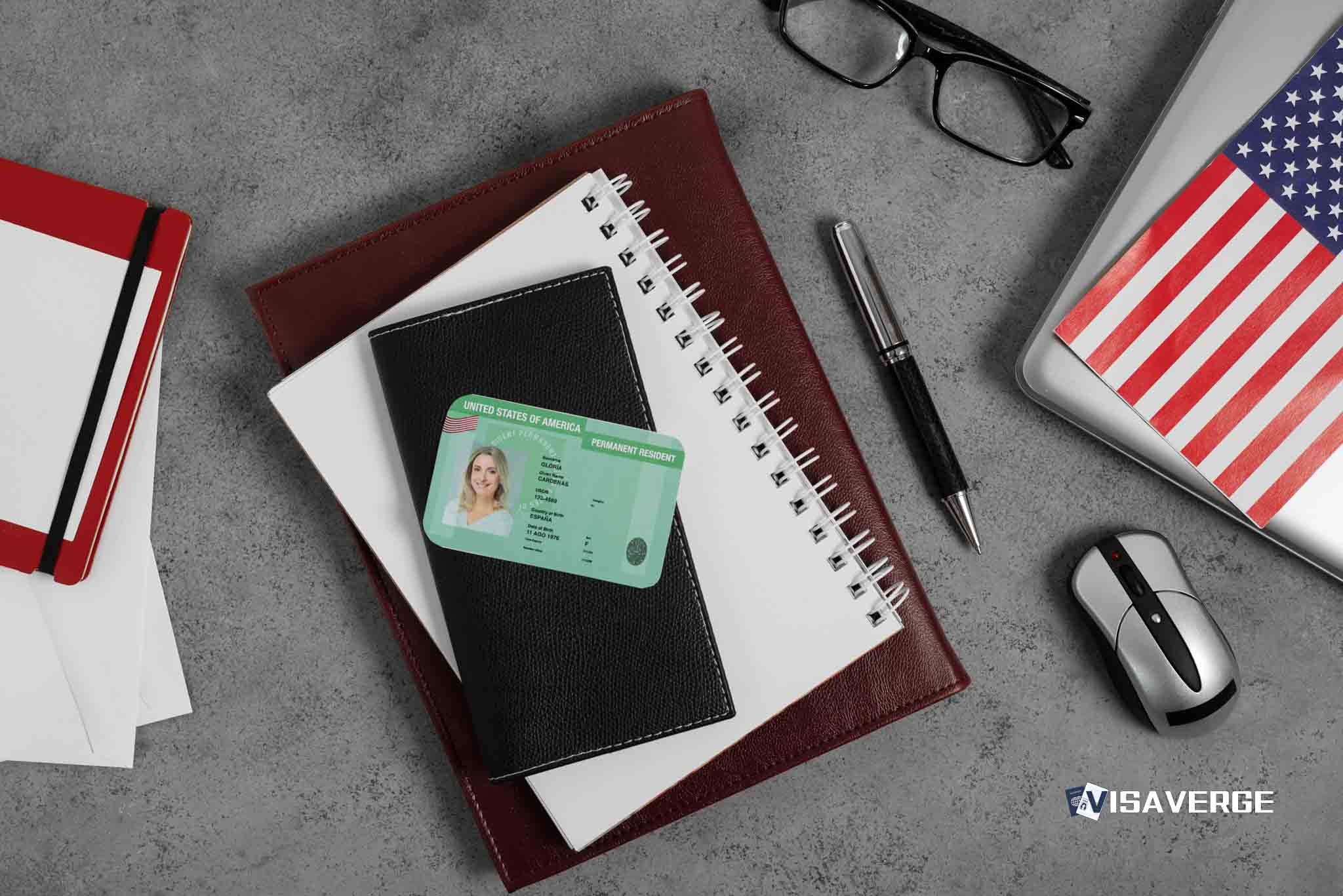
France applies two separate passport tests, and travelers routinely fail the second one without realising it exists. Your passport must have a date of issue less than 10 years before the day you arrive, and an expiry date at least three months after the day you plan to leave the Schengen area. Both conditions have to be true at the same time.
The 10-year test is the trap. Some countries used to add leftover months from an old passport onto a new one, producing a book valid for 10 years and nine months. Those extra months are not recognised for Schengen entry. If your passport was issued more than a decade before your arrival date, it does not matter that it says it expires next year.
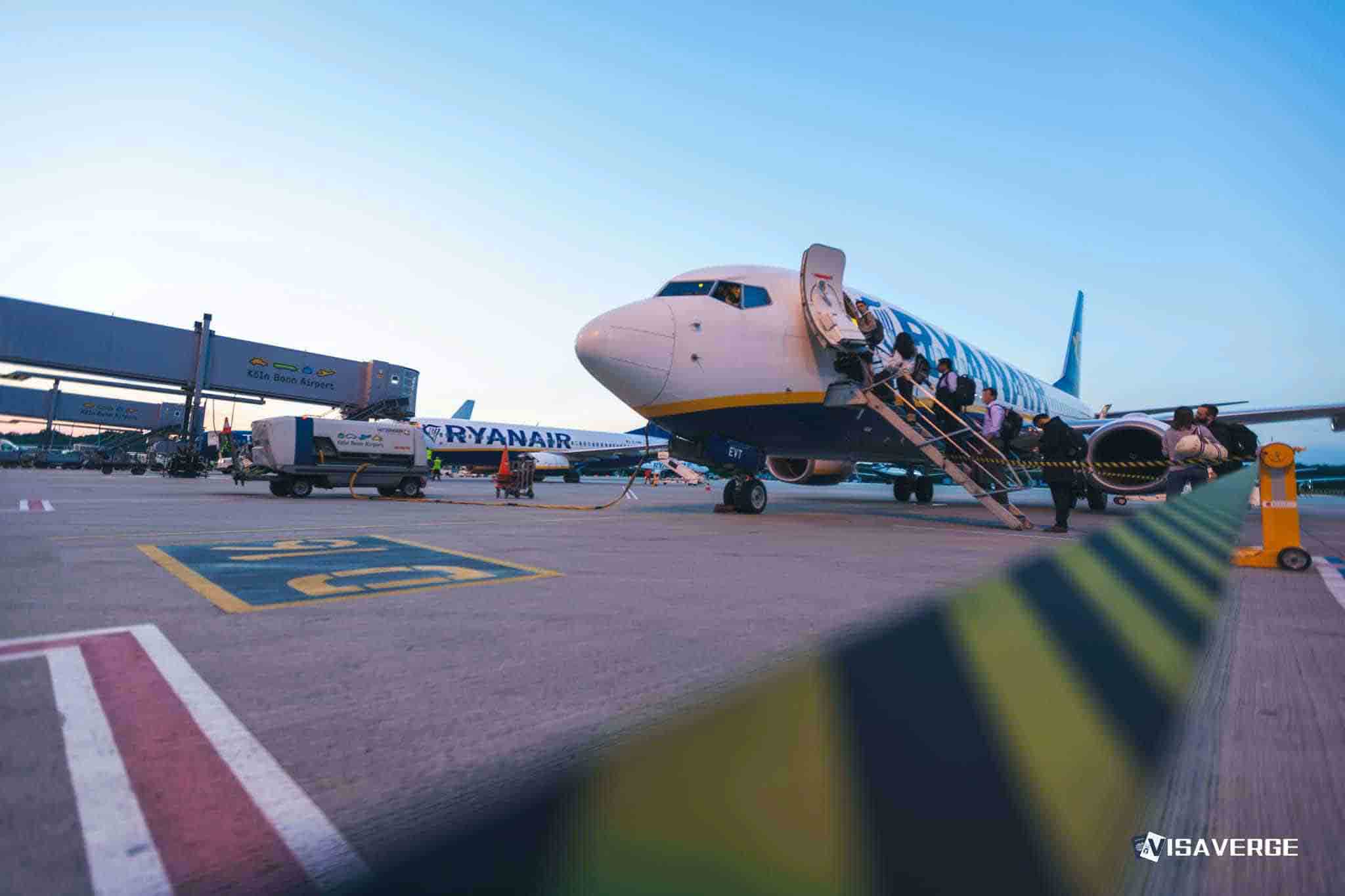
The three-month test is measured against your exit from the whole Schengen area, not from France. If you fly Paris to Rome and home from Rome, the clock runs from the Rome departure. Note that three months is the legal floor, not the airline’s comfort zone: some carriers still enforce a six-month buffer at check-in, and boarding refusals over passport validity have hit passengers on European short-haul routes.
The 90/180 rule, now counted automatically
Visa-free visitors can spend a maximum of 90 days in any rolling 180-day period across the Schengen area. France is one country inside that shared budget. Days in Spain, Italy, Germany, Greece and the other members all draw down the same 90.
Before EES, enforcement depended on an officer reading faded ink. Now the system calculates your balance from your own entry and exit records and flags an overstay the moment you present your passport. Early EES data across the EU showed thousands of travelers refused entry or flagged as overstayers in the first months of operation. The consequences run from a fine to an entry ban recorded in the Schengen Information System.
Count before you book, not after. The European Commission publishes a free short-stay calculator, and our own Schengen short-stay calculator does the same arithmetic on the 180-day window.
Do you need a Schengen visa for France?
Two groups, one border. Citizens of the United States, United Kingdom, Canada, Australia, New Zealand, Japan, South Korea, Brazil, Mexico, Argentina and most of Latin America enter France without a visa for short stays. EU, EEA and Swiss citizens enter on a national ID card or passport with no stay limit.
Everyone else needs a Type C short-stay Schengen visa before travel, applied for at the French consulate or an authorised visa centre in the country where you live. That includes citizens of India, China, Nigeria, Pakistan, Egypt, Algeria, Morocco and South Africa, among others. The Schengen rules hub tracks changes by nationality.
The visa file is standard: form Cerfa no. 14076*01 completed through the France-Visas portal, three standardised photos, a passport meeting the 10-year and three-month tests, travel and accommodation proof, insurance, proof of funds, and a guarantee of repatriation. The consular fee is 90 euros for adults and 45 euros for children aged 6 to 11, with under-6s free. That fee has been unchanged since June 2024 and is identical at every Schengen consulate. Service charges at outsourced visa centres are extra.
Apply no earlier than six months before travel and no later than 15 working days before. Standard processing is around 15 calendar days, but summer and holiday peaks stretch that, and Schengen refusal rates for some nationalities remain high enough that a thin file is a real risk.
Money, accommodation, and insurance: the numbers France uses
France publishes exact daily thresholds for proof of sufficient means, and the amount depends entirely on how you prove where you are sleeping. The better your accommodation evidence, the less cash you have to show.
If a hotel booking covers only part of the trip, France applies 65 euros per day for the booked nights and 120 euros per day for the rest. Bank statements, credit cards and a sponsor letter are cleaner evidence than cash, and a stack of banknotes on its own rarely convinces an officer.
Staying with family or friends changes the arithmetic and the paperwork. Your host applies in person at the town hall where they live, signing Cerfa form no. 10798*03 and paying a 30 euro tax stamp. The validated attestation d’accueil is what drops your daily threshold to 32.50 euros. Hosts need to start early: appointments in large cities can take weeks.
Travel insurance is mandatory for Schengen visa applicants, with minimum cover of 30,000 euros for medical and hospital expenses including repatriation. Visa-free visitors are not legally required to hold it, but French border officers can ask, and non-EU visitors are not covered by France’s public health system. EU and EEA travelers use the EHIC card; UK travelers use the GHIC.
Channel crossings, transit, and the overseas departments
Travelers reaching France from the UK cross at juxtaposed controls, where French border police check you before you leave British soil: the Port of Dover, the Eurotunnel terminal at Folkestone, and Eurostar at London St Pancras. France postponed EES registration at those sites shortly before the April 2026 go-live because the biometric equipment failed final acceptance testing, and the kiosks installed at St Pancras were switched off. Rollout there has been running behind the airports, so confirm the current process with your operator before you travel.
Airside transit through a French airport without entering the Schengen area does not consume 90/180 days, but some nationalities need an airport transit visa even to stay in the international zone. Check that before booking a connection through Paris, because it is a common and expensive surprise.
One rule catches even experienced travelers: France’s overseas departments are not in the Schengen area. Guadeloupe, Martinique, French Guiana, Reunion and Mayotte have their own entry regime. A Schengen visa issued for mainland France does not admit you to Guadeloupe, and visa nationals need a separate territory-specific short-stay visa. Visa-free nationalities, including US, UK, Canadian, Australian and Japanese citizens, can still visit for up to 90 days in 180. Time spent there does not draw down your mainland Schengen allowance.
What to carry, and what to have on your phone
Border officers work through a short mental list. Give them everything on it in one motion and the conversation is over in a minute.
- Passport issued within the last 10 years and valid three months past your Schengen exit
- Type C Schengen visa if your nationality requires one
- Return or onward ticket showing departure inside your 90-day allowance
- Accommodation proof: hotel confirmation, rental agreement, or a validated attestation d’accueil
- Proof of funds at 32.50, 65 or 120 euros per day depending on that accommodation proof
- Travel insurance with at least 30,000 euros of medical and repatriation cover
- Printed copies of the bookings, because airport wifi fails exactly when you need it
Photograph the passport data page and store it somewhere you can reach without the physical document. If your passport is lost or stolen in France, report it to the police, get the report, and contact your embassy in Paris. A copy turns a ruined week into a two-day errand.
For official guidance, use the French government’s France-Visas portal, which is the only official channel for French visa applications, and the Interior Ministry’s border pages for EES. If Spain or another Schengen country is also on your route, our guide to travel documents for Spain covers the same checks under Spanish rules, and readers heading the other way often pair France with Mexico’s entry document rules.
France has not made entry harder in 2026. It has made it automatic. The traveler who suffers is the one improvising at the desk: no exit ticket, no address, a passport issued 10 years and two months ago. Sort those three things before you leave home and the biometric border is just a slightly longer queue.