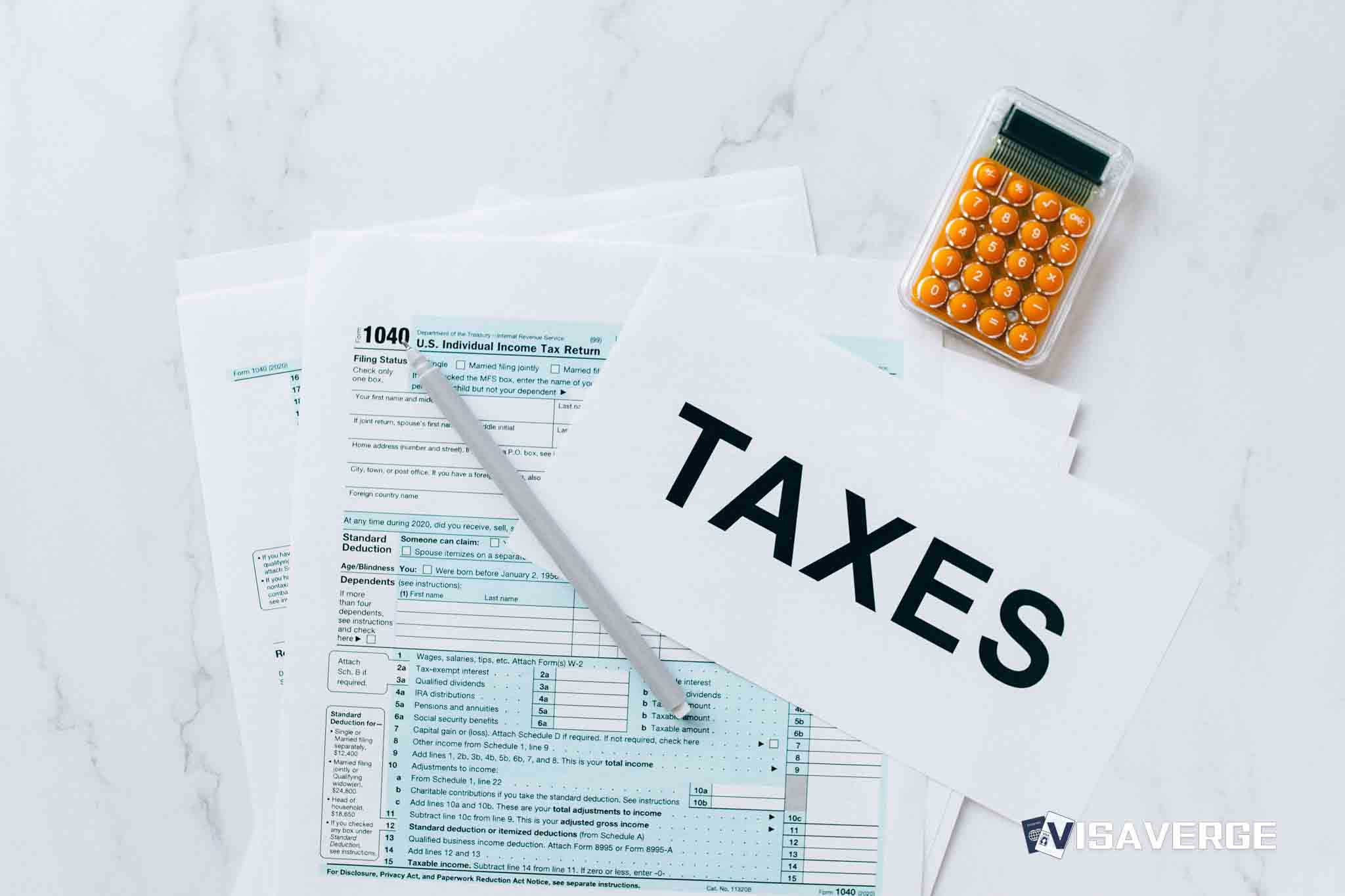
Yes. H-1B workers pay Social Security tax and Medicare tax (together called FICA) from the first paycheck covering work done after the H-1B takes effect. The exemption that F-1 students get on OPT, STEM OPT and CPT wages ends on that date, which for most cap-subject workers is October 1.
The reason is a gap in the law, not a payroll quirk. Section 3121(b)(19) of the Internal Revenue Code exempts wages paid to a nonresident alien for work allowed under F, J, M or Q status. H-1B is not on that list. Once your status changes, the exemption has nothing to attach to, whether or not you have already become a resident alien for income tax.
The rate is the same for everyone. In 2026 an employee pays 6.2% Social Security tax on wages up to $184,500 and 1.45% Medicare tax on all wages, and the employer pays a matching amount. Employers also withhold an extra 0.9% Additional Medicare Tax on wages above $200,000 in a calendar year. The employer does not match that 0.9%.
The year you switch is where most mistakes happen. A payroll system that keeps the student exemption on after October 1 under-withholds, and one that applies FICA to January through September wages over-withholds. Both are common, and both can be fixed if you catch them early.
This guide covers who is exempt and for how long, what changes on the H-1B start date, a worked example for the year of the switch, how to get back FICA that was withheld by mistake, whether any country’s totalization agreement helps, and whether you can recover Social Security tax when you leave the United States.
Two related guides go deeper on the student side: our walk-through of the F-1 FICA refund and exemption rules and the OPT and CPT FICA exemption guide. Everything below is checked against IRS Publication 519, the IRS foreign-student FICA page and the Social Security Administration (SSA), as of November 6, 2026.
Know why F-1 wages are exempt and H-1B wages are not
F-1 students who are nonresident aliens for tax purposes are generally exempt from FICA on wages for work that USCIS allows. That covers on-campus jobs, CPT, post-completion OPT and the STEM OPT extension. The IRS describes the exemption as applying to F-1, J-1 and M-1 students who have been in the United States for fewer than five calendar years. A partial calendar year counts as a full year, so a student who arrives in August 2023 uses up the fifth year in 2027.
After that fifth calendar year, a student who meets the substantial presence test becomes a resident alien for tax purposes. A resident alien does not qualify for the nonresident-alien exemption, so FICA starts on OPT wages even though the visa status has not changed. This is the second way a student can lose the exemption, and it has nothing to do with H-1B.
The H-1B is the first way. FICA treatment follows your immigration status and tax residency on the date the wages are earned, not your employer or your job title.
| F-1 (OPT, STEM OPT, CPT) | H-1B | |
|---|---|---|
| Social Security (6.2%) and Medicare (1.45%) | Exempt while you are a nonresident alien | Withheld from the first wages after the effective date |
| Legal basis | IRC 3121(b)(19) exemption for F, J, M and Q nonresident aliens | No exemption for H-1B |
| Time limit | Generally the first five calendar years in the U.S. | None; applies for as long as you work in H-1B status |
| Becoming a resident alien | FICA starts, even on OPT | FICA applies either way |
| Additional Medicare Tax (0.9%) | Applies above the threshold; no special nonresident rule | Applies above the threshold |
F-2, J-2 and M-2 dependents are not covered by the student exemption. If your spouse works on an EAD in another status, check that status separately.
Find the exact date FICA starts
FICA starts on the effective date of the H-1B status, which is shown on your I-797 approval notice. For most students on the cap-gap extension, this is October 1. Until that date you remain in F-1 status, your work authorization continues under the cap-gap rule, and your wages stay exempt as long as you are still a nonresident alien.
If your H-1B is approved through consular processing, you remain in F-1 status until you are admitted in H-1B status. Use the date on your approval notice and your I-94, not the date you expect to start.
Payroll should split the year by the dates the services were performed. Our report on how payrolls split OPT and H-1B wages shows what a correct split looks like on a pay stub. Check your first pay statement dated after the start date. It should show Social Security and Medicare lines. If it does not, tell payroll the same week.
If an employer fails to withhold FICA after the H-1B starts, the tax is still owed. The employer can be liable for it, and some employers recover the employee share with later deductions. Raise it early so the catch-up is small.
Work through the year of the switch
Here is the common case. Anika arrived on an F-1 visa in August 2023, completed her degree, and worked on STEM OPT at a salary of $120,000, paid evenly at $10,000 a month. Her H-1B change of status takes effect October 1, 2026. She is still a nonresident alien for the first nine months of 2026.
| January to September wages (STEM OPT, exempt) | $90,000 |
| FICA owed on those wages | $0 |
| October to December wages (H-1B) | $30,000 |
| Social Security tax, 6.2% of $30,000 | $1,860 |
| Medicare tax, 1.45% of $30,000 | $435 |
| Total FICA owed for 2026 | $2,295 |
If payroll applied FICA to the whole year by mistake, it would have withheld $7,440 in Social Security tax and $1,740 in Medicare tax, which is $9,180. That is $6,885 too much, and the excess is the refund claim described in Step 5. If payroll kept the exemption on after October 1, Anika would owe the $2,295 later.
Her wages stay far below the 2026 Social Security wage base of $184,500 and the $200,000 Additional Medicare Tax line, so neither limit comes into play. For 2027 the SSA set the wage base at $192,300 in its October 26, 2026 Federal Register notice, which raises the most an employee can pay in Social Security tax from $11,439 in 2026 to $11,922.60.
| Social Security tax, employee share | 6.2% |
| Social Security wage base, 2026 | $184,500 |
| Social Security wage base, 2027 | $192,300 |
| Medicare tax, employee share (no wage cap) | 1.45% |
| Additional Medicare Tax above $200,000 in wages | 0.9% |
| Employer match on Social Security and Medicare | Same rates |
The income tax return is a separate question. A mid-year change often makes you a dual-status filer for that year, which is covered in IRS Publication 519. The FICA outcome above does not depend on the form you file.
Know the Additional Medicare Tax threshold
The 0.9% Additional Medicare Tax applies to Medicare wages above $200,000 for single filers, $250,000 for married couples filing jointly and $125,000 for married filing separately. Publication 519 says there are no special rules for nonresident aliens. Your employer withholds it only once your wages pass $200,000 in the calendar year, whatever your filing status.
A couple who file jointly and earn more than $250,000 together may owe the tax even if neither spouse hit $200,000, so they may need extra withholding on Form W-4. If you file Form 1040-NR, the cutoffs are $125,000 for married filing separately and $200,000 for single filers. The tax is settled on Form 8959.
Get back FICA that was withheld by mistake
Wrongly withheld FICA is common in the first months of OPT and in the year of an H-1B switch. Fix it in this order. The IRS wants you to go to your employer first.
- Compare your pay stubs and W-2 against the dates of your exempt period (for example OPT start date to the day before the H-1B effective date).
- Send payroll a written request for a refund of the Social Security and Medicare tax withheld in error, with your I-20, EAD (Form I-766) and the I-797 showing the H-1B date.
- Ask for a corrected W-2 (Form W-2c) if the withholding was reported for a past year.
- If the employer refuses or cannot refund it, file Form 843 with Form 8316 and the supporting documents.
- Do not claim the withheld amount on your income tax return. It is not income tax.
Publication 519 lists what to attach to Form 843 for an F-1 student on OPT: a copy of your Form W-2, your visa, your Form I-94, your complete Form I-20 and your Form I-766 (EAD). Add a statement from your employer showing any refund it paid or any credit it claimed. If you cannot get that statement, explain why in your own statement or on Form 8316. If you were exempt for only part of the year, include pay statements covering the exempt period.
Form 843 cannot be used to claim back Additional Medicare Tax withheld in error. That is claimed on your income tax return using Form 8959. Refund claims also have deadlines, so do not wait for the employer to answer for months.
Employers have their own correction route, which is why asking first matters. When the employer refunds the tax, it corrects its payroll tax filings and you avoid an IRS claim that can take months. Our report on what to do when payroll refuses the refund and you file Form 843 covers that situation.
Form 8316 asks whether the wages related to your course of study, whether your employer repaid you, and whether you have claimed the tax elsewhere. Fill it out only after the employer has refused or failed to repay in full.
Check whether a totalization agreement applies
A totalization agreement is a treaty between the United States and another country that does two things. It stops a worker being taxed by both systems on the same wages, and it lets a worker combine work credits from both countries to qualify for retirement, disability or survivor benefits. SSA lists agreements with about 30 countries, including Australia, Canada, France, Germany, Italy, Japan, South Korea, the Netherlands, Spain, Switzerland and the United Kingdom.
India has no agreement in force with the United States, and neither do China, Mexico or the Philippines. Indian officials have raised a totalisation pact in trade talks, and Commerce Minister Piyush Goyal has said the process will take time. Until one is signed and in force, an H-1B worker from India pays U.S. FICA in full and gets no relief from the home country’s system.
For workers from agreement countries, the relief mainly covers employees sent to the United States by a foreign employer for a limited period. In that case a certificate of coverage from the home country’s agency can keep the worker in the home system and exempt the U.S. wages from U.S. Social Security tax. It generally does not apply to someone hired locally by a U.S. employer, which describes most OPT-to-H-1B workers. Check with your home country’s social security agency before you start.
If you worked in a country that has an agreement and later return to the United States, ask SSA about combining credits. You need some U.S. credits to qualify for a totalized benefit.
Plan for leaving the United States
Social Security and Medicare tax paid on lawful H-1B wages is not refunded when you leave. There is no exit claim, and Form 843 does not apply, because the tax was correctly withheld. The only way to get value back is through benefits.
Social Security retirement benefits generally require 40 work credits, which is about 10 years of covered work. Your H-1B years stay on your earnings record, and you can claim a benefit later from abroad if you reach 40 credits, including through a green card and later U.S. work. A totalization agreement can fill the gap for people who have enough credits in both countries but not enough in either alone.
The exception is a wrong withholding. If the H-1B employer withheld FICA on wages that should have been exempt, such as OPT wages before the start date, you can still claim that amount back using Step 5, and the claim does not require you to be in the United States, but deadlines apply. It needs the same documents, so keep your I-20, EAD, I-797 and W-2 copies.
- Form I-20 or DS-2019 showing your F-1 or J-1 status and program dates
- EAD card (Form I-766) and your OPT or STEM OPT dates
- I-797 approval notice showing the H-1B effective date
- Pay stubs and Form W-2 for the year, plus any Form W-2c
- Written correspondence with payroll about the refund
Common mistakes
The exemption ends on the H-1B effective date. Check the first stub after that date for Social Security and Medicare lines.
January to September OPT wages can stay exempt if you were still a nonresident alien. Ask payroll to split the year by service dates.
The IRS wants you to ask the employer first. Form 8316 asks whether you did.
A student who becomes a resident alien after five calendar years owes FICA on OPT wages even before any H-1B.
Correctly withheld FICA is not refunded when you leave. Only wrongly withheld tax is claimable.
What to do next
Before October 1, send payroll your I-797 and ask for the H-1B date to be entered, so withholding starts on the right paycheck. After it starts, read the first stub, keep your student documents, and file a claim for any wrongly withheld amount while the paperwork is fresh. For the student-side refund steps, see our F-1 FICA refund guide.
Frequently Asked Questions
Do H-1B workers pay Social Security tax?
Yes. H-1B workers pay 6.2% Social Security tax on wages up to $184,500 in 2026 and 1.45% Medicare tax on all wages. Withholding starts with work performed after the H-1B status takes effect, and the employer pays a matching share.
Are F-1 students on OPT exempt from FICA?
Generally yes, while they are nonresident aliens. The IRS says F-1, J-1 and M-1 students who have been in the U.S. fewer than five calendar years are exempt on wages for work USCIS allows, including practical training.
When does FICA start when I move from OPT to H-1B?
FICA starts on the effective date of the H-1B status shown on your I-797 approval notice, which is October 1 for most cap-subject workers. Wages for work done before that date can stay exempt if you are still a nonresident alien.
How long does the F-1 FICA exemption last?
Generally the first five calendar years in the United States. A partial calendar year counts as a full year. After that, a student who meets the substantial presence test becomes a resident alien and owes FICA even on OPT wages.
How do I get a refund of FICA withheld in error?
Ask your employer for a refund first. If it refuses or cannot repay in full, file Form 843 with Form 8316 and the documents Publication 519 lists, such as your W-2, I-20, I-94 and EAD.
Does India have a totalization agreement with the U.S.?
No. India has no totalization agreement with the United States, so an Indian H-1B worker pays full U.S. FICA with no relief from the Indian system. India has raised the issue in trade talks, but no pact is in force.
Can I get my Social Security tax back when I leave the U.S.?
Generally no. Social Security and Medicare tax correctly withheld on H-1B wages is not refunded on departure. You may collect benefits later if you earn 40 credits, and a totalization agreement can help combine credits.
What is the Social Security wage base for 2027?
The Social Security Administration set the 2027 wage base at $192,300 in its October 26, 2026 Federal Register notice, up from $184,500 in 2026. Medicare tax has no wage cap, and 0.9% Additional Medicare Tax applies above $200,000 in wages.