- F-1 students on OPT are generally exempt from FICA taxes while maintaining nonresident alien tax status.
- The first step is requesting a refund directly from the employer’s payroll department with supporting documentation.
- If employers refuse, students must file IRS Form 843 and 8316 to recover withheld funds.
(UNITED STATES) — F-1 students on OPT and STEM OPT can seek refunds after employers withhold Social Security and Medicare taxes from exempt wages, starting with the employer and, if that fails, moving to the IRS with Form 843 and Form 8316.
The issue centers on FICA, the payroll taxes for Social Security and Medicare. IRS guidance says nonresident alien students temporarily present in the United States in F-1 status are generally exempt from those taxes on wages paid for services allowed by USCIS and performed to carry out the purpose of the visa.
Free toolSubstantial Presence Test Calculator
That exemption does not turn every case into a refund. Students have to check whether they were still in valid F-1 status, whether they were nonresident aliens for tax purposes, whether the work was authorized as OPT or STEM OPT, and whether the job was directly connected with the course of study.
Payroll systems often create the problem. Employers may treat OPT wages like ordinary U.S. employee wages and withhold Social Security tax, Medicare tax, federal income tax, and state income tax through regular payroll processing.
Federal and state income tax withholding can be proper depending on income and filing facts. FICA follows a different rule set for eligible F-1 students, which is why students who discover the withholding have to separate Social Security and Medicare deductions from the rest of their paycheck.
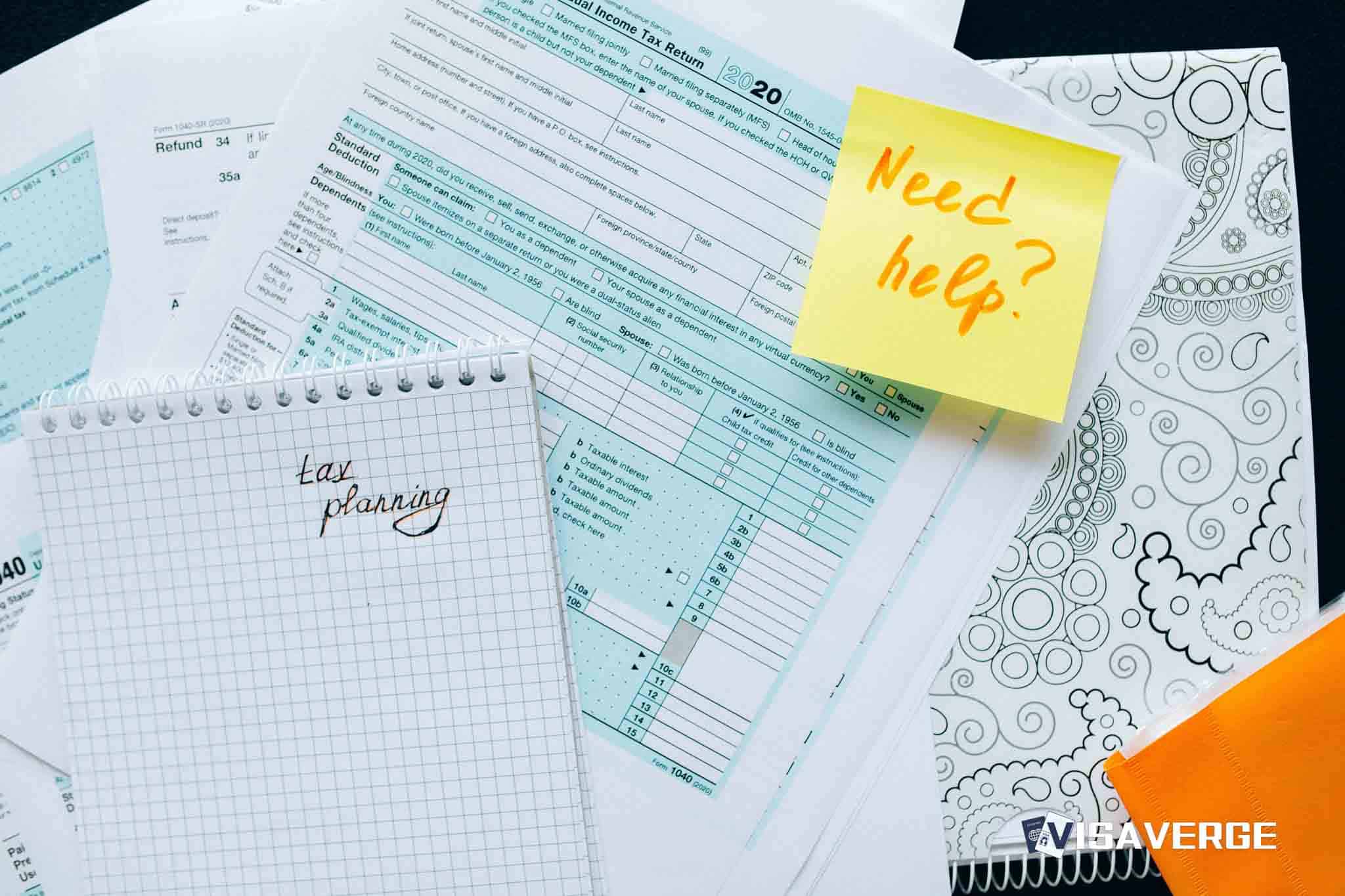
Students usually spot the error on a paystub or after a Form W-2 arrives. On the W-2, the first places to review are Box 4, which shows Social Security tax withheld, and Box 6, which shows Medicare tax withheld.
A closer review also includes Box 3 for Social Security wages and Box 5 for Medicare wages and tips. On paystubs, the deductions may appear as Social Security, OASDI, Medicare, FICA, Fed OASDI/EE, or Fed MED/EE.
Those entries matter because students should not confuse FICA with federal income tax withholding, state income tax withholding, local tax, health insurance, or retirement deductions. The refund path discussed here applies to Social Security and Medicare taxes, not to ordinary income-tax withholding.
Tax residency can change the answer. Many F-1 students remain nonresident aliens during their initial student period because certain days may be excluded from the substantial presence test, but that treatment can end after the permitted exempt-individual period or after an immigration status change.
Wages earned after a student becomes a resident alien for tax purposes may no longer qualify for the same FICA exemption. The same is true when a student changes from F-1 to H-1B during the year, because wages paid after H-1B status begins may be treated differently from wages paid during F-1 OPT.
The source gives a clear example: a student who changed to H-1B on October 1 should separate wages before and after that date. A refund claim may cover wages earned during valid F-1 OPT while the student remained a nonresident alien, but not wages properly taxed after H-1B began.
Authorized employment also matters. IRS student guidance refers to services allowed by USCIS and performed to carry out the purpose for which the visa holder was admitted, so wages earned outside OPT authorization dates, after an EAD expired, before an EAD started, or through unauthorized side work require a separate review before any refund claim is made.
The first step, the IRS says, is to ask the employer for the money back. If Social Security or Medicare tax was withheld in error from pay that is not subject to those taxes, the employee should contact the employer that withheld the taxes for reimbursement.
That request should go to the employer or payroll department with records attached. The source lists current and prior paystubs, the W-2 if it has already been issued, F-1 visa information, Form I-20, the EAD card for OPT or STEM OPT, Form I-94, proof of nonresident alien status where available, and a short written explanation requesting a refund of Social Security and Medicare tax withheld in error.
Students should also keep a paper trail. Email records, HR ticket numbers, payroll portal screenshots, follow-up messages, and any written notes about non-response can become part of the later IRS claim if the employer refuses to act.
An issued W-2 does not close the matter. Students can still ask payroll to refund the taxes, correct payroll records, issue a W-2c if needed, or explain in writing that the employer will not refund the amount.
That written response carries weight because the IRS process asks whether the employee first requested a refund from the employer. A student whose employer says nothing still needs to show the attempt through dated emails, portal requests, or other written records.
Payroll departments sometimes respond with, “You can claim it when you file your tax return.”
Instead, the IRS route generally involves Form 843 and Form 8316 if the employer does not provide a full refund. Form 843 is titled Claim for Refund and Request for Abatement, and the instructions say it is used to claim a refund or request abatement of certain taxes, penalties, additions to tax, interest and fees.
Form 8316 asks for information regarding a request for refund of Social Security tax erroneously withheld on wages received by a nonresident alien on an F, J, or M type visa. The form covers the student’s visa status, the employer, and the withholding that the student says was collected in error.
The document package matters. The source lists a W-2 showing Social Security and Medicare tax withheld, paystubs showing FICA withholding, the passport identity page, F-1 visa page, Form I-94, Form I-20, the EAD card, proof of employment authorization, the written request made to the employer, any refusal letter or email, a statement that the employer did not refund the tax, a copy of Form 1040-NR if filed, proof of nonresident alien status, and payroll correspondence.
A complete filing reduces the chance of delay. Students also need to match the claim to the exact withholding shown on payroll records, including Social Security tax withheld, Medicare tax withheld, any Additional Medicare tax, and the total refund requested.
That precision becomes more important in mixed-status years. A single W-2 may combine wages earned during F-1 OPT with wages earned after H-1B started, and payroll may have correctly withheld FICA for one period while withholding it in error for another.
The source warns against duplicate or inconsistent claims. Students should not ask the employer for a refund, receive it, and then seek the same amount again from the IRS.
Normal annual tax filing still remains separate. A FICA refund claim does not replace Form 1040-NR, Form 8843, a state income tax return, or a local tax return where required.
That separation is central to disputes over OPT wages. Federal income tax withheld from wages is generally reconciled through the annual tax return, while wrongly withheld FICA may need the employer refund process first and, if that fails, the Form 843 and Form 8316 route.
The source sets out several situations where students should pause before filing. A long-term F-1 student who became a resident alien for tax purposes should not automatically seek a refund, and a student whose work fell outside authorized OPT employment should not claim exemption for wages that do not meet the requirements.
Professional help may be useful where the facts are mixed, including status changes, multiple employers, combined F-1 and H-1B wages, or unauthorized work concerns.
Still, the sequence itself is direct: confirm F-1 nonresident status for the wage period, verify the OPT or STEM OPT authorization dates, review paystubs and W-2 entries for Social Security and Medicare withholding, ask the employer to refund the tax first, and turn to Form 843 and Form 8316 only if the employer does not provide a full refund.
Students who discover FICA on OPT wages after a W-2 arrives are not barred from acting. They still can press payroll for a correction, preserve the response, and file a refund claim that matches the wages that were actually exempt.