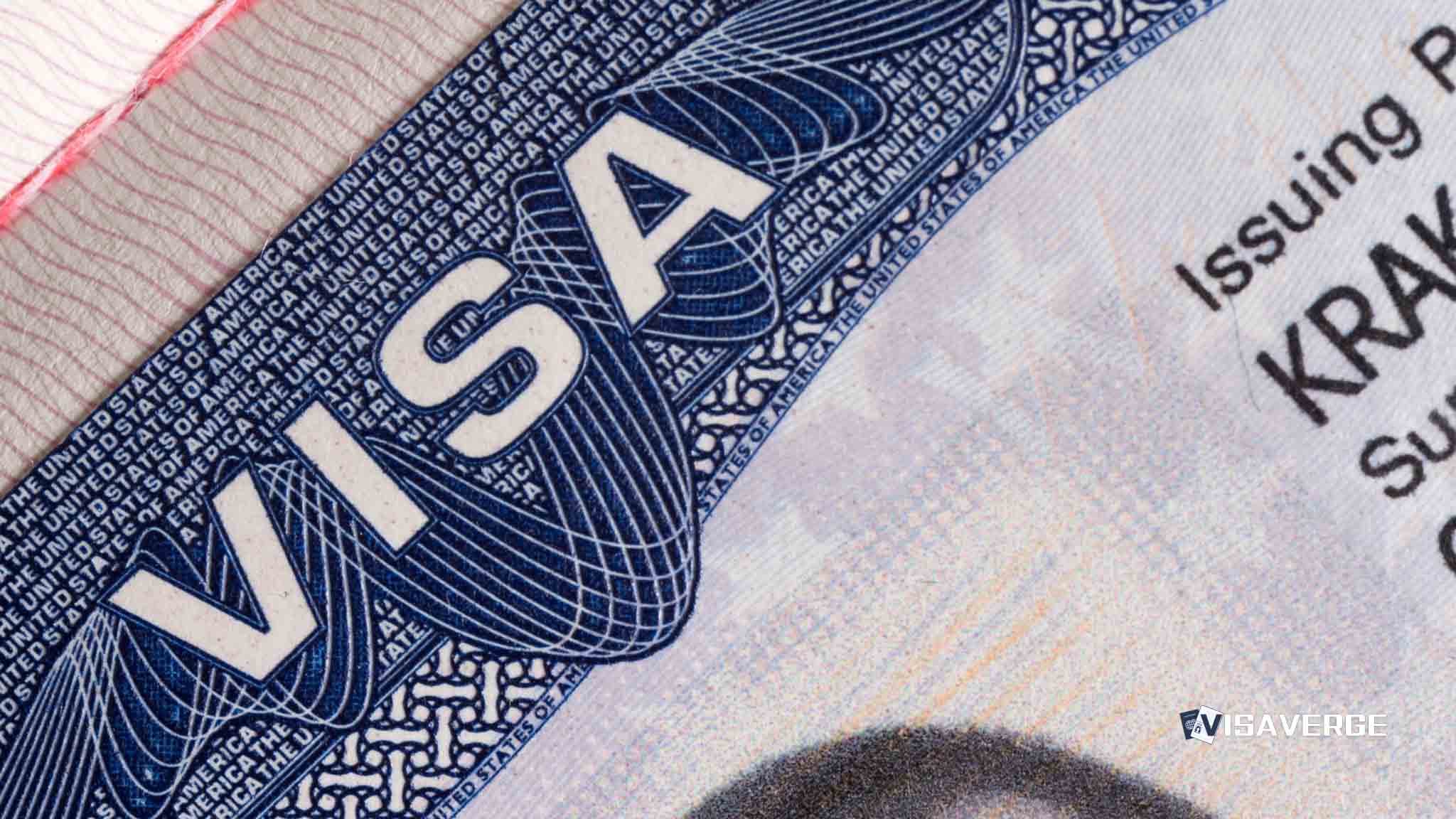
(UNITED STATES) The Trump administration is moving to require far deeper digital screening for short-term visitors, demanding five years of social media history from travelers who now enter the United States 🇺🇸 without a visa, while also enforcing a separate June 2025 proclamation that blocks or limits entry for nationals of certain countries on national security grounds. The rules, described in recent federal postings and policy updates and expected to be in place as of late 2025, are already changing how airlines, families, and business travelers plan trips, because the paperwork starts well before a passport is scanned at the airport.
Executive Order and the broad shift in screening

At the center of the shift is Executive Order 14161, issued in January 2025 and titled “Protecting the United States From Foreign Terrorists and Other National Security and Public Safety Threats.” The order directs agencies to expand screening and deny entry to people deemed to pose security risks.
This produces a practical effect of an expanded net for digital vetting that now reaches beyond visa applicants to many Visa Waiver Program travelers, who previously experienced relatively low friction once an online authorization was approved.
“The executive order directs agencies to expand screening and deny entry to people deemed security risks,” creating an expanded net for digital vetting beyond traditional visa applicants.
ESTA redesign and who it affects
Under the plan described by Customs and Border Protection (CBP), citizens of 42 Visa Waiver Program countries—people who can usually visit for up to 90 days for tourism or business—would submit far more information through a redesigned Electronic System for Travel Authorization (Electronic System for Travel Authorization (ESTA)).
- CBP posted the collection changes in the Federal Register and said the package is awaiting review by the White House budget office (a step that can affect timing but not the direction).
- Analysis by VisaVerge.com indicates the redesign points toward an ESTA process that is “soon mobile-only,” placing more of the process on travelers’ phones and less on printed itineraries.
Key new data points requested
- Five years of social media history (most sensitive new field)
- Emails used over the past 10 years
- Personal details about immediate family members, including phone numbers and residences
The source material does not list specific platforms or whether travelers must provide handles, URLs, or usernames, but the term social media history implies a broad request for accounts used over that period.
Why travelers may see this as a background check
For many travelers, these disclosures will feel less like a travel authorization and more like a background packet—especially because the information is submitted before meeting a border officer. CBP says the expanded data request is tied to security screening aims, but privacy advocates warn that collecting social media history can sweep in political speech, jokes, or old posts that are hard to explain out of context.
- USCIS scrutiny is described as probing social media for what officials call “anti-American” views in cases involving asylum, green cards, and citizenship.
- USCIS and CBP operate in different parts of the immigration system, but travelers may assume information shared with one agency could be matched, stored, or compared elsewhere.
Arrival/Departure Record (Form I-94) changes
CBP’s parallel update to the Arrival/Departure Record reinforces the trend. Changes to Form I-94 are described as enforcing social media disclosure as well—another reminder that the federal government can gather information at multiple points in the travel chain.
For official records and instructions, visitors can use the portal at CBP’s I-94 website, where many retrieve proof of admission for employers, schools, or driver’s license offices after arrival.
Nationality-based limits: the June 9, 2025 proclamation
The digital expansion is unfolding alongside sharper nationality-based entry limits under the Proclamation titled “Restricting the Entry of Foreign Nationals to Protect the United States from Foreign Terrorists and Other National Security and Public Safety Threats,” which took effect June 9, 2025.
- The source material does not include the full list of designated countries, but it states the proclamation limits entry and affects visa issuance for nationals of those places.
- There are carve-outs for people with multiple passports or those who live abroad.
- In practice, travelers can face both broad vetting questions and a hard stop based on nationality—even when they have family ties or long-standing travel patterns.
Effects on Canada and mixed-status households
One clear cross-border ripple effect involves Canada 🇨🇦:
- Canadian passport holders, including dual citizens, are exempt when using Canadian documents—an important detail for those who can choose which passport to present at check-in.
- Canadian permanent residents who are nationals of affected countries may need nonimmigrant visas, which could be harder to obtain under the current security framing.
This split can produce difficult household situations: a Canadian citizen spouse may travel freely, while a permanent resident spouse from a designated country may face a fresh visa interview and longer security checks.
State Department timeline and related actions
The State Department’s role in the late-2025 tightening is documented through several dated actions:
- National security suspensions tied to June 7, 2025
- “Dec 2025 updates”
- Visa bonds for certain countries on October 23, 2025
- Diversity Visa changes on November 5, 2025
- A State Department update dated December 12, 2025, describing expanded screening for H-1B/H-4 visas and encouraging adjudication of immigrant visas in applicants’ home countries
Each item has different legal hooks, but together they show a system that is asking more questions, requesting more proof, and taking more time to decide.
Practical costs: time, uncertainty, and change in expectations
For travelers and employers, time is often the real cost.
- The Visa Waiver Program exists partly to enable last-minute business travel, but an ESTA that asks for a decade of emails and five years of social media history can turn a quick visit into a planning project.
- Travel industry groups have warned that complicated screening can depress tourism. The source material suggests tourism may fall even as the U.S. approaches the pre-2026 World Cup travel rush.
Consequences include:
– Missed meetings, delayed family visits, and canceled academic conferences
– Additional screening triggered by inconsistent or incomplete answers
– Pressure on travelers to keep personal histories perfectly consistent across trips, even when platforms change, accounts are deactivated, or family members move
Who may be disproportionately affected
Some of the most personal effects fall on people whose identities are already contested in paperwork:
- The source material flags a 2SLGBTQI+ note: federal forms are shifting to sex assigned at birth, while state laws vary.
- This can create mismatches between federal forms and the ID documents travelers use day to day—raising the chance of questions at a port of entry, even when the traveler has done nothing wrong.
Legal and civil-rights scrutiny
Legal observers view the late-2025 package as a test of executive power over immigration screening. The New York City Bar Association, in guidance updated October 10, 2025, is tracking the new measures and ongoing legal challenges, framing them as part of broader disputes over privacy, due process, and limits of authority during national security crackdowns.
The source material does not name individual plaintiffs or include direct official quotes beyond the executive order and proclamation titles, but it emphasizes that the dispute concerns not only who gets in, but what information people must surrender to try.
Practical advice and resources
For now, the practical guidance from the source material is straightforward: check official status early and expect delays.
- Review U.S. visa and entry information at travel.state.gov.
- Visa Waiver Program visitors can track ESTA guidance at CBP’s ESTA page.
With Executive Order 14161 pushing agencies toward deeper screening, and with the June 9, 2025 proclamation shaping nationality-based restrictions, many visitors will find that a trip that once started with a ticket now starts with a digital autobiography.
Additional entry-document details for Canadians and Visa Waiver visitors
- Canadians entering by land or water: travelers age 16 and older need a passport, a Trusted Traveler card, or an enhanced ID.
- Children under 16 may use a birth certificate.
- For Visa Waiver visitors, CBP recommends applying early because additional questions can slow approvals.
The government has not said how many applications will be delayed, but the direction is clear: more data up front, and more consequences for incomplete answers.
Federal authorities will expand pre-arrival digital vetting for many visa-free travelers, requiring five years of social media history, ten years of email addresses, and family contact details. Executive Order 14161 drives broader screening, while a June 9, 2025 proclamation restricts entry for nationals of designated countries. CBP’s ESTA and Form I-94 updates—likely mobile-first—are expected by late 2025, raising privacy concerns, longer processing times, and practical planning impacts for travelers and employers.
Live Government Data
State Dept • CBPBusiest Border Crossings
- Nogales 210 min
- Nogales 120 min
- Brownsville 90 min