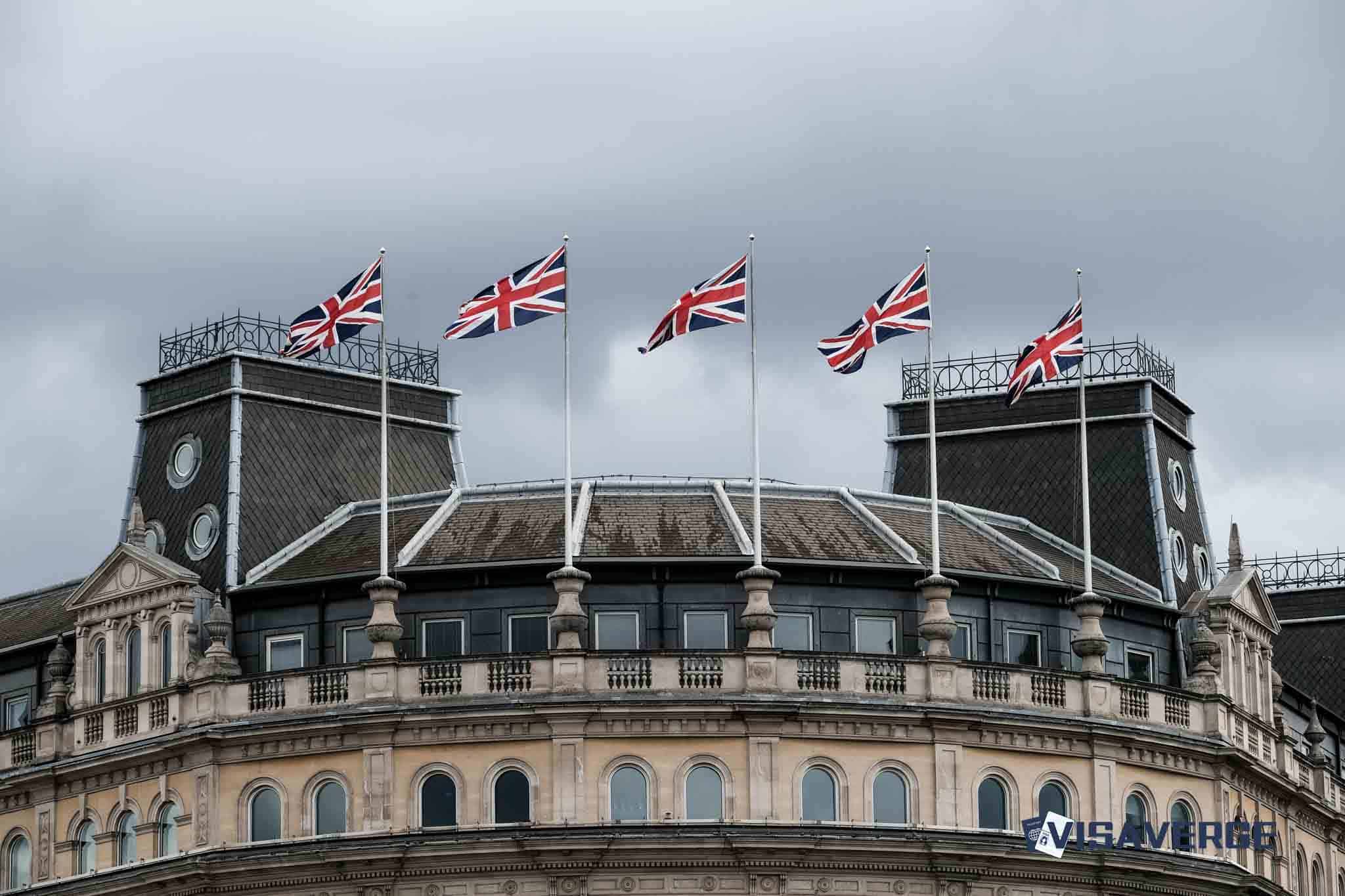
- The UK government tightened visa rules across student, work, and family categories to reduce net migration totals.
- Overall visa applications fell by 25 percent during the first four months of 2024 following restrictions.
- Student dependant visa applications plunged by 79 percent after new bans on family members took effect.
(UK) — The UK tightened visa rules across student, work and family routes, and net migration then fell sharply as applications dropped on the categories most directly affected.
Home Office figures show visa applications across the main routes hit by the changes, Skilled Worker, Health & Care, and Study visas, fell by 25% in the first four months of 2024 compared with the same period in 2023. The decline was concentrated in routes ministers had targeted as part of a wider drive to cut legal arrivals.
Free toolUSCIS Receipt Number Decoder
The steepest fall came on family-linked applications tied to study. Student dependant visa applications fell by 79% in the first four months of 2024, with more than 30,000 fewer applications than in the same period a year earlier.
Health and care also recorded a sharp drop after restrictions took effect. In the first full month after the care-worker dependant ban started, Health & Care dependant visa applications fell by 58%, from 15,100 in April 2023 to 6,400 in April 2024.
| India | China | ROW | |
|---|---|---|---|
| EB-1 | Feb 01, 2023 ▲109d | Jul 01, 2023 | Current |
| EB-2 | Nov 01, 2013 | Oct 01, 2021 ▲30d | Jan 01, 2025 |
| EB-3 | Jan 01, 2014 | Jan 08, 2022 ▲7d | May 15, 2024 ▼109d |
| F-1 | Jan 22, 2020 | Jan 22, 2020 | Jan 22, 2020 |
| F-2A | Sep 22, 2026 ▲31d | Sep 22, 2026 ▲31d | Sep 22, 2026 ▲31d |
The government said the package of measures would mean approximately 300,000 people who came to the UK in the prior year would now not be able to come under the new rules. The Home Office called the package “the largest ever reduction in legal migration.”
Those changes were introduced in stages. On 1 January 2024, the government restricted most overseas students from bringing family members, leaving exceptions for people on postgraduate research courses and those with government-funded scholarships.
A second change followed on 11 March 2024, when care workers and senior care workers lost the right to bring dependants. On the same date, sponsoring care providers also had to register with the Care Quality Commission.
Salary and income thresholds then moved sharply higher. On 4 April 2024, the general Skilled Worker salary threshold rose from £26,200 to £38,700, a 48% increase.
One week later, on 11 April 2024, the family visa minimum income requirement increased from £18,600 to £29,000, a 55% rise. Together, the measures narrowed several of the routes that had fed recent growth in legal arrivals.
The government has since added a nationality-based restriction that it describes as a visa brake. The measure refuses certain visa applications from specified nationalities on specific routes, and it applies to applications made outside the UK.
At present, the visa brake covers student visas for nationals of Afghanistan, Cameroon, Myanmar, and Sudan. It also covers Skilled Worker visas for nationals of Afghanistan.
Applications submitted online after 12:01 am on 26 March 2026 are refused if they fall into those categories. Existing valid visas remain valid until expiry, and holders can still apply in-country for extensions or other eligible routes.
The political aim behind the changes is explicit. The Home Office has framed the measures as part of a push to reduce net migration after record-high inflows, focusing on routes ministers see as contributing to high migration totals and, in the government’s view, abuse of the system through dependants or lower-paid overseas recruitment.
That approach has altered the shape of the debate around legal migration. Student routes have drawn attention because the fall in the student dependant visa category was so abrupt, while work routes have come under pressure because the government paired dependant limits with stricter pay rules and sponsorship conditions.
The timing matters for employers that recruit from abroad. Health and care providers faced the dependant ban from 11 March 2024, and employers using the Skilled Worker route then had to deal with the higher salary threshold from 4 April 2024.
Those shifts landed hardest on sectors that have relied on overseas hiring to fill vacancies. Independent commentary has warned that tighter recruitment rules could create labour shortages in health and care, and also in hospitality and retail.
That warning reflects the sectors most exposed to the policy mix set out by ministers. Restrictions on dependants can reduce the appeal of moving to the UK for lower-paid or mid-paid jobs, while a higher salary floor can rule out roles that employers had previously filled through overseas recruitment.
The same logic applies to higher education, where the drop in student dependant visa applications points to how quickly rule changes can reshape demand. Overseas students can still apply, but most can no longer bring family unless they fall into the limited categories the government left in place.
The current rules also create a sharper divide between applicants outside the country and people already in it. The visa brake applies to overseas applications in defined nationality and route combinations, while people who already hold valid permission keep that status until it expires and can still seek an extension or switch into another eligible route from within the UK.
That distinction leaves the latest restrictions operating as a gate on new inflows rather than a blanket cancellation of existing status. It also means the effect on future net migration will be driven by who can still qualify to enter, who no longer can, and how employers, universities and families respond to the narrower terms now in force.
The headline numbers already show the scale of the shift. Applications across the main affected visa routes fell by 25% in the first four months of 2024, student dependant visa applications dropped by 79%, and the first full month of the Health & Care dependant visa ban produced a 58% fall, early evidence of how deeply the UK’s visa curbs have cut into legal arrivals.