- Stephen Miller claims birthright citizenship undermines American rights and encourages birth tourism.
- The administration seeks a narrow interpretation of the 14th Amendment’s Citizenship Clause.
- Executive Order 14160 would deny citizenship documents to children of undocumented parents.
(UNITED STATES) — White House Deputy Chief of Staff Stephen Miller renewed the Trump administration’s campaign to narrow birthright citizenship on March 15, 2026, arguing that the current approach weakens the rights of U.S. citizens.
“Offering ‘birthright citizenship’ to the world when the world is just one plane trip from the United States steals the actual birthright of every American,” Miller said in a statement issued on March 15, 2026.

Miller’s remarks came as the administration presses a reinterpretation of the 14th Amendment’s Citizenship Clause while the U.S. Supreme Court prepares to hear a challenge that tests how far a president can go in limiting citizenship-document issuance for some U.S.-born children.
The administration has tied its push to what it calls “birth tourism” and to claims about sovereignty and security, while opponents warn the changes would disrupt routine proof-of-citizenship processes for families and deepen uncertainty for children born in the United States.
President Trump has already put the policy in motion through Executive Order 14160, and federal agencies have drawn up plans to carry it out if courts allow it, even as multiple injunctions have blocked the order’s enforcement to date.
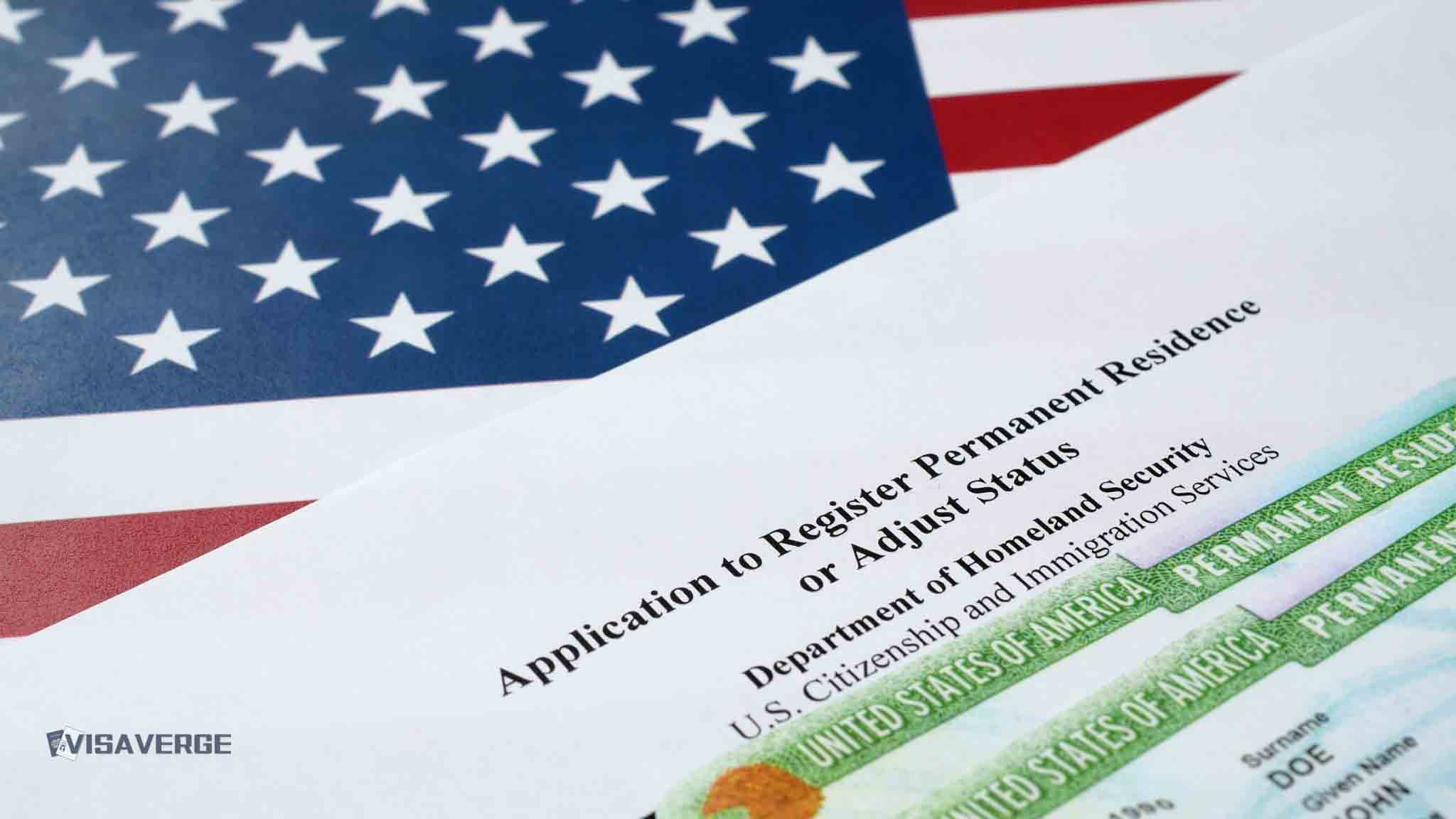
Executive Order 14160, titled “Protecting the Meaning and Value of American Citizenship,” directs federal agencies to stop issuing citizenship documents to children born in the U.S. whose parents are either unlawfully present or on temporary visas. The order appeared in the Federal Register as 90 Fed. Reg. 8449 (January 20, 2025).
The government’s approach focuses on documents that function as practical proof of U.S. citizenship in everyday life, including passports and Social Security cards, and seeks to tie their issuance to a child’s parents’ immigration status.
U.S. Citizenship and Immigration Services published a formal implementation plan on July 25, 2025, describing how the agency would apply the order if upheld. The plan, IP-2025-0001 (July 25, 2025), defines “unlawfully present” and “lawful but temporary” status and requires parents to provide proof of their legal standing before a child’s citizenship is recognized for documentation purposes.
Miller’s statement framed the administration’s rationale as a defense of Americans’ own “birthright,” and his comments echoed the government’s broader argument that current interpretations of the 14th Amendment create incentives for international travel to the United States for childbirth.
Officials have cast the policy as a way to curb “birth tourism” and tighten the issuance of citizenship documents, tying the rhetoric directly to agency workflows that would screen parental status before producing records families often need for a child’s identity and benefits.
In practical terms, the order attempts to make parents’ immigration categories the trigger for whether federal agencies will issue documents that treat a U.S.-born child as a citizen, a shift that would have immediate consequences for families seeking passports, citizenship-related records, or Social Security documentation.
The policy draws a line between parents who are “unlawfully present” and those who are lawfully in the country but only temporarily, and it makes those distinctions central to determining whether a child can readily obtain federal citizenship documents.
That approach, if implemented, would require new verification steps across agencies that touch citizenship and identity, increasing the importance of how agencies define terms and how they resolve edge cases involving family status, timing, and proof.
USCIS laid out an operational blueprint in IP-2025-0001 that centers on parental-status proof as the gateway to a child’s citizenship documentation, a change that could introduce additional requests for evidence and more frequent status checks during document adjudications.
Families could feel the effects at multiple points where citizenship status is recorded or relied upon, including applications for documents and interactions with identity systems that depend on consistent federal records. The plan’s definitions of “unlawfully present” and “lawful but temporary” status would drive when adjudicators treat an application as requiring heightened scrutiny.
The Supreme Court case testing the administration’s theory, Trump v. Barbara, has placed the meaning of the 14th Amendment phrase “subject to the jurisdiction thereof” at the center of a high-stakes legal dispute over who qualifies for citizenship at birth.
The court is scheduled to hear oral arguments on April 1, 2026, in Trump v. Barbara, No. 25-365, with the government arguing that jurisdiction in the Citizenship Clause turns on political allegiance and therefore excludes people who are in the United States illegally or temporarily.
Challengers have pointed to long-standing precedent that treats birthright citizenship as settled, while the administration has advanced a narrower reading that would allow federal agencies to deny certain citizenship documents to some U.S.-born children based on their parents’ status.
Lower courts have repeatedly blocked Executive Order 14160, with multiple federal courts issuing preliminary injunctions that preserved existing practices while litigation continues. Those rulings relied on United States v. Wong Kim Ark (1898), which the courts treated as central to the modern understanding of birthright citizenship.
The legal fight has unfolded alongside political developments inside the administration, including changes in leadership at the Department of Homeland Security that could shape how aggressively agencies prepare to carry out the order if the courts clear the way.
On March 5, 2026, President Trump nominated Senator Markwayne Mullin as Secretary of Homeland Security following the firing of Kristi Noem. Mullin has publicly supported Miller’s stance and has said that children of undocumented parents should be subject to the same immigration enforcement as their parents.
Congress has also kept attention on the issue as agencies prepare for potential operational changes. The Senate Judiciary Committee’s Subcommittee on Border Security and Immigration held a hearing on March 10, 2026, listed as Subcommittee on Border Security and Immigration (March 10, 2026).
Operationally, the policy’s footprint extends beyond DHS and USCIS because it aims at the issuance of core identity and citizenship documents. The order’s focus on passports and Social Security cards points to coordination pressures involving the State Department and systems connected to Social Security records, where documentation decisions can affect access to services and the ability to prove status.
Supporters describe the effort as a protective measure, and the administration has framed it as a “national security” issue, citing “birth tourism” industries in countries like China as a way for foreign adversaries to gain influence.
Opponents have emphasized the potential for confusion and disruption for families, particularly if children are treated as lacking citizenship for documentation purposes during verification steps. Critics and legal experts estimate that if the policy is upheld, approximately 250,000 children born annually in the U.S. would be denied citizenship.
They also estimate that over 3 million children per year could be treated as “presumptive noncitizens,” requiring their parents to undergo a verification process to secure citizenship documents.
Religious and advocacy voices have warned about extreme downstream outcomes for children whose parents cannot promptly satisfy documentation demands or whose situations implicate more than one country’s nationality laws.
The U.S. Conference of Catholic Bishops and other advocacy groups have warned that this policy could leave infants “stateless,” making them vulnerable to deportation and exploitation.
The administration, by contrast, has cast the effort as a targeted response to what it calls systemic abuse, with Miller’s March 15 statement arguing that the current model effectively transfers Americans’ “birthright” to noncitizens who can reach the country quickly.
The Supreme Court’s handling of Trump v. Barbara will determine whether the administration can use executive action to tie federal citizenship-document issuance to parental status in the way Executive Order 14160 directs, or whether courts will continue to treat birthright citizenship as constitutionally settled under precedent including United States v. Wong Kim Ark.
With oral arguments set for April 1, 2026, the case has turned Miller’s political message into an immediate administrative and legal contest that could reshape how families prove citizenship for U.S.-born children, even before any final resolution filters through federal agencies.