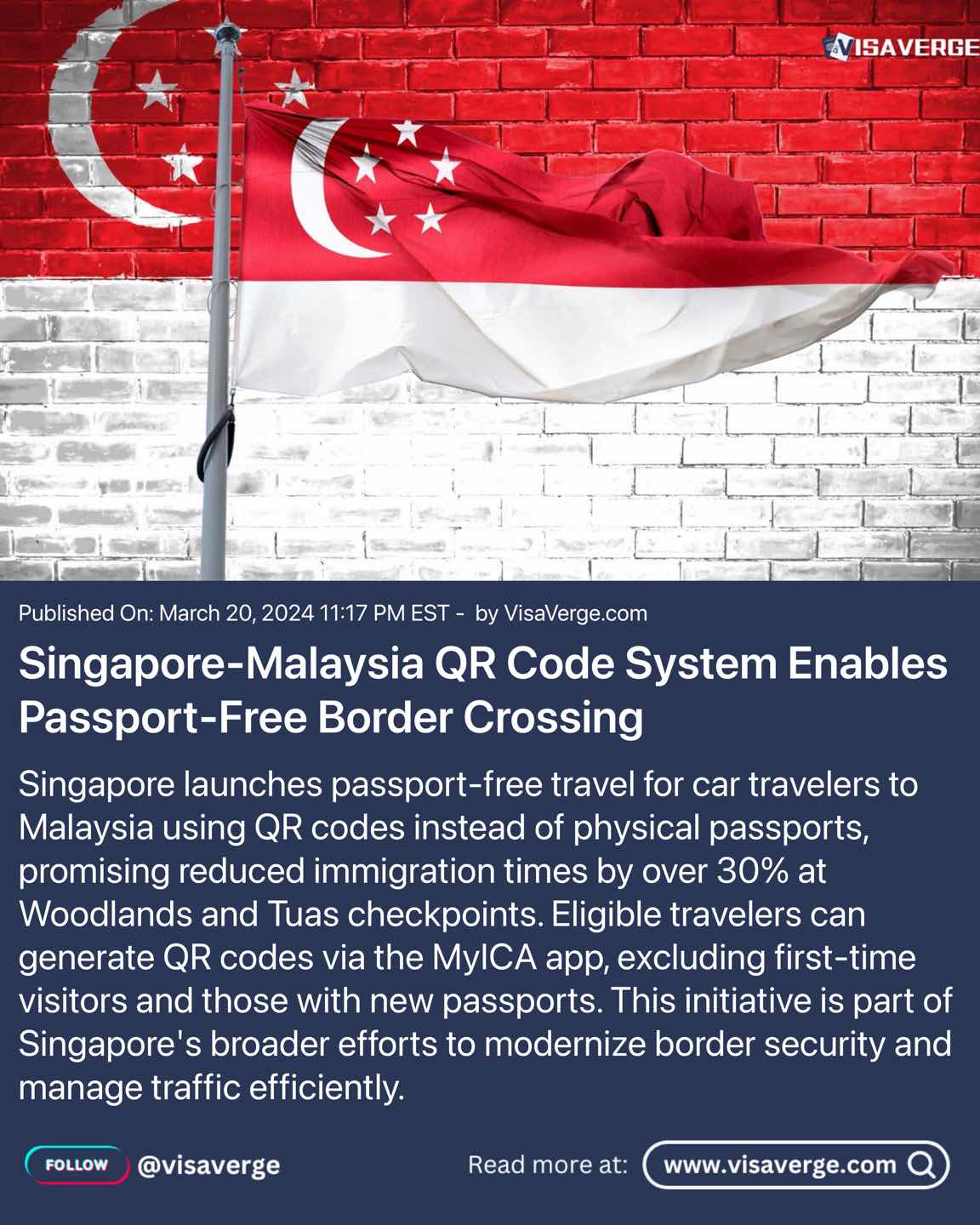
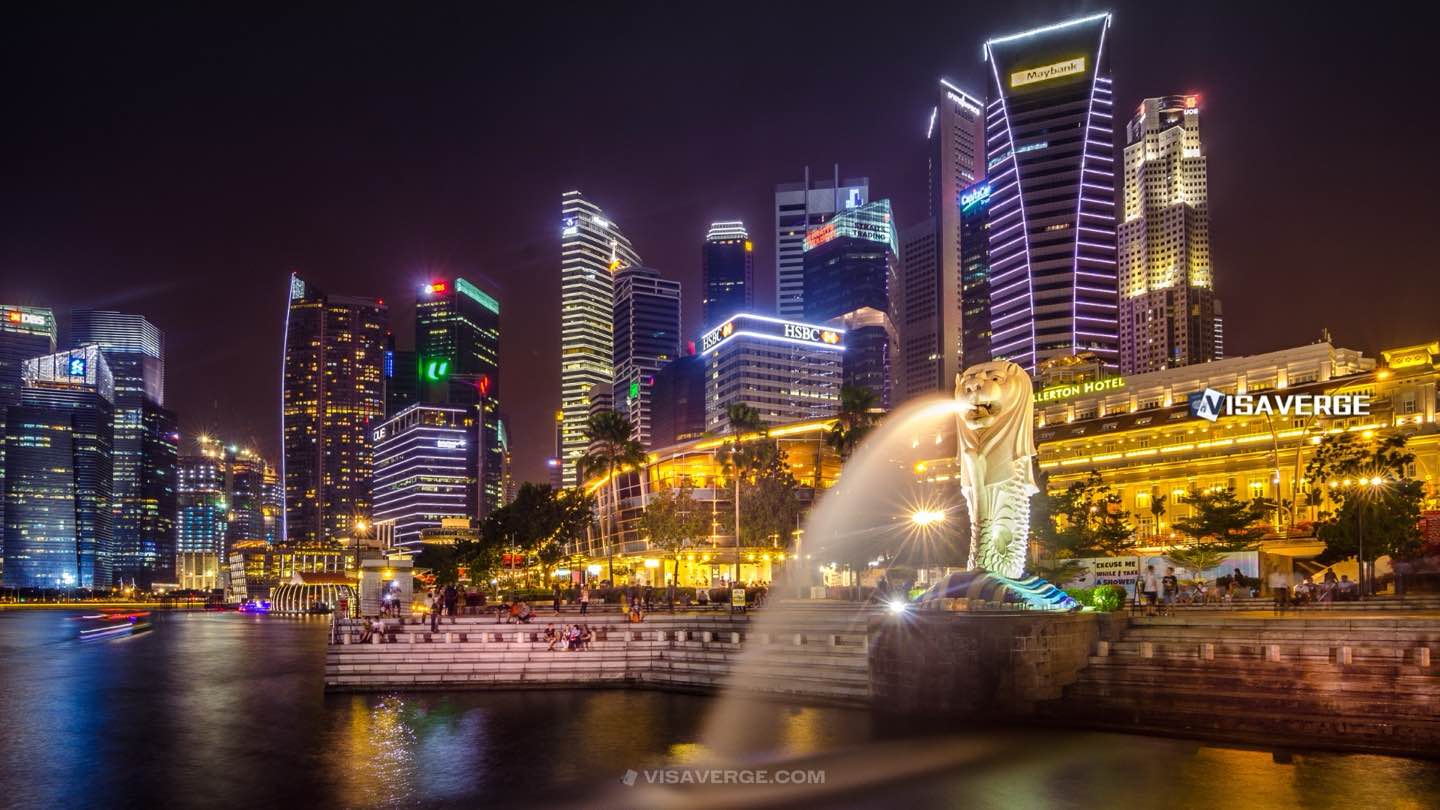
Singapore has announced a significant change at its borders that is set to revolutionize the way people travel between Singapore and Malaysia. Starting from Tuesday, travelers moving by car through the Singapore-Malaysia border can opt for passport-free travel, utilizing QR code immigration instead. This innovative approach aims to streamline the crossing process, promising a significant reduction in immigration processing times at the Woodlands and Tuas checkpoints.
What Does Passport-Free Travel Entail?

In a move towards more efficient border management, Singapore’s Immigration & Checkpoints Authority has introduced a system where Singapore residents and foreign travelers can generate self-generated QR codes through the MyICA mobile app. This digital leap allows for a smoother transition across the border without the need to physically hand over passports. A group code generation feature is also available for up to 10 people traveling in the same vehicle, further consolidating the process for families and groups.
Free toolB1/B2 Tourist Visa Stay Calculator onlineHowever, it’s important to note that QR-code clearance is not available for everyone. The eligibility criteria exclude individuals entering Singapore for the first time and those using a different passport from their previous visits. For more detailed information on the QR code immigration process, visit the official Singapore Immigration & Checkpoints Authority website.
How Will This Change Affect Travelers?
The implementation of QR code immigration is set to bring about more than a 30% reduction in immigration processing times. Specifically, cars carrying four passengers can expect a time-saving of around 20 seconds, whereas vehicles with 10 people could see a reduction of up to a minute. This is a significant advancement, considering the volume of travelers passing through these checkpoints.
Why the Singapore-Malaysia Border?
The checkpoint connecting Johor Bahru in Malaysia to Woodlands in Singapore is noted as one of the busiest international border crossings globally. Just between March 7 and 10, over 1.8 million travelers crossed over through Singapore’s checkpoints with Malaysia. Particularly, on March 8, a record-breaking 495,000 individuals crossed the Woodlands and Tuas checkpoints, surpassing previous records. This high traffic volume underscores the necessity and potential impact of implementing passport-free travel and QR code immigration procedures.
A Larger Push Towards Modernizing Border Control
This initiative is part of Singapore’s broader efforts to modernize its border security procedures and manage the increasing number of travelers amidst challenges like an aging workforce. For example, Changi Airport is set to replace traditional travel document verification with biometric processing by the first half of 2024. Currently undergoing trials, this “passport-free” immigration clearance approach mirrors the QR code initiative’s objectives to streamline travel without compromising security.
Looking Forward
With initial plans focusing on travelers crossing by car, Singapore intends to extend the QR code clearance to individuals using other modes of transport in the future. As the world leans more towards digital solutions for efficiency and security, Singapore’s bold steps in modernizing border control could set a precedent for border management worldwide.
By implementing these measures, Singapore not only enhances the travel experience for countless individuals daily but also navigates the complex balance between security and efficiency in today’s interconnected world. As these initiatives evolve, it will be fascinating to see how they shape international travel and border control strategies globally.
This Article In A Nutshell:
Singapore revolutionizes travel between Malaysia with QR code border clearance starting Tuesday at Woodlands and Tuas. Generate QR codes via MyICA app for passport-free crossing. Saves 20-60 seconds per car, easing congestion. First-timers and passport-changers excluded. Part of Singapore’s modernization efforts, foreshadowing border control advancements worldwide.
Read More:
- New Passport-less QR Clearance at Woodlands & Tuas Checkpoints: Singapore Immigration Update
-
Former Singapore Lawyer Gurdaib Singh Pala Singh Jailed in Misappropriation Case
-
Singapore NRIs’ Guide: How to Beat DTAA and Easily Avoid Capital Gains Tax
-
Singapore and China Initiate Visa-Free Travel: A Reciprocal 30-Day Exemption Arrangement