Rep. Rich McCormick introduced the House companion to Sen. Marsha Blackburn's Ban Birth Tourism Act of 2026, adding fresh momentum to Republican efforts to restrict birth tourism. The new push comes after the U.S. State Department said on June 10, 2026, that it was ending illegal birth tourism schemes and had revoked more than 100 visas tied to birth tourism, even as the June 30, 2026 Supreme Court ruling preserved birthright citizenship.
- Rich McCormick's bill would make birth tourism grounds for inadmissibility and deportation and give DHS and the State Department authority to determine whether a person is engaging in birth tourism.
- Sen. John Cornyn introduced the BACK OFF Act, a separate Senate bill that would also target birth tourism by making participants inadmissible and deportable, adding detention and expedited-removal provisions, and creating criminal penalties and a task force to investigate facilitators.
- Federal policy already bars travel for the primary purpose of giving birth in the United States under B visas, so the new bills focus on adding statutory enforcement tools.
- Senator John Cornyn introduced the BACK OFF Act to end birth tourism practices through stricter border controls.
- The bill proposes mandatory medical exams for foreign women suspected of traveling to the U.S. to give birth.
- New penalties include deportation for ring operators and the suspension of visas for recalcitrant countries.
(UNITED STATES) — Senator John Cornyn introduced the BACK OFF Act on April 30, 2026, proposing to bar foreign nationals from entering the United States to give birth and to make people involved in birth tourism inadmissible to and deportable from the country.
Free toolSubstantial Presence Test CalculatorCornyn, a Texas Republican, cast the bill as a response to what he described as abuse of U.S. citizenship rules. “U.S. citizenship is the greatest blessing and privilege on the planet, so it should come as no surprise that our adversaries have gamed the system. My bill would hold the criminals who game our immigration system to gain U.S. citizenship accountable, ensuring the sanctity of America’s borders.”
The proposal lands as the Trump administration presses a broader challenge to automatic citizenship at birth and as the Supreme Court reviews whether the government can narrow that right. Birthright citizenship remains in place while court orders block implementation of the administration’s policy.
Cornyn’s bill, formally named the Barring American Citizenship by Keeping Out Foreign Fraudsters Act, would reach beyond visa denials. It would require the Department of Homeland Security to detain foreigners who commit crimes related to birth tourism rings.
Another provision would require biological females of childbearing age to submit to a medical exam by a U.S. Public Health Service officer if an immigration officer or judge suspects they are seeking entry for birth tourism. The measure also calls for automatic visa suspension for nationals of “recalcitrant countries” that refuse to accept the removal of their citizens who engaged in birth tourism.
The legislative push follows a sharper executive-branch focus on the issue. In a April 11, 2026 clarification, a DHS spokesperson said, “While the act of giving birth in the United States is not unlawful, DHS remains focused on identifying and addressing potential violations of federal law associated with these activities,” referring to visa fraud and misrepresentation.
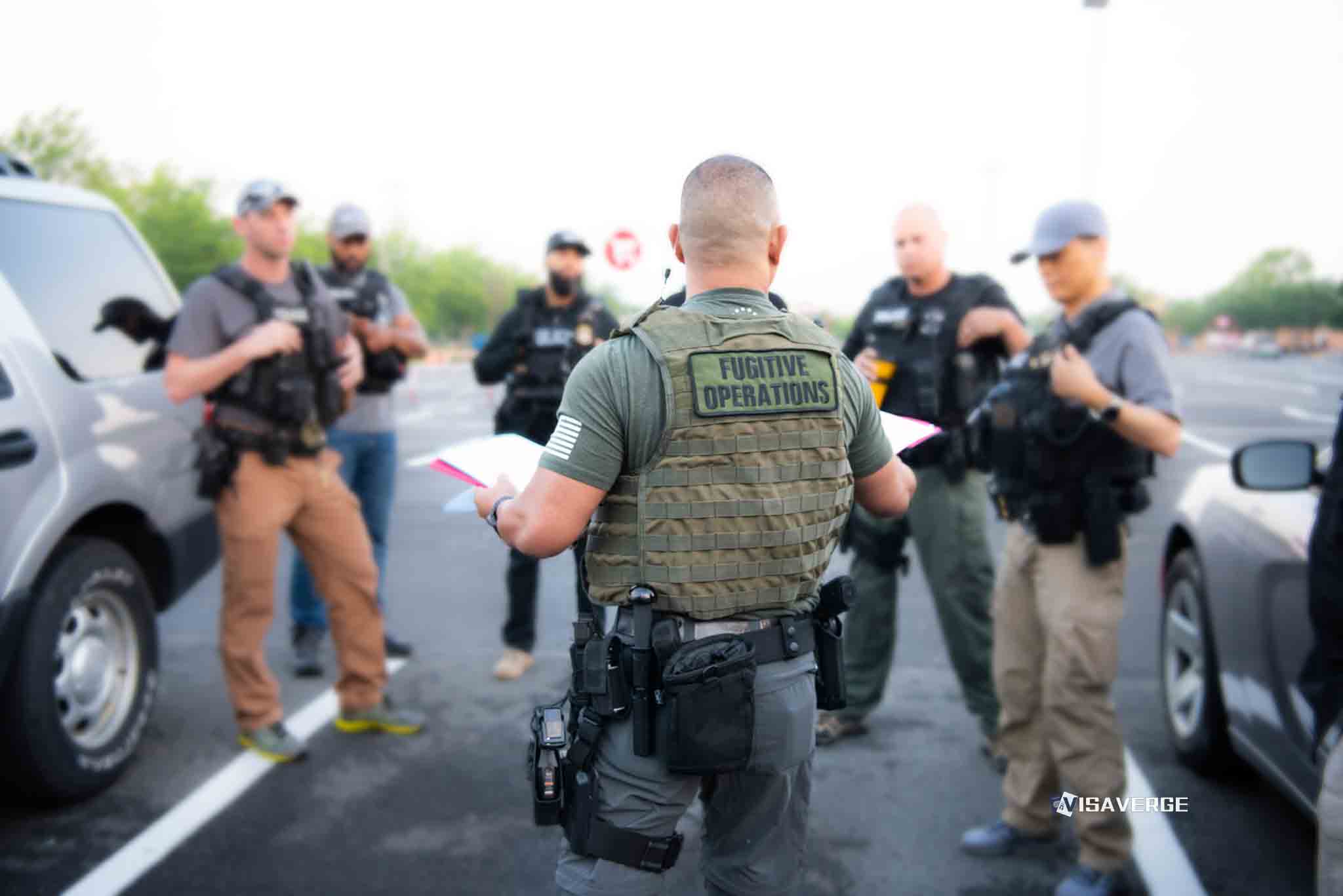
ICE added to that posture in April 2026, when internal guidance ordered investigative agents to prioritize cases involving “organized facilitation networks” that exploit lawful immigration processes for birth tourism. The emphasis, as described in the guidance, centers on ring operators and related fraud rather than childbirth itself.
USCIS had already laid out how the administration would try to carry out a narrower view of citizenship. In Implementation Plan IP-2025-0001, released on July 25, 2025, the agency said children born to mothers who are “unlawfully present” or in “lawful but temporary” status would not automatically acquire citizenship if the father also lacks citizenship or a green card.
That plan ties to Executive Order 14160. The categories cited in the USCIS plan include temporary statuses such as H-1B, F-1 and B-1/B-2, placing workers, students and visitors inside the administration’s proposed framework if the courts ultimately allow it to take effect.
The Supreme Court is now weighing that broader constitutional fight in Barbara v. Trump, No. 25-365. The justices heard oral arguments on April 1, 2026, and a ruling is expected in late June or early July 2026.
Trump administration lawyers argued that the Constitution’s phrase “subject to the jurisdiction” of the United States requires a parent’s permanent political allegiance, or domicile, which temporary visitors and undocumented immigrants do not possess. Nationwide injunctions remain largely in place, so children born in the United States continue to receive birthright citizenship for now.
The numbers attached to the debate stretch beyond the narrower practice targeted by the BACK OFF Act. Birth tourism itself is estimated to account for roughly 26,000 births annually, while the broader executive order could affect an estimated 255,000 babies born in the U.S. each year if their parents are undocumented or on temporary visas.
Those figures help explain why the proposal has drawn attention well outside the visitor visa system. Cornyn’s rationale explicitly names birth tourism, but the government’s separate citizenship policy reaches families that include temporary workers and students legally present in the country.
That overlap places foreign nationals on H-1B and F-1 visas among the groups most closely watching the Supreme Court case and the new bill. Visitors from countries such as China and Russia are also among the primary groups mentioned in the BACK OFF Act’s rationale.
Texas has already moved against one alleged operator. On April 29, 2026, Texas Attorney General Ken Paxton announced a lawsuit against a Houston-area birth tourism center, accusing it of facilitating the entry of foreign nationals solely for the purpose of giving birth to secure citizenship.
The state lawsuit arrived one day before Cornyn unveiled his bill, giving federal and state action a nearly simultaneous push. Together, they point to a broader enforcement campaign aimed at facilitators, visa applicants and, if Congress agrees, suspected participants themselves.
The bill’s detention and examination provisions are likely to draw scrutiny alongside the constitutional fight already underway over birthright citizenship. Cornyn’s office published the proposal in a press release, while administration updates continue through the USCIS newsroom, DHS news page and Texas attorney general announcements.
Congress now has before it a bill that would create new penalties tied specifically to birth tourism, while the Supreme Court considers whether the Constitution allows a much wider restriction on citizenship at birth. A decision from the justices, expected within weeks, will determine whether the administration can move beyond proposals and court filings to reshape who is recognized as a citizen from the moment of birth on U.S. soil.