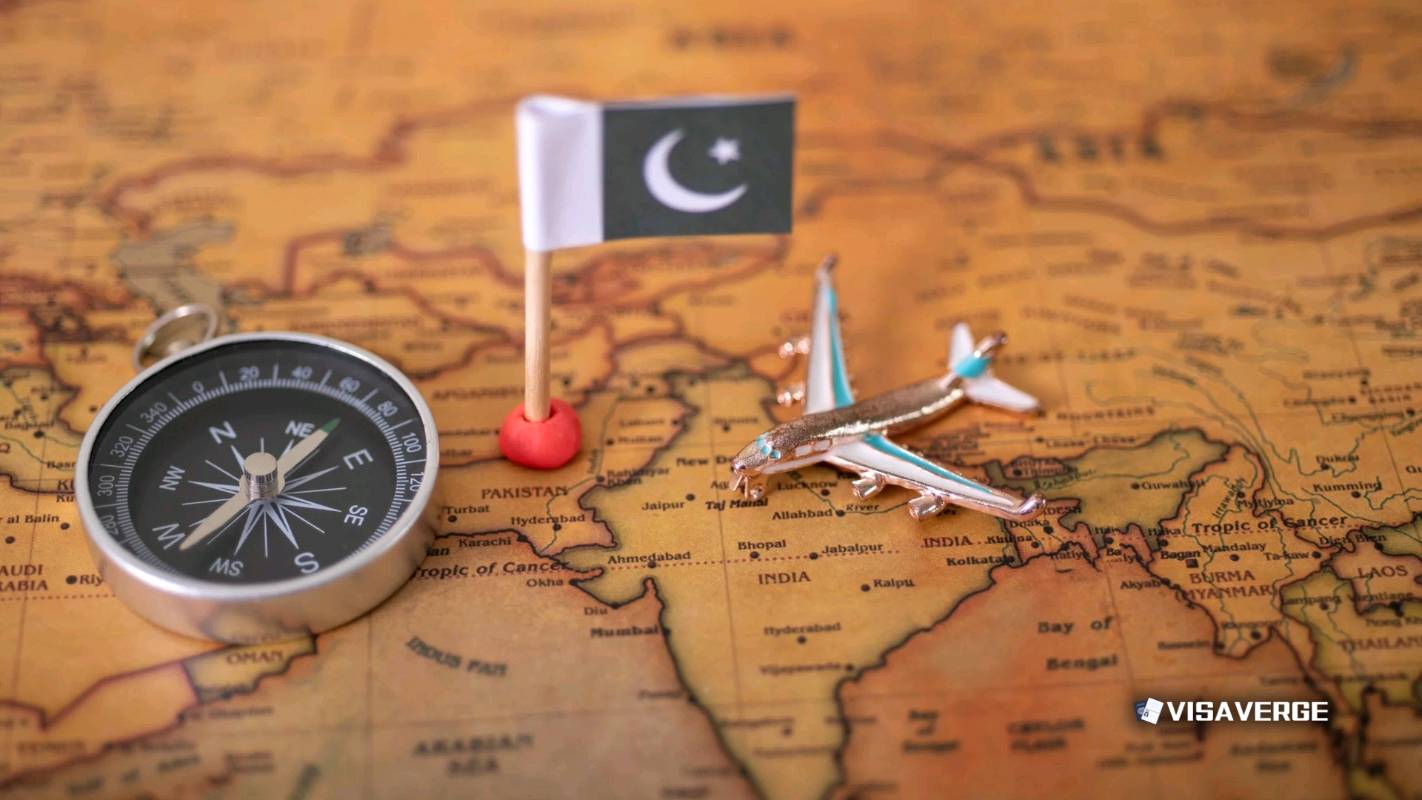
- Pakistan and Italy signed an agreement for diplomatic visa exemptions to streamline official travel and strengthen bilateral relations.
- The measure applies exclusively to diplomatic passport holders and does not impact ordinary travel or other categories.
- Italy committed to providing 10,500 work visas for skilled workers under a separate labor cooperation framework.
(ROME) — Pakistan and Italy signed an agreement to exempt holders of diplomatic passports from visa requirements, according to Pakistani and Italian press reports issued on June 2, 2026.
The deal was signed in Rome by Pakistan’s Ambassador to Italy, Ali Javed, and Italian Foreign Affairs Secretary General Ambassador Riccardo Guariglia. Official and media accounts described it as an accord meant to facilitate travel for diplomatic missions and strengthen bilateral ties.
Free toolSchengen Short-Stay Visa Calculator
The arrangement applies only to diplomatic passports. It does not extend to other passport categories in the information released on Tuesday.
Accounts carried in both countries presented the measure as a practical step aimed at easing official exchanges. The stated purpose was narrow and diplomatic: simpler travel for state representatives engaged in official work.
That limited scope stood out in all descriptions of the accord. Pakistan and Italy framed the exemption as part of their bilateral diplomatic engagement rather than a wider change in entry rules for ordinary travelers.
Javed signed on Pakistan’s behalf, while Guariglia signed for Italy. The signing in the Italian capital placed the agreement in a formal diplomatic setting, with both sides linking it to smoother institutional contact.
Tuesday’s reports did not present the accord as a broad migration measure. They described a targeted exemption tied to diplomatic missions and state-to-state exchanges.
Pakistan and Italy have also discussed wider cooperation through the same diplomatic channel. That includes Italy’s commitment to provide 10,500 work visas for Pakistani skilled workers under a separate labor framework.
The work visa commitment sits outside the diplomatic passport deal, but it points to a broader pattern in relations between the two countries. One track addresses official travel between governments; the other concerns labor mobility for Pakistani workers.
Seen together, the two strands show a relationship built on both diplomacy and employment. The visa exemption removes a procedural step for holders of diplomatic passports, while the separate labor framework opens a larger lane for skilled migration.
Italy’s pledge of 10,500 work visas has drawn attention because of its scale and because it concerns Pakistani skilled workers rather than diplomatic staff. The two matters remain distinct in the accounts released on June 2, 2026, with one centered on official travel and the other on labor access.
No broader exemption was announced alongside the diplomatic accord. Reports repeated the same core point: the agreement covers diplomatic passport holders and is meant to facilitate official exchanges.
That keeps the measure tightly defined. Diplomats and officials carrying the covered passports stand to benefit from reduced visa formalities, while the broader travel regime between the two countries remains separate from this arrangement.
Rome served as more than the venue for the signing. It was also the setting in which Pakistan and Italy put on record a small but concrete step in bilateral relations, one focused on the mechanics of diplomacy rather than rhetoric.
The accord adds a formal layer to contacts that both sides have linked to stronger bilateral ties. In parallel, the separate labor framework, anchored by 10,500 work visas, shows that cooperation is not confined to diplomatic protocol.
Taken together, Tuesday’s developments pointed to two active areas in Pakistan-Italy relations: easier movement for officials under the agreement to exempt holders of diplomatic passports from visa requirements, and labor cooperation built around Italy’s commitment on skilled-worker visas.