- Nigerian aviation unions suspended their airport blockade after government intervention on Tuesday afternoon.
- Over eighty flights were cancelled, causing estimated losses of two billion Naira in airline revenue.
- A critical meeting regarding unpaid ticket sales charges and union rights is scheduled for August fourteenth.
Nigerian airlines began restoring flights Tuesday after aviation unions suspended industrial action that blocked terminal access in Lagos and Abuja. The disruption left passengers stranded for several hours and forced carriers to work through cancelled services.
The unions announced the temporary suspension around 2:00 PM WAT on Tuesday, August 11, 2026, after Aviation and Aerospace Development Minister Festus Keyamo intervened. Frances Akinjole, general secretary of the Air Transport Services Senior Staff Association, said the unions would meet the minister in Abuja.
Free toolB1/B2 Tourist Visa Stay Calculator online
“It has been suspended. The Minister [Festus Keyamo] intervened, so we are having a meeting with him in Abuja on Thursday.”
That meeting is scheduled for Thursday, August 14, 2026. The suspension eased the airport blockade, but it did not settle the underlying dispute.
The picketing began in the early hours of Tuesday. Union members targeted major airports in Lagos and Abuja, with the action focused primarily on Air Peace and potentially other carriers in a later phase.
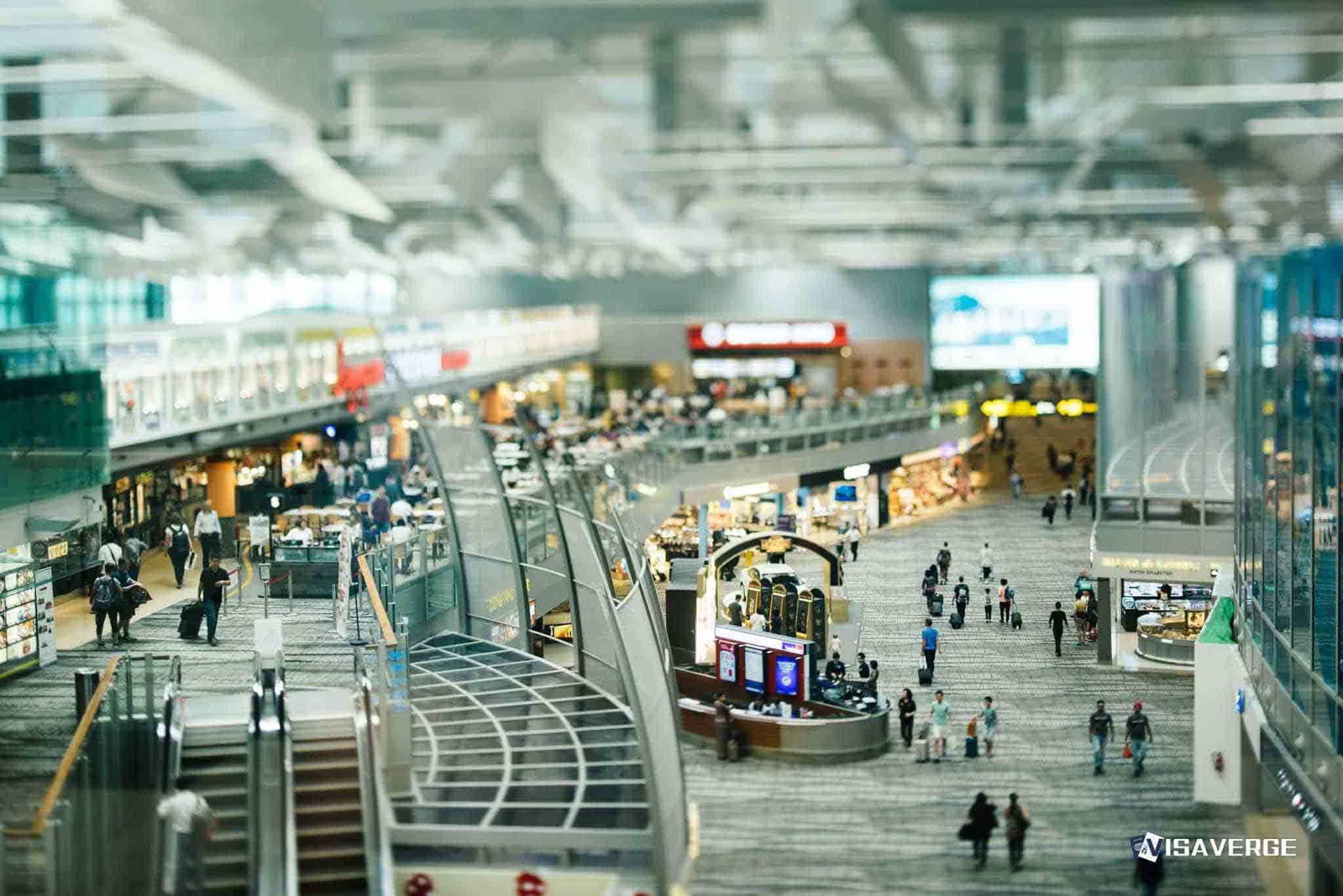
Passengers faced blocked entrances at the General Aviation Terminal and Terminal 2 in Lagos. Access was also disrupted at Nnamdi Azikiwe International Airport in Abuja.
At Murtala Muhammed Airport Terminal 1 in Lagos and the Abuja terminal, barricades prevented scheduled departures. The MMA1 arrival area reopened at exactly 2:25pm, allowing waiting passengers to enter and join boarding queues.
Efe Whiskey, a spokesperson for the carrier, said flights had started operating while the airline assessed how to move passengers who had been waiting at the airport.
“We are trying to see how many flights we can operate with the amount of passengers who have been waiting at the airport. we are operating flights already.”
The airline later apologized to stranded passengers and described the disruption as temporary. It said its Lagos and Abuja departure terminals had been barricaded, preventing scheduled services from leaving.
Carriers reported different cancellation totals during the blockade
The two airlines gave separate figures for flights removed from their schedules. Their statements also showed the scale of the recovery task facing operators after terminal access was disrupted.
| Carrier | Flights cancelled or suspended | Normal schedule cited |
|---|---|---|
| Air Peace | 29 flights cancelled by Tuesday afternoon | About 70 regional and international flights daily; another account cited a 75-flight schedule |
| United Nigeria Airlines | 32 flights suspended | Not specified |
United Nigeria Airlines said it paused 32 flights to protect passengers and crew. Its advisory said:
“Rather than compromise on safety, we have chosen to pause operations until normalcy is restored.”
The additional research put the nationwide total above 80 cancelled flights. Preliminary industry estimates placed losses from lost revenue and service disruptions at N2 billion, or $1.25 million USD.
That estimate remains an industry figure. Airlines began clearing the resulting backlog as operations returned.
The dispute combines a 5% charge claim with complaints about union rights
NUATE, ATSSSAN and the National Association of Aircraft Pilots and Engineers led the action. The Nigeria Labour Congress and the Trade Union Congress backed the unions.
Their central financial complaint concerns the statutory 5% Ticket Sales Charge. The unions allege that domestic carriers collect the charge from passengers but do not remit it to the Nigeria Civil Aviation Authority.
They say the charge helps fund aviation agencies’ operations. The unions put the alleged unpaid amount at approximately N15 billion to N20 billion.
The labor groups also accuse airlines of anti-union practices. Their complaints include alleged intimidation and attempts to prevent employees from joining labor organizations.
Air Peace management and a faction of its workers rejected the action. Aminu Suleiman, a spokesman for workers at the airline, said employees should be free to decide whether to join a union.
“Section 40 of the 1999 Constitution guarantees the freedom of association. we can choose to join or not. It’s not by force.”
The competing positions leave the ministerial talks to address both money and workplace rights. The unions want the remittance issue examined alongside employees’ ability to organize.
The aviation regulator urged restraint as airlines tried to reopen
Capt. Chris Ona Najomo, acting Director-General of the Nigeria Civil Aviation Authority, appealed for a negotiated settlement while the minister worked with the parties.
“sheathe their swords and exercise restraint pending the return of the Honourable Minister. who has been actively working towards resolving the issues.”
Najomo also called on the unions, airlines and government bodies to cooperate. In a separate appeal, he said:
“We appeal to all parties to embrace dialogue and cooperation. We are confident that the matter will be resolved shortly and normal flight operations will resume as soon as practicable”
The regulator’s intervention came as passengers remained outside terminals and carriers assessed which flights could operate. The reopening of access allowed airlines to begin moving waiting travelers, but cancelled services still had to be rescheduled.
Ado Sanusi, chief executive of Aero Contractors, called for a government investigation into the airport action.
“Nigeria is a country of law, and we are law-abiding citizens. I think the Federal Government should investigate this because people are taking the law into their hands.”
John Ogbe, national president of ATSSSAN, and John Igene, general secretary of NUATE, are among the union officials connected to the dispute. Their organizations’ backing helped turn the airline-level disagreement into a broader aviation labor action.
Abuja talks will test whether the suspension lasts
The unions’ decision ended the immediate picketing but remains temporary. They indicated that industrial action could resume the following day or extend to other airlines if the dispute is not resolved.
Keyamo’s Abuja meeting on Thursday will focus on the alleged Ticket Sales Charge remittance shortfall and complaints about unionization rights. The minister’s intervention gave airlines time to restart services while the parties pursue a settlement.
The resumption also leaves carriers handling the consequences of Tuesday’s cancellations. Knock-on delays persisted as airlines worked through the backlog from more than 80 affected flights.
Passengers with disrupted bookings should check the status of their flights with the operating airline before heading to the airport. The next scheduled labor meeting is Thursday, August 14, 2026, in Abuja.