What Happened to Mehul Prajapati in Canada?
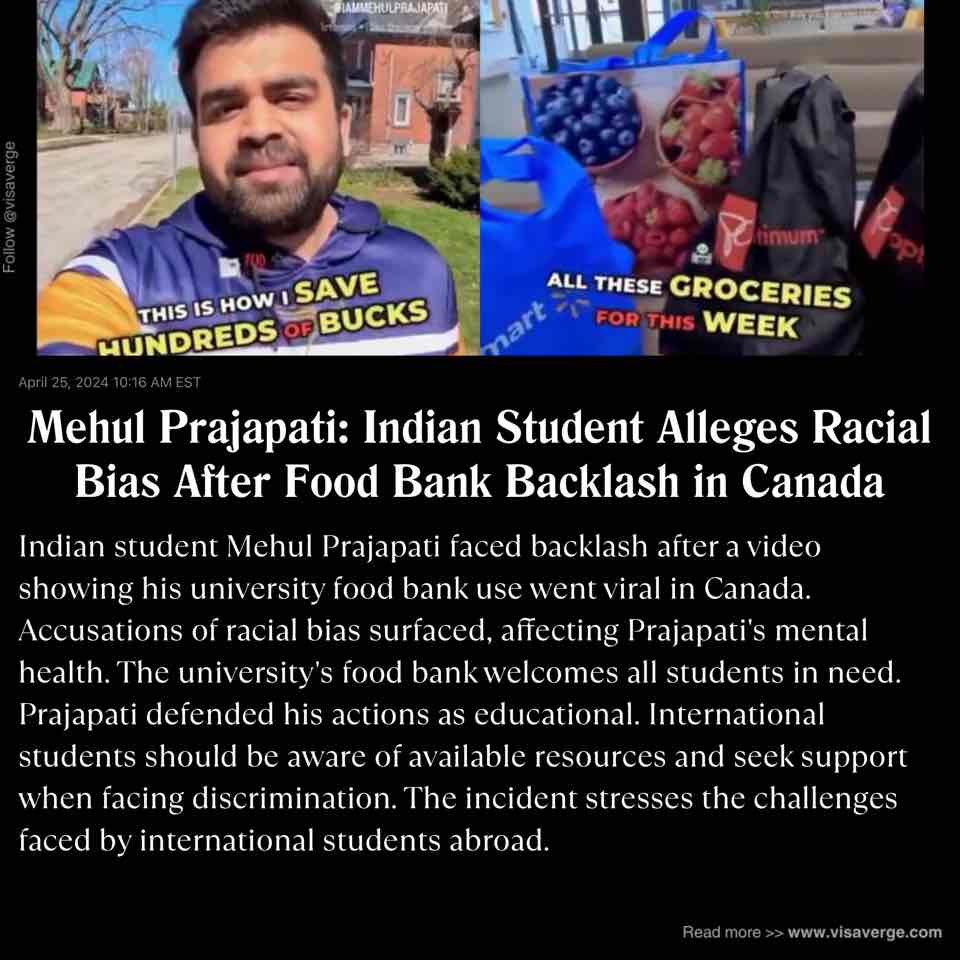
Mehul Prajapati, an Indian data scientist studying in Canada, has been in the spotlight for reasons he never anticipated. After creating and sharing a video to guide fellow international students on utilizing a university food bank, Prajapati faced severe backlash online, propelling him into a controversy punctuated by accusations of racial bias. This incident sheds light on the challenges faced by international students and the complex dynamics of racial perception in social media spaces.

Who is Mehul Prajapati?
Mehul Prajapati is an Indian student who moved to Canada in 2022 on a student visa. He enrolled in a master’s degree program at Wilfrid Laurier University. Alongside his studies, Prajapati engaged in an internship which concluded on December 22, 2023. His story took a turn when he created a video showing how he accessed food support from a food bank designed to aid struggling students at his university.
What is the Controversy Surrounding the Canada Food Bank Use?
The video posted by Prajapati, showcasing how to use the food bank services at Wilfrid Laurier University, triggered intense online attacks after it went viral. Critics argued that Prajapati, who had an internship stipend, should not have used the food bank intended to assist financially struggling students. His annual earnings were around 98,000 Canadian dollars during his internship period, sparking a debate about the necessity of his food bank usage. Following the backlash, misinformation spread, further fueling the controversy, and eventually, he was no longer associated with his employer, TD Bank.
How Did Racial Bias Play a Role?
In discussing the backlash, Prajapati cited racial bias as a significant factor in the severity of the criticism he faced. He expressed that the attacks were not just about the food bank usage but were tinged with racial undertones, affecting his mental health and safety. He recounted, “For the past six days, I’ve stayed indoors due to mental stress caused by hurtful comments. These accounts are spreading rumours without solid proof, targeting a specific group. It’s discrimination and racial bullying, and I’m a victim of it.”
What Does the University Say About the Food Bank Program?
The Wilfrid Laurier University, along with Laurier Students’ Public Interest Research Group (LSPIRG) and Martin Luther University College, runs a program that offers free groceries to students who experience food insecurity. The initiative operates on the principle that students should take what they need without restriction, as the precise needs can vary greatly among students. This resource is exclusively available to students of the mentioned institutions and requires proper identification for access.
Was Mehul Prajapati’s Use of the Food Bank Justified?
Prajapati defended his actions by stating his intention was purely to educate and assist other students in a similar financial position, not to exploit the resources. He explained, “My aim was to help students, not take from others. The resource mentioned in the video is meant for university students specifically, not the general public. Everything I mentioned is factual, as per the website.”
Furthermore, it is important to note that Prajapati had previously volunteered for the food bank program, indicating his engagement and support for the initiative beyond just utilizing its resources.
How Can International Students Navigate Similar Challenges?
For international students finding themselves in similar predicaments, it is crucial to stay informed about the resources available to them and understand the local norms and regulations regarding their usage. Students should also be aware of their rights and the proper channels through which to seek help if they face discrimination or backlash. For authoritative information on navigating student visas and related concerns, the Government of Canada’s immigration and citizenship page offers comprehensive guidance.
Conclusion
The ordeal of Mehul Prajapati highlights the intersection of social media, cultural misunderstandings, and the challenges of being an international student in a foreign country. It underscores the importance of understanding and empathy in discourse surrounding migration and student life abroad. As discussions continue, it is essential to approach such sensitive topics with a balanced perspective, focusing on facts and personal stories to foster a more inclusive and supportive environment for international students around the world.
Learn Today:
Glossary or Definitions:
- Student Visa:
A document issued by a country’s government that allows individuals to enter, study, and reside in that country for the purpose of pursuing educational opportunities. Student visas typically come with specific requirements, such as enrollment in a recognized educational institution and evidence of financial support during the stay.
- Internship Stipend:
A predetermined sum of money paid to individuals undertaking internships as a form of compensation for their work. Stipends are often provided to support interns financially during their training or work experience and may vary in amount depending on factors such as the duration of the internship and the organization offering it.
-
Racial Bias:
Prejudice or discrimination against individuals based on their race or ethnicity, leading to unfair treatment, stereotypes, or negative perceptions. Racial bias can manifest in various forms, including unequal opportunities, systemic inequalities, and biased attitudes towards individuals from specific racial or ethnic backgrounds.
-
Food Insecurity:
A condition where individuals lack reliable access to a sufficient quantity of affordable, nutritious food. Food insecurity can result from various factors, such as financial constraints, limited access to grocery stores, or insufficient social support systems. Programs like food banks aim to address food insecurity by providing assistance to those in need.
-
Immigration Regulations:
Laws and policies established by a country’s government to govern the movement of individuals across its borders. Immigration regulations outline requirements, procedures, and restrictions related to entering, staying, and working in a foreign country, including aspects such as visa types, residency permits, documentation, and eligibility criteria.
This Article In A Nutshell:
Mehul Prajapati, an Indian student in Canada, faced backlash for using a university food bank. Accused of racial bias, the incident ignited a debate on social media. International students can navigate challenges by understanding local resources and seeking support. The issue emphasizes the need for empathy and cultural understanding in the international student community.
— By VisaVerge.com