


- Aviation regulators like the FAA and EASA have not approved standing-only seats for commercial passenger flights.
- Concepts like the Skyrider 2.0 aim to increase passenger capacity by 20% on short-haul budget routes.
- Significant hurdles include rigorous crash safety testing and emergency evacuation requirements that current prototypes cannot meet.
Major aviation regulators have not approved standing-only seats for passenger service, leaving concepts such as Aviointeriors’ Skyrider 2.0 off commercial aircraft as of March 2026 despite renewed claims of a rollout this year.
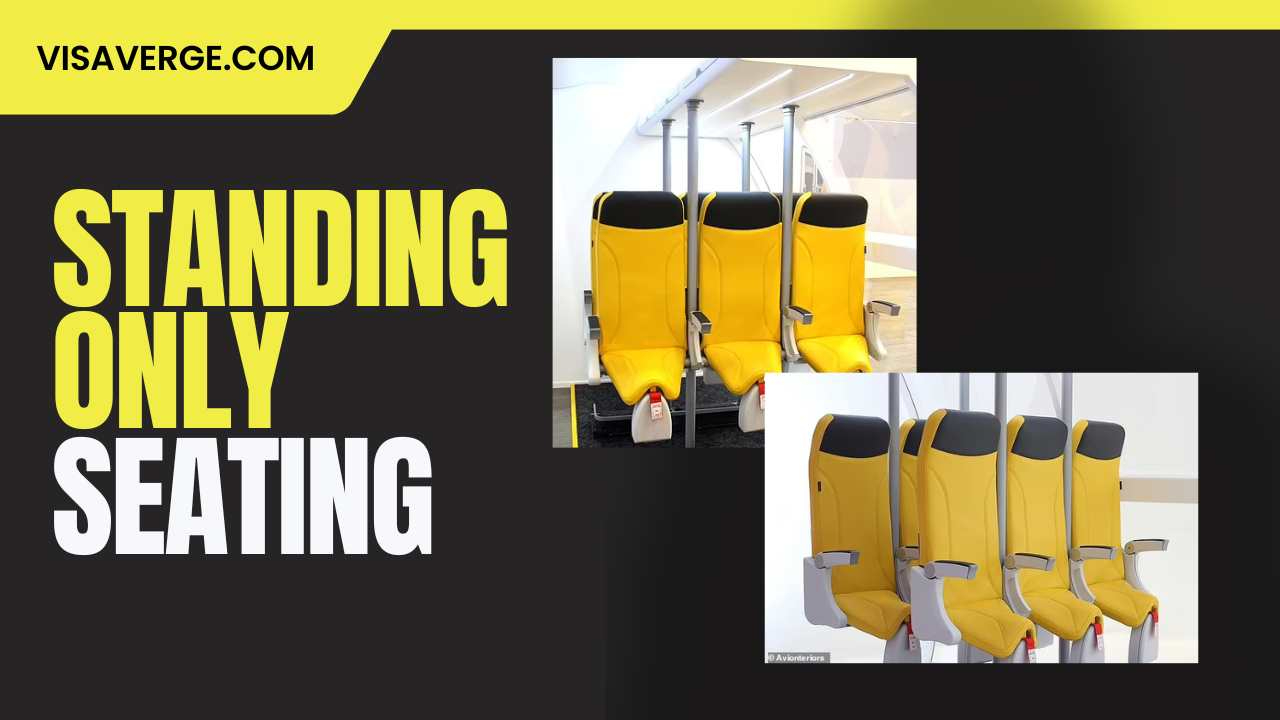
No airline operates the seats, and regulators including the FAA in the United States and EASA in Europe have not certified vertical or semi-standing seating layouts. The designs remain prototypes more than a decade after they first appeared.
Rumors surged again after social media posts in early 2025 claimed that “several budget airlines will introduce standing-only seating options beginning in 2026,” with the promise of packing 20% more passengers onto flights under two hours. Those posts helped revive a long-running idea that low-cost carriers could replace standard rows with saddle-like perches for short trips.
Aviointeriors pushed back in a May 2025 Instagram post, saying the Skyrider seats were “never meant to be taken at face value” and are not in its current product catalog. That statement undercut repeated claims that airlines were preparing to install standing-only seats in 2026.
The Skyrider Concept
The best-known version, the Skyrider 2.0, appeared at the 2018 Aircraft Interiors Expo in Hamburg. Aviointeriors presented it as a semi-standing design with a padded perch resembling a bicycle seat, angled at about 45 degrees so passengers would lean rather than fully sit or stand.
The concept aimed to reduce seat pitch from the typical 31-32 inches in economy to 23 inches. In theory, that would allow airlines to add 20% more passengers without enlarging the fuselage.
Aviointeriors also promoted the seat as 50% lighter than standard models, with fewer components that could lower maintenance and fuel costs. The design included seatbelts for takeoff, landing and turbulence, plus firmer floor-and-ceiling mountings and added padding for support.
Yet the prototype has not moved beyond trade shows. Full cabin installation would require changes to seat tracks, overhead bins, evacuation paths and under-seat storage, and those changes do not fit existing aircraft fuselages.
Regulatory and Certification Barriers
Regulatory barriers have kept the idea grounded. EASA said in May 2025 that it had received zero applications for standing or semi-standing passenger seats.
An EASA spokesperson said: “The design of the fuselage does not provide space for standing passengers right across to the window.” The regulator also cited technical obstacles including emergency evacuation and the shape of aircraft cabins.
Certification rules create another hurdle. Passenger seats must pass dynamic crash testing that simulates 16g forward and 14g vertical forces, tests built around seated postures rather than semi-upright ones.
A semi-standing position changes how forces move through the spine, pelvis and legs. That has raised questions about whether such seats could satisfy current crash standards.
Emergency evacuation rules add to the challenge. Aircraft must be able to evacuate all passengers within 90 seconds, and a denser cabin built around standing-only seats could make that harder, especially on narrow-body jets.
The FAA’s staffing rules also affect the economics. The agency requires two attendants per 50 passengers, so adding more passengers would also raise crew costs.
Accessibility presents another obstacle. Designs that assume full leg mobility conflict with the Americans with Disabilities Act, and airlines would need accommodations that add complexity and expense.
Manufacturers would also need new type certificates for altered cabin configurations. That means Boeing, Airbus or another aircraft maker would have to secure approval for those layouts, a process that can take years.
Airline Interest and Rejections
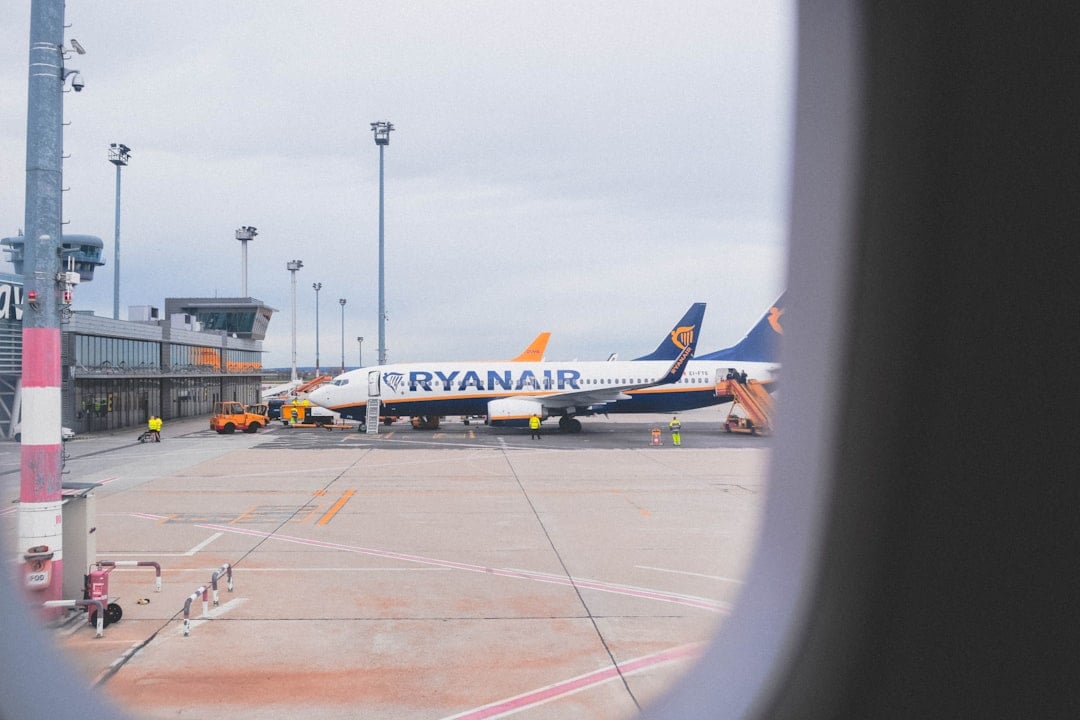
Airlines have talked about the idea, but none has committed to it. Ryanair CEO Michael O’Leary has joked about £1-£5 “standing berths” since 2009 and floated the idea of 10 rows of them in 2012.
Ryanair said in 2025 that it is not considering Skyrider seats. The airline acknowledged earlier EU safety rejections, and no order has followed O’Leary’s remarks.
EasyJet also denied plans for a 2026 launch when asked about the rumors. Aviointeriors has reported no sales or orders for the product, despite repeated online claims that unnamed low-cost carriers in Spain or Eastern Europe might adopt it.
Safety, Comfort, and Practical Concerns
The safety debate has gone beyond certification paperwork. Supporters have said the Skyrider passed “all safety tests,” but the absence of approval from regulators such as the FAA and EASA has left that claim unresolved in practice.
Critics argue that a semi-standing posture offers less protection from impact and from objects flying through the cabin during sudden turbulence. They also question whether passengers could safely remain braced on a perch for up to two hours.
Fatigue is part of that concern. Standing-only seats require passengers to support themselves in an upright or semi-upright position, a burden that could fall harder on elderly, disabled or tall travelers.
One critic compared the concept to “anti-vagrancy devices.” Another line of criticism has focused on dignity and comfort, with opponents describing the idea as “cattle class.”
Even if regulators approved the concept, airlines would face practical questions about what passengers receive for the lower fare. The layout leaves no room for tray tables, limited or no under-seat storage and none of the features that travelers associate with a standard seat.
The Business Case and Public Reaction
Backers of the concept argue the business case is simple. By carrying 20% more passengers and using lighter seats, airlines could cut costs and offer lower one-way fares, including estimates of €1-€5 on busy short routes such as Madrid-Lisbon.
That promise has fueled public curiosity even as the project has stalled. For budget carriers operating on thin margins, any cabin redesign that increases density and reduces fuel burn attracts attention.
Still, the extra capacity may not translate neatly into lower operating costs. Higher passenger numbers would trigger staffing requirements, and slower boarding or exits could erase some of the gains from squeezing more people onto an aircraft.
Public reaction has been sharp. Social media users mocked the idea with jokes about passengers being treated like “library books” or hanging on to “wing handrails,” while some price-sensitive travelers said they would consider the option for quick city hops.
That divide reflects a wider argument over how far airlines can push no-frills travel. Low-cost carriers already rely on tighter seating, add-on fees and dense cabins, but standing-only seats would test the limit of what travelers and regulators accept.
For cross-border travelers, migrant workers and people making short family trips in Europe, the appeal was obvious in theory: cheaper fares on brief routes. But because the seats remain unapproved, standard economy seats still define the market for those trips.
The idea has lingered through several versions. Earlier Skyrider concepts dating to 2010 evolved into the 2.0 and 3.0 prototypes, with talk of mixed cabins that would place standing options ahead of conventional seating.
Those versions never made the jump from display floor to airline fleet. Without regulatory approval, manufacturer certification and a carrier willing to commit, the concept remains a talking point rather than a product.
As of March 2026, standing-only seats and the Skyrider 2.0 sit at the intersection of airline cost-cutting and aviation safety rules, with the FAA and EASA still far from allowing passengers to fly in them. For now, the rumors of a 2026 debut have proved stronger than the case for putting them in the air.


Vertigo? Short stature? Children? Panic attacks? Hypotension? Peripheral weakness? Obesity?