- Advocacy groups filed a federal lawsuit against the Trump administration’s Gold Card visa program over transparency issues.
- The legal action targets withheld FOIA records from the DHS, State Department, and Commerce Department regarding program implementation.
- Critics label the $1 million visa pathway a pay-to-play scheme that potentially displaces merit-based immigration applicants.
(UNITED STATES) — Democracy Defenders Fund, Colombo & Hurd, and the Free Information Group filed a federal lawsuit on April 13, 2026, accusing the Trump administration’s Gold Card visa program of withholding records and operating with a lack of transparency.
The case, filed in the U.S. District Court for the District of Columbia, names the Department of Homeland Security, U.S. Citizenship and Immigration Services, the Department of State, and the Department of Commerce. It centers on the government’s refusal to release documents under the Freedom of Information Act, or FOIA.
Free toolDS-160 Form Filling Online Helper Tool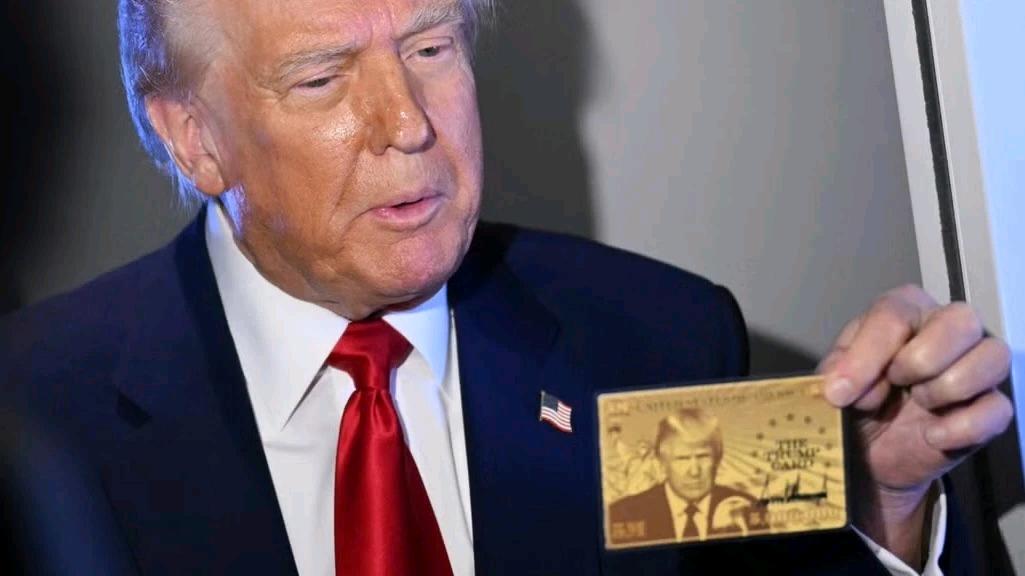
Plaintiffs cast the Gold Card as a fast-track residency pathway built with little public disclosure. They argue the administration has been inconsistent and secretive about how the program was developed, how it fits within existing immigration law, and how participating agencies are carrying it out.
President Trump launched the program on December 11, 2025 and described it as a “green card on steroids” and a “direct path to Citizenship for all qualified and vetted people.” USCIS later published Form I-140G, Immigrant Petition for the Gold Card Program, with edition date 11/19/25, placing the initiative inside existing employment-based immigration channels.
Commerce Secretary Howard Lutnick said in early 2026 that the program generated $1.3 billion in “sales” within days of launch. He later said the administration had “sold” roughly 1,000 cards.
That public sales pitch now sits beside a lawsuit demanding the records behind it. Democracy Defenders Fund said the Department of Commerce told the group it would not complete its FOIA request until March 2027.
Amb. Norm Eisen of Democracy Defenders Fund said, “Behind closed doors, this administration appears to be trying to turn our immigration system into a bazaar with the privilege of U.S. residency available to the highest bidder. The American people deserve to know how this pay-to-play scheme came to be”.
Kevin Bell of the Free Information Group said, “Immigrant visas are not million-dollar Mar-a-Lago memberships. People may lie, records don’t”.
The program traces to Executive Order 14351, which established it on September 19, 2025. Under the structure described by the administration, individuals pay $1 million, while corporations can pay $2 million on behalf of an employee.
Applicants also face a non-refundable processing fee of $15,000 before making the full contribution. USCIS has treated the financial gift as prima facie evidence of eligibility within the EB-1A and EB-2 NIW categories, a move that has drawn legal scrutiny because those classifications were created for applicants qualifying through traditional standards tied to extraordinary ability or national interest.
A higher-priced version, the Platinum Card, remains in a waitlist phase at $5 million. The administration has said that product would offer tax exemptions on non-U.S. income for holders who stay up to 270 days per year.
Critics have focused on what that design means for applicants already competing for visas in capped employment-based categories. An earlier lawsuit, AAUP v. DHS, filed on Feb 3, 2026, argued that Gold Card applicants would take visa numbers from scientists, researchers, and engineers who qualify through standard merit-based routes.
Because EB-1 and EB-2 visas face annual limits, opponents argue that each Gold Card approval can crowd out a petition from a worker who built a case through publications, research, patents, or national interest work rather than a financial contribution. That displacement argument has become central to the broader legal fight over whether the executive branch can reshape existing visa categories without Congress.
Immigration professionals said that, as of April 2026, there were “no publicly verified holders” who had completed the process. That gap has sharpened questions about whether the program is moving through adjudication or has slowed amid litigation and administrative disputes.
Attorneys have also warned that early participants face legal risk if courts find the program exceeded executive authority. Applicants who paid the $1 million contribution could confront “complex consequences,” including possible revocation of status, if judges rule that the framework cannot stand under existing law.
The lawsuit does not challenge the administration’s rhetoric alone. It targets the paper trail behind the policy, including how agencies coordinated on the program, what legal analysis supported it, and what records exist about implementation.
Commerce’s projected FOIA completion date of March 2027 has become a focal point because the program is already open and has been publicly marketed. Plaintiffs argue that a disclosure timeline stretching that far into the future leaves the public in the dark while the government solicits large payments for immigration benefits.
USCIS has publicly reflected the program’s existence through USCIS Forms Updates (I-140G), where the form appears among agency materials. Democracy Defenders Fund has posted information about the case through its press center.
The administration’s registration system also appears through the official portal, though access is restricted. Those public-facing references have not resolved the dispute over what legal memoranda, interagency communications, and policy documents remain undisclosed.
The case arrives as the Trump administration continues to present the Gold Card as a new route for wealthy migrants and employer-backed applicants, while its critics frame it as a pay-to-play redesign of the immigration system. Bell’s line, “People may lie, records don’t,” captures the fight now heading to court: not over whether the program exists, but over who gets to see how it was built.