- Homeland Security suggests withdrawing customs officers from major airports located within sanctuary jurisdictions.
- Charlotte Douglas International will not be affected as Charlotte is not on the sanctuary city list.
- The proposal remains a political and legal debate with no official implementation timeline announced yet.
(CHARLOTTE, NORTH CAROLINA) — Homeland Security Secretary Markwayne Mullin proposed potentially withdrawing Customs and Border Protection officers from airports in sanctuary jurisdictions, but Charlotte Douglas International Airport will not be affected because Charlotte is not on the cited sanctuary city lists.
Mullin raised the idea in statements from April 6-8, 2026, suggesting the government could halt international traveler processing at major airports in cities that limit cooperation with federal immigration enforcement. As of April 9, 2026, no official policy, airport list or implementation timeline had been announced.
Free toolUSCIS Receipt Number Decoder
For travelers in Charlotte, the immediate answer is straightforward. Charlotte Douglas International Airport, often referred to as CLT, is not located in a sanctuary city and is not targeted by the proposal, and flights there will not be affected.
That makes Charlotte an exception in a debate now centered on sanctuary city airports and how the federal government might respond to local policies it opposes. The discussion has widened as a partial Department of Homeland Security shutdown entered its 54th day as of April 8, 2026.
Mullin tied his comments to both immigration enforcement and funding disputes. He also raised the question of whether cities that do not fully cooperate with federal immigration authorities should continue handling arriving international passengers through federal customs processing.
“If they’re a sanctuary city, should they really be processing customs into their city?” Mullin said during an interview and a visit to western North Carolina on April 8.
The Department of Justice’s May 2025 list of sanctuary cities, cited in the discussion, includes Denver, Philadelphia, Chicago, Los Angeles, New York City and San Francisco. Airports associated with those cities include DEN, PHL, ORD, LAX, JFK/LGA/EWR and SFO.
Charlotte, North Carolina, does not appear on those cited lists. That exclusion has placed Charlotte Douglas International Airport outside the airports referenced in the proposal debate.
Other accounts of the potential impact also mentioned Boston Logan, Seattle and New Orleans. Even in those broader references, Charlotte remained absent.
That matters because the proposal, as described so far, is linked to sanctuary jurisdictions rather than to airports generally. Charlotte Douglas International Airport continues normal operations without the risks mentioned for airports in the sanctuary city discussion.
The idea remains under review. No formal DHS policy has been issued, no final roster of airports has been announced and no schedule for any change has been set.
Mullin said discussions with President Trump were possible. He also indicated that funding disputes were a priority factor as the shutdown continued.
Those timing questions have left the proposal in a political and legal gray area. Federal officials have discussed halting international traveler processing at sanctuary city airports, but they have not moved from public statements to a published implementation plan.
That uncertainty has fed a broader argument over how far the administration can go in using federal immigration functions to pressure cities. A prior April 2025 federal injunction in San Francisco prohibits retaliating against sanctuary cities by withholding federal funding, a ruling that could complicate implementation even though it does not apply here.
The injunction does not change the immediate status of Charlotte. Because Charlotte is excluded from the cited sanctuary lists, Charlotte Douglas International Airport has not been identified as a target.
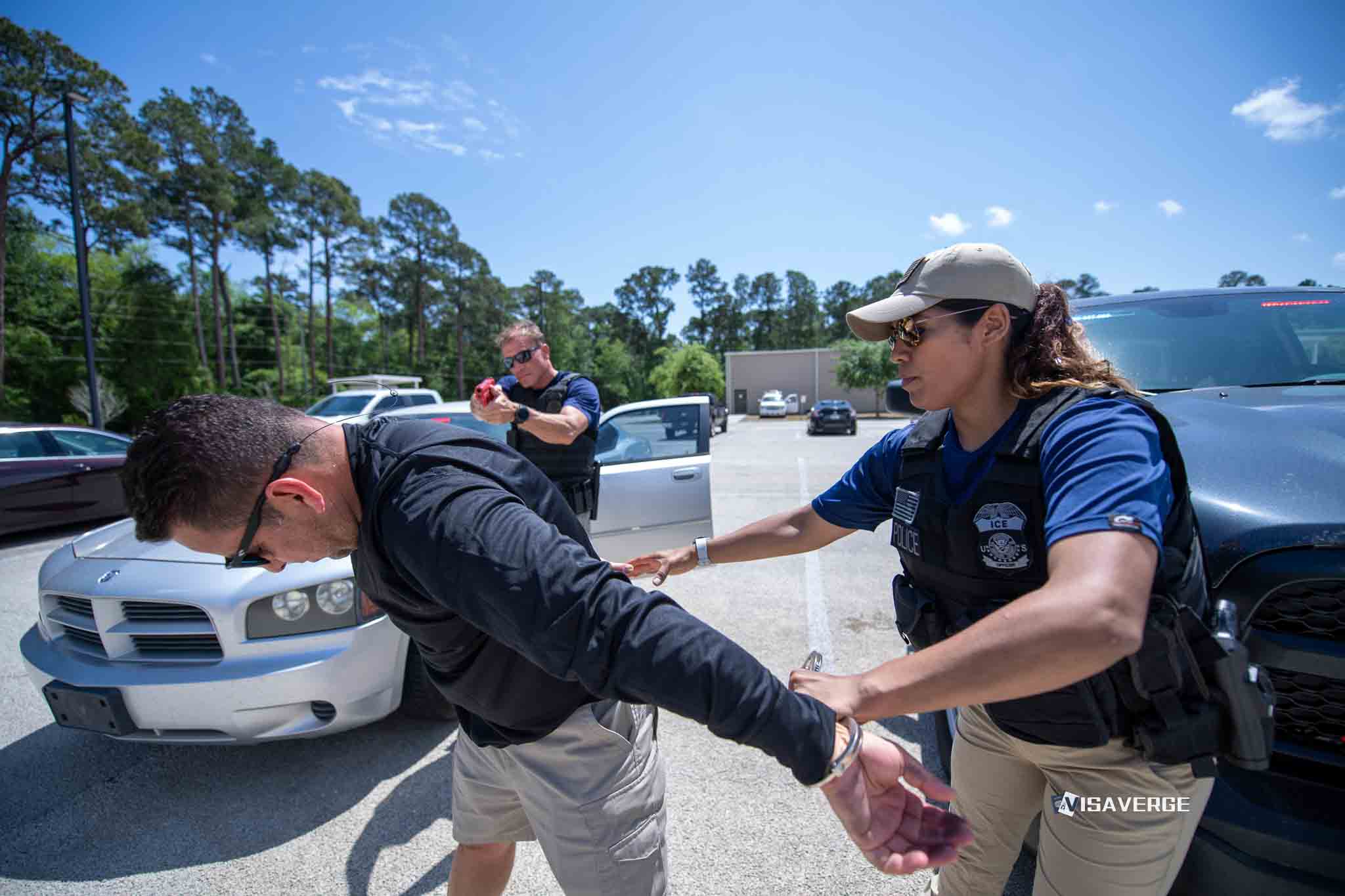
The policy debate has also unfolded alongside ongoing airport enforcement activity. ICE has made over 800 arrests from TSA tips at airports amid the shutdown.
That figure adds another layer to an already tense period for federal immigration operations at airports. It also shows that, even during the shutdown, enforcement tied to air travel has continued.
Still, the proposal Mullin discussed would concern Customs and Border Protection rather than routine airport operations in Charlotte. No change has been announced for CLT, and the airport’s flights will not be affected under the analysis tied to the current sanctuary city proposal.
For Charlotte travelers, airline crews and airport businesses, that distinction is central. The current debate is not about airport slowdowns nationwide but about whether the administration should remove customs processing from airports in jurisdictions it considers uncooperative on immigration enforcement.
That would focus attention on international gateways in the cities named in the Department of Justice’s May 2025 list. Denver, Philadelphia, Chicago, Los Angeles, New York City and San Francisco all host large airports with international passenger traffic and federal customs operations.
Charlotte Douglas International Airport is a large airport as well, but it is outside the sanctuary city frame that Mullin described. In the cited material, Charlotte is excluded from all of the lists used to identify possible targets.
The administration’s public comments from April 6-8, 2026 gave no indication that Charlotte’s status was under review. No airport list released as of April 9, 2026 included CLT.
Critics have pushed back sharply on the broader idea. California Governor Gavin Newsom called the proposal a “stupid idea” and warned about economic risks.
Those concerns extend beyond airport operations alone. Critics have pointed to possible effects on travel, trade and the country’s ability to handle major international events, including the 2026 FIFA World Cup.
That event has become part of the political argument because it will bring large flows of international visitors to the United States. Any disruption in customs processing at major airports could become a flashpoint in that context.
For now, though, the debate remains concentrated on the proposal itself rather than on any enacted order. Mullin has floated the idea publicly, but the government has not issued a final decision.
That leaves several points unchanged as of April 9, 2026. There is no official policy, no implementation timeline and no announced list of airports that would lose Customs and Border Protection officers.
In Charlotte, the practical result is unchanged as well. Charlotte Douglas International Airport is not in a sanctuary city, has not been named among the airports associated with the proposal and continues normal operations.
The issue has nonetheless drawn attention in North Carolina because Mullin discussed it during a visit to western North Carolina on April 8. His remarks prompted questions about whether one of the region’s busiest transportation hubs might be swept into a federal immigration fight.
Those questions have a clear answer under the facts now available. CLT flights will not be affected.
That does not settle the wider dispute over sanctuary city airports, which now sits at the intersection of immigration enforcement, presidential politics, federal funding and airport operations. But for travelers moving through Charlotte Douglas International Airport, the airport remains outside the proposal’s reach.
And unless the administration issues a policy that departs from the lists and statements cited so far, Charlotte’s exclusion from the sanctuary city debate will keep CLT on its current course while the fight over Customs and Border Protection at other airports continues.