The Home Office has cut the number of asylum hotels to fewer than 160 nationwide after announcing 13 more closures on 12 August 2026, with ministers saying the move will save taxpayers £51 million. New government figures also show 16,021 asylum seekers still in hotels, down 50% year-on-year and down 71% from the September 2023 peak of 56,018.
- The Home Office recorded 0 small-boat arrivals on each day from 19 August 2026 through 25 August 2026 in its rolling 7-day update.
- Year-to-date small-boat arrivals stood at 14,526 as of 1 August 2026, a 43% decrease from the same point in 2025.
- One crossing on 10 August 2026 carried 230 people, a record for a single small boat.
- A government update on 27 August 2026 said small-boat crossings had fallen 23% year-on-year, linking the decline to more trafficking arrests and more interceptions by French police.
(UK) — The Home Office reported on Thursday that it had cut the number of asylum seekers housed in UK hotels to 30,657 as of December 31, 2025, the lowest level in 18 months.
Home Office figures released February 26, 2026 showed that total marked a 19% decline from December 2024 and a 45% drop from the peak of 56,018 in September 2023.
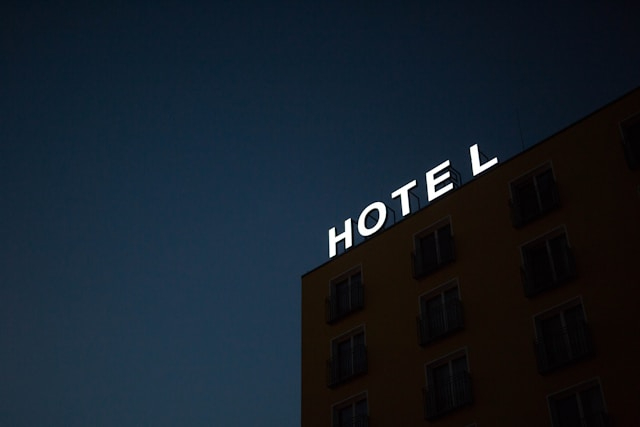
Ministers have treated hotel use as a political test because it concentrates asylum seekers in a small number of places, strains local services and budgets, and carries heavy accommodation costs even when it falls.
A central driver of the reduction came from moving people into dispersal accommodation, the longer-term housing model built around privately managed houses, flats or shared properties spread across local authority areas.
By year-end, dispersal accommodation held 68,538 people, a 4% rise from 65,707 in December 2024, alongside a shrinking hotel cohort that officials have tried to move on as contracts and capacity allow.
Year-end totals also underlined the overall scale of the support system. The Home Office counted 106,003 supported asylum seekers, including people in accommodation as well as those who receive subsistence-only support.
Within that caseload, 29% (30,657) stayed in hotels, 68% (72,769) stayed in other types of accommodation, and 3% (3,577) received only subsistence support.
Non-hotel contingency sites, including barracks, housed 2,010 people at the end of December, the lowest since December 2022, another measure watched closely because such sites have drawn political criticism and legal scrutiny in past debates over conditions and suitability.
Behind the accommodation shift, demand for places remained high through 2025, with the Home Office recording historically elevated claim volumes and a large share linked to English Channel small-boat crossings, even as the department stressed that arrivals and hotel totals do not move in lockstep.
Changes in decision-making speed and exits from the system can reduce pressure on accommodation even when new claims continue, because people may leave Home Office support after initial decisions or after later stages such as appeals.
The Home Office also reported a sharp fall in the initial decision backlog, which officials linked in part to AI case summarization tools used to speed up processing and reduce the time needed to prepare files.
That initial decision backlog fell nearly 50% to 64,426 from 124,802, and the department said the latest level was the lowest since September 2020 (60,548).
A smaller backlog can ease accommodation demand because faster decisions can increase the number of people who move out of asylum support, whether through grants that shift them toward mainstream housing and benefits or refusals that can lead to appeal and, in some cases, departure from support.
At the same time, the Home Office has to manage other constraints that sit outside casework performance, including the availability of longer-term housing stock, the pace at which providers can procure new properties, and the willingness of local authorities to participate in dispersal accommodation contracts.
The financial picture has been central to the government’s argument for reducing hotels. The Home Office reported annual savings of £620 million tied to lower hotel use.
Overall asylum support costs also fell, with spending dropping from £5,377,991,249 in 2023/24 to £4,757,226,306 in 2024/25, figures that capture accommodation contracts and the cost of supporting people for longer stays when the system slows.
Labour pledged to end hotel use by 2029, a timeline that keeps pressure on the department to expand dispersal accommodation while limiting politically sensitive alternatives that can provoke local opposition and legal challenges.
Even so, the Home Office continued to use other sites. It said it had housed men at Scottish and southern England barracks for ~900 men since October 2025, a reminder that reducing hotels does not eliminate the need for contingency capacity when arrivals rise or housing supply tightens.
Regional patterns remain part of the dispute over fairness and capacity. Home Office figures showed 88% (94,354) of supported asylum seekers lived in England at the end of 2025.
Within England, the North West hosted 20,864 (19%) and London hosted 16,378 (15%), and the department’s data pointed to per-capita concentration as well as raw totals, with the North West and North East at ~27 per 10,000 residents.
Those distributions reflect a combination of housing stock, provider contracts and the extent to which councils accept placements, issues that sit at the heart of the dispersal policy designed to spread accommodation more evenly.
Dr. Peter Walsh of Oxford’s Migration Observatory said the reduced hotel numbers still left reliance at a high level of roughly 31,000, which he tied to structural pressures including processing backlogs, high claims and failed efforts to expand alternatives.
Walsh also pointed to outcomes inside the system that can affect how long people remain in accommodation, saying grant rates fell to 42% in 2025 and giving an example of Syrians moving from 98% to 9%.
A Home Office spokesperson struck a different balance between progress and remaining reliance. “Real progress. but too many hotels remain in use,” the spokesperson said, citing the Home Secretary’s reforms against “pull factors” and increased removals.
The Home Office also reported the most recent crossing update it provided alongside the new accommodation snapshot, recording 74 on February 24, the first group with children since February 9 (322 arrivals).
Those short-term movements can still complicate planning for accommodation providers and councils, officials and analysts say, because spikes can arrive faster than new dispersal accommodation can be procured, even when longer-term hotel totals trend down.
With the Home Office set to publish further monthly and quarterly updates, the next indicators likely to draw attention will include whether hotel totals keep falling, whether the initial decision backlog continues to shrink, and whether dispersal accommodation can expand without renewed reliance on contingency sites, leaving the government managing a reduced hotel footprint that still operates at scale.
Home Office Figures Show Asylum Seekers in Dispersal Hotels Hit Lowest
The UK has reached an 18-month low in hotel-based asylum housing, dropping to 30,657 occupants by year-end 2025. This reduction, supported by a shrinking case backlog and increased use of dispersal housing, resulted in £620 million in savings. However, with over 100,000 individuals still requiring support and ongoing English Channel crossings, the government faces continued pressure to expand permanent housing capacity and meet its 2029 hotel-exit target.