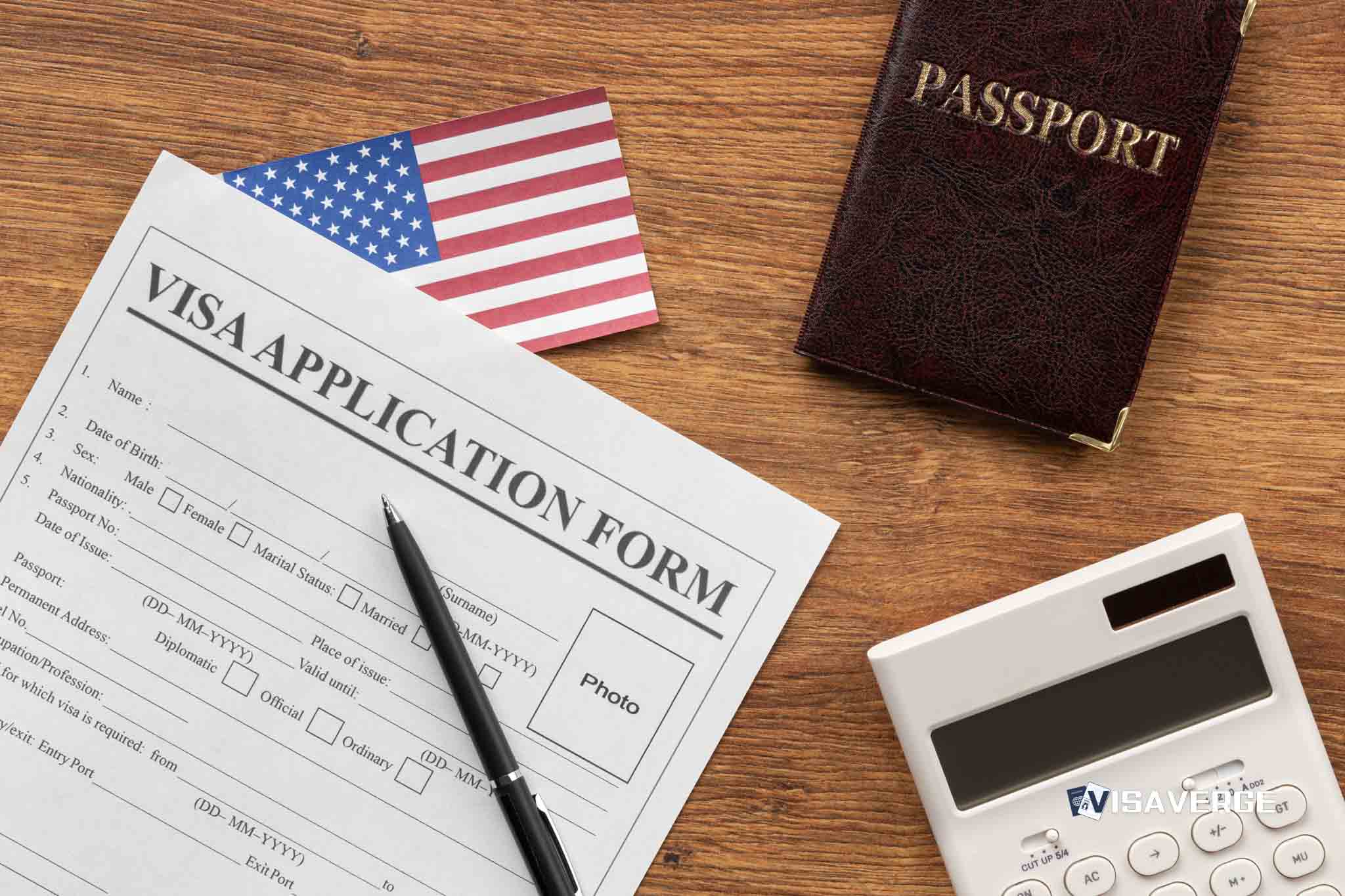
If a friend or relative from outside Europe will stay in your home in France for less than three months, you, the host, must get an attestation d’accueil (proof of accommodation) from your mairie before they apply for their visa. It costs EUR 30, paid with a timbre fiscal (tax stamp), and that money is not refunded if the mayor refuses the request.
The document is French law, not a consulate preference. Articles L313-1 to L313-8 of the Code de l’entree et du sejour des etrangers et du droit d’asile (CESEDA) require it for any private or family visit of up to three months where a non-European visitor stays with a private host. The mayor signs it as an agent of the State, and the host formally promises to cover the visitor’s living costs in France if the visitor cannot.
The process happens in two countries. You apply in person at the town hall in France, and the visitor uses the original document abroad, attaching it to a short-stay Schengen visa application or carrying it to the border if their passport is visa-exempt. Get the order wrong, and the visa file is incomplete: the attestation must be validated before the visa application is lodged.
Free toolSchengen Short-Stay Visa CalculatorThis guide is for hosts in France: French citizens, EU citizens living there, and non-EU residents with a valid residence card. It is also for the visitors themselves, often parents coming to see a new grandchild, siblings attending a wedding, or friends on holiday. It covers who needs the attestation, what to bring to the mairie, how long validation takes, what the visitor does with it, and what to do if the mayor says no.
The rules below were checked on 10 October 2026 against Service-Public.fr, the official French administration portal, the CESEDA text on Legifrance, and the current Cerfa 10798*04 form. France has no national online application; each mairie runs its own appointment system, so local practice on booking and waiting times varies.
If France is one of several Schengen countries on your visitor’s route, start with our Schengen visa invitation letter guide, which compares the host documents that Germany, Austria, the Netherlands, Belgium, Spain and Italy use. This guide goes deeper on France alone.
Check Whether Your Visitor Needs an Attestation d’Accueil
The attestation applies to any non-European visitor coming to France for a private or family stay of less than three months and staying with a private host. It does not depend on whether the visitor needs a visa. A visitor who needs a visa attaches it to the visa application. A visa-exempt visitor, for example a traveler from the United States, Canada or Brazil staying with friends, must be able to show it at the external Schengen border.
Service-Public lists several cases where no attestation is required. Citizens of the EU, the European Economic Area, Switzerland, Andorra and Monaco are outside the system altogether.
| Visitor situation | Attestation needed? |
|---|---|
| Non-EU visitor staying in a private home, under 3 months, needs a Schengen visa | Yes, attached to the visa application |
| Non-EU visitor staying in a private home, under 3 months, visa-exempt | Yes, shown at the Schengen border on request |
| Visitor holding a Schengen “visa de circulation” (multi-entry circulation visa) | No |
| Visa marked “carte de sejour a solliciter dans les 2 mois suivant l’arrivee” | No |
| Visa marked “famille de Francais” | No |
| Humanitarian stay or cultural exchange | No |
| Urgent medical situation, or travel for a relative’s funeral | No |
| Visitor staying in a hotel or other paid accommodation | No, the booking is the proof of lodging |
| EU, EEA, Swiss, Andorran or Monegasque citizen | No |
Some exemptions, such as humanitarian stays, are granted by the French consulate in the visitor’s country under conditions set by decree. If your visitor thinks they fall into one, they should confirm it with the consulate or on France-Visas before you pay for the stamp.
The attestation is per visitor, but a spouse and minor children traveling with the visitor can be listed on the same form. A couple traveling with their two minor children needs one attestation and one EUR 30 stamp, not four.
Buy the EUR 30 Timbre Fiscal
The fee is a tax set by Article L313-6 of CESEDA and paid by the host, not the visitor. You pay it with an electronic timbre fiscal, bought online from the government stamp site or at a tobacconist (bureau de tabac) equipped to print them. Online, the stamp arrives as a PDF with a 2D code or as an SMS with a 16-digit number, and the mairie accepts either. Bank cards work; PayPal and American Express do not.
| Attestation d’accueil tax stamp (per form, paid by host) | EUR 30 |
| Refund if the mayor refuses | None |
| Replacement if the original is lost (new application and new stamp) | EUR 30 |
| Schengen short-stay visa fee, adult (paid by visitor, if a visa is needed) | EUR 90 |
| Schengen short-stay visa fee, child aged 6 to 11 | EUR 45 |
Choose the stamp labelled “attestation d’accueil”, not a “timbre amende” (fine payment). The mairie consumes the stamp when you file, so it is lost even if the request is refused. An unused stamp, by contrast, can be refunded through the stamp site.
Gather the Host’s Documents
Bring originals. Many mairies also ask for photocopies, so check your town’s page before the appointment. The mayor is checking three things: that you are who you say you are, that you actually live in the home, and that the home and your income can support a guest in “normal” conditions of size, safety and sanitation.
- Identity: French or EU national ID card or passport; non-EU hosts bring their residence permit
- Proof you own, rent or occupy the home: title deed, property or housing tax notice, or lease with recent rent receipts
- Recent proof of address for that home: water, electricity or phone bill, or rent receipt
- Proof of income: last 3 payslips and your latest tax assessment (avis d’imposition)
- Anything showing the home can host the visitor normally (surface area, number of occupants)
- The EUR 30 timbre fiscal (PDF, printout or SMS code)
- Each visitor’s passport number, full name, date and place of birth, nationality and home address
- The planned arrival and departure dates
- For an unaccompanied minor: a signed letter on plain paper from the parents stating the purpose and length of the stay
Non-EU hosts face one extra test. The City of Paris says the host’s residence document must be valid for the whole planned stay, and lists accepted titles such as a temporary residence card, a resident card, an Algerian residence certificate, a renewal receipt showing the extension, or a long-stay visa carrying an OFII validation. A provisional permit (autorisation provisoire de sejour), a first-application receipt or an asylum-claim receipt is not enough.
If the bills are all in your spouse’s name, bring your family record book (livret de famille) or marriage certificate to show the link. If your employer provides the housing, bring the employment contract or housing allocation and the employer’s signed authorization.
File Cerfa 10798 in Person at Your Mairie
You file at the mairie of the address where the visitor will stay. In Paris, Lyon and Marseille, that is the arrondissement town hall, not the central city hall. Most mairies require an appointment, and in large cities slots can be booked weeks ahead, so book as soon as you know the dates.
You cannot download and fill in the form at home. The original Cerfa 10798 is handed to you at the counter, and you complete and sign it there. Your presence is a legal condition of validation; a relative cannot file on your behalf. The current version, 10798*04, is printed in French, German and English and includes a reply coupon that the consulate detaches and sends back to the mayor after deciding the visa.
The form records your identity and address, each visitor’s identity, passport number and home address, the dates of the stay, your relationship to the visitor, the type of housing and who lives there, and any attestations you have signed before. That last box exists because mayors may keep a file of past requests to detect misuse, for example a host who signs many attestations for unrelated people.
Write the visitor’s name exactly as it appears in the passport’s machine-readable zone and use the same dates the visitor will put on the visa form and flight booking. A mismatch between the attestation and the visa file is an easy reason for the consulate to ask questions.
Wait for Validation
Service-Public says issue “is not necessarily immediate”. If the file needs closer review, you get a filing receipt (recepisse) and the mairie contacts you when the signed attestation is ready. There is no national processing standard. Town halls publish their own estimates: Nanterre quotes about 8 days and Guyancourt about 10, with up to a month when a home check is ordered. The legal ceiling is one month: if the mayor has not answered by then, the request counts as refused.
The mayor can ask agents of the French Office for Immigration and Integration (OFII) to inspect your home. Under Article L313-4, they can enter only with your written consent, but if you refuse the visit, the home is treated as failing the “normal living conditions” test and the attestation will be refused.
| Stage | Typical time | Who acts |
|---|---|---|
| Mairie appointment | Days to several weeks, by city | Host |
| Validation | About 1 to 2 weeks; legal limit 1 month | Mayor |
| Posting the original abroad | About 1 week by international courier | Host |
| Visa decision | Normally 15 calendar days after a complete application | French consulate |
| Safe lead time | Start 8 to 12 weeks before the trip | |
Send the Original to Your Visitor and Know How They Use It
Collect the validated attestation from the mairie and post the original to your visitor. Keep a scan and the courier tracking number. A scan alone is not enough for the visa file, and Service-Public notes that the police can check the original during transit.
The validated document lists your identity, the visitor’s passport number and nationality (plus any spouse and children on the form), the arrival and departure dates, the address and description of the home, and who holds the mandatory medical insurance of at least EUR 30,000. That insurance can be bought by the visitor or by you as host, and the visa officer will expect to see the policy.
- The original attestation d’accueil, plus a photocopy
- A copy of the host’s ID or residence permit
- Travel medical insurance of at least EUR 30,000 covering the whole stay, unless the host bought it
- Proof of funds: France-Visas cites EUR 32.50 per day with an attestation, against EUR 65 with a hotel booking and EUR 120 with no booking
- Return flight reservation matching the attestation dates
- Proof of ties at home: job letter, pension, studies, property, family
- A short cover letter that cites the attestation (see the samples below)
The attestation lowers the daily money a visitor must show, because the host is formally responsible for the stay. Under Article L313-2, the host’s commitment covers the visitor’s living costs in France for three months from entry, or for the visa’s validity, capped at the resources a visitor would otherwise need. It does not make the visa automatic. The consulate still judges the visitor’s own profile, and our France visa guide covers the full application. The visa application can be lodged up to six months before the trip and no later than 15 days before it.
The attestation names specific dates. If the trip moves by weeks, the dates on the visa form, the flights and the insurance should still fall inside it. A large change usually means a new attestation and a new EUR 30 stamp.
If the Mairie Refuses: Appeal to the Prefect
Article L313-3 lets the mayor refuse on four grounds only: you cannot produce the required documents; the visitor cannot be housed in normal conditions; the information on the form is inaccurate; or your earlier attestations show misuse of the procedure. The refusal is either written with reasons, or implicit after one month of silence.
| Stage | Deadline | Outcome |
|---|---|---|
| Hierarchical appeal (recours hierarchique) to the prefect; in Paris, the Prefet de Police | Within 2 months of the mayor’s refusal | Prefect validates the attestation or rejects the appeal; silence for 1 month means rejection |
| Court challenge at the tribunal administratif | After the prefect rejects | Only possible if you first appealed to the prefect |
| Practical alternative | Immediate | Fix the missing documents and file a fresh request, or switch the visitor to a hotel booking |
In practice, most refusals come from a missing document or a home judged too small for the number of occupants. A fresh, complete request is usually faster than an appeal, though it costs another EUR 30. An appeal makes sense when you believe the mayor got the facts wrong, for example over the size of the home.
The Alternative: A Hotel or Paid Booking
A visitor who stays in a hotel, guesthouse or other paid accommodation needs no attestation at all; the booking is their proof of lodging. That route skips the mairie, but France-Visas asks for more money: EUR 65 per day for nights covered by a hotel booking, against EUR 32.50 with an attestation. It also means paying for the room.
| Attestation d’accueil | Hotel or paid booking | |
|---|---|---|
| Who arranges it | Host, in person at the mairie | Visitor, online |
| Upfront cost | EUR 30 stamp, non-refundable | Cost of the room |
| Daily funds the visitor shows | EUR 32.50 | EUR 65 |
| Lead time | Appointment plus up to 1 month | Minutes |
| Host liability | Host commits to cover stay costs | None |
| Best for | Family visits, longer stays, visitors with modest savings | Short trips, hosts without a suitable home or residence card |
Do not book a refundable hotel just to cancel it after the visa is issued while actually staying with friends. The visa states the purpose of the trip, and a border officer can ask where you are staying. Our guide to submitting proof of accommodation explains what each kind of booking proves.
Sample Letters That Accompany the Attestation
The attestation is a fixed government form, so there is nothing to draft on the form itself. What hosts and visitors do write are the letters around it: a short host letter to the consulate, the visitor’s cover letter, and, for a child traveling alone, the parents’ authorization the mairie requires. The three samples below show the structure. Adapt them to your facts and do not copy them verbatim, because visa officers see the same internet templates daily. All names, addresses and numbers are fictional.
To the Visa Section, Consulate General of France, Bangalore
Toulouse, 18 February 2027
Subject: Supporting letter for Mr. Suresh Iyer and Mrs. Lakshmi Iyer, attestation d’accueil no. 31555-2027-000123
I, Meera Iyer, born 3 May 1990, an Indian citizen holding a French multi-year residence card valid until 14 September 2029, residing at 22 Rue des Filatiers, 31000 Toulouse, invite my parents, Mr. Suresh Iyer (born 11 January 1958, passport W1234567) and Mrs. Lakshmi Iyer (born 26 July 1961, passport W7654321), to stay with me from 2 April 2027 to 20 May 2027.
The Mairie de Toulouse validated my attestation d’accueil for both of them on 9 February 2027; the original is enclosed with their application. My apartment has three rooms and 74 square meters, and I live there with my husband. I work as a process engineer with a net monthly salary of EUR 3,900, and I have bought their travel medical insurance, which covers EUR 30,000 each.
My parents are coming to meet their first grandchild, born on 12 January 2027. My father is a retired bank manager and both own their home in Coimbatore, where they will return on 20 May 2027.
Yours faithfully,
Meera Iyer
+33 6 00 00 00 00, [email protected]
To the Visa Section, Consulate General of France, Casablanca
Casablanca, 5 May 2027
Subject: Short-stay visa application, family visit, 10 July to 31 July 2027
I, Youssef Benali, born 19 March 1992, Moroccan passport ZZ0000000, apply for a short-stay Schengen visa to visit my sister, Mrs. Salma Benali-Martin, in Lille for 21 days, from 10 July 2027 to 31 July 2027, to attend her wedding on 17 July 2027.
I will stay at my sister’s home, 8 Rue Gambetta, 59000 Lille. She obtained an attestation d’accueil from the Mairie de Lille on 22 April 2027; the original is attached, along with a copy of her French identity card. My travel medical insurance covers EUR 30,000 for the whole stay, and my bank statements for the last three months show a balance of MAD 48,000, above the EUR 32.50 daily amount for a stay with a host.
I work as an accountant at a Casablanca logistics company, which has approved my leave from 9 July to 2 August 2027 (letter attached). My return flight is booked for 31 July 2027.
Yours sincerely,
Youssef Benali
Parental authorization for an attestation d’accueil
We, the undersigned, Mr. Mamadou Diallo, born 2 June 1978, Senegalese passport A00000001, and Mrs. Awa Diallo, born 14 October 1981, Senegalese passport A00000002, residing at Villa 14, Sacre-Coeur 3, Dakar, holders of parental authority over our son Ibrahima Diallo, born 8 August 2011, Senegalese passport A00000003,
authorize our son to travel alone to France and to stay with his aunt, Mrs. Fatou Ndiaye, residing at 31 Rue Paul Bert, 69003 Lyon, from 1 July 2027 to 15 August 2027, for a summer holiday and a French language course.
Mrs. Ndiaye will be responsible for him throughout his stay. Copies of our passports are attached.
Signed in Dakar on 2 April 2027,
Mamadou Diallo, Awa Diallo
Write the host letter and the cover letter in French or English; French consulates accept both. The parental authorization is filed by the host at the mairie with the attestation request, so the host should receive the signed original before the appointment. For more letter structures, see our sample cover letters for Schengen visa applications.
Common Mistakes
The attestation must be signed by the mayor before the visa is lodged. A visa file with a receipt instead of the validated original is incomplete.
Post the original by tracked courier and keep a copy. If it is lost, you must reapply with all documents and buy a new EUR 30 stamp.
File at the mairie of the address where the guest will sleep. In Paris, Lyon and Marseille, that means the arrondissement mairie.
Non-EU hosts need a permit valid for the whole stay. Renew first, or have another eligible household member host.
Refusing an OFII visit means the home is treated as unsuitable and the request fails. Agree to it and keep the receipt handy.
Align the attestation, visa form, flight reservation and insurance. A stay longer than the attestation’s dates invites a refusal for unclear purpose.
After the Visa Is Issued
The visitor should carry the original attestation, the insurance certificate and the return ticket in hand luggage. Border police can ask for them at the first Schengen entry point, and the answers about where the visitor is staying should match. Since the EU’s Entry/Exit System went live, non-EU short-stay travelers also give fingerprints and a face image at their first crossing, so allow extra time at the airport.
The stay must still fit the Schengen 90-in-180-day limit; our explainer on what 90 days on a Schengen visa really means shows how to count it. For insurance options, see our Schengen travel insurance guide. If the visa is refused despite a valid attestation, the decision letter will cite standard grounds, explained in our guide to the official reasons for Schengen visa rejection.
Frequently Asked Questions
How much does an attestation d’accueil cost in France?
The host pays EUR 30 per form with an electronic timbre fiscal bought online at timbres.impots.gouv.fr or at an equipped tobacconist. The mairie consumes the stamp when the request is filed, so the EUR 30 is not refunded if the mayor refuses. A spouse and minor children can share one form.
Where do I apply for an attestation d’accueil?
At the mairie of the address where the visitor will stay, in person and usually by appointment. In Paris, Lyon and Marseille you go to the arrondissement town hall. The Cerfa 10798 form is handed out at the counter and must be completed and signed there by the host.
How long does it take to get an attestation d’accueil?
There is no national standard. Town halls such as Nanterre and Guyancourt quote about 8 to 10 days, longer if an OFII home inspection is ordered. Legally the mayor has one month; no answer after one month counts as a refusal. Hosts should start 8 to 12 weeks before the trip.
What documents does the host need for an attestation d’accueil?
Original ID or, for non-EU hosts, a residence permit valid for the whole stay; proof of owning or renting the home; a recent utility bill; the last 3 payslips and latest tax notice; the EUR 30 stamp; and each visitor’s passport number, identity and travel dates.
Do visa-exempt visitors need an attestation d’accueil?
Yes, if they stay in a private home in France for less than three months. Service-Public says a visa-exempt visitor must present the attestation at the external Schengen border. Exemptions include holders of a Schengen circulation visa, humanitarian or cultural exchange stays, urgent medical cases and funerals.
Can the visitor stay in a hotel instead of getting an attestation d’accueil?
Yes. A hotel or other paid booking replaces the attestation as proof of lodging, so no mairie visit is needed. France-Visas then expects proof of EUR 65 a day in funds for the booked nights, against EUR 32.50 a day for a visitor staying with a host under an attestation.
What can I do if the mairie refuses my attestation d’accueil?
Appeal to the prefect within two months of the refusal; in Paris that is the Prefet de Police. If the prefect rejects the appeal or stays silent for one month, you can go to the administrative court. Filing a fresh, complete request with a new EUR 30 stamp is often faster.
Can a non-EU resident of France sign an attestation d’accueil?
Yes, if their residence document is valid for the entire planned stay, such as a temporary or resident card or a long-stay visa validated by OFII. The City of Paris says a provisional permit, a first-application receipt or an asylum-claim receipt cannot be used.