- The DV-2026 program offers 55,000 diversity visas despite ongoing political debates and proposed legislative changes.
- Selected applicants must complete all processing and interviews by September 30, 2026 without exceptions.
- Future cycles starting April 2026 will introduce a new registration fee and stricter identity requirements.
The Diversity Visa (DV) Program continues to operate in 2026, with up to 55,000 visas available for fiscal year 2026 and no active legislative proposal to end it as of March 26, 2026.
Known widely as the Green Card Lottery, the program remains open to those already selected for DV-2026, even as the Trump administration tightens rules for the next cycle and critics renew calls for a more merit-based immigration system.
For the current cycle, results remain accessible from May 3, 2025, until at least September 30, 2026. All selectees and their eligible spouses and children must obtain visas or adjust status by September 30, 2026. No extensions apply.
Free toolCSPA Age-Out Calculator OnlineUpcoming Changes for the Next Cycle
Major changes are now approaching for the next round. Rules announced in early 2026 for fiscal year 2027 take effect April 10, 2026, adding a new registration fee, stricter identity requirements and expanded personal data collection, while leaving the lottery itself in place.
How the Diversity Visa Program Works
Congress created the Diversity Visa Program in the Immigration Act of 1990 to promote immigration diversity. Each year it randomly selects immigrants from countries with historically low rates of U.S. immigration, and no single country can receive more than 7% of the annual total.
Although the law authorizes up to 55,000 immigrant visas a year, statutory deductions reduce the actual number available for DV-2026 to approximately 51,850. The reductions stem from NACARA, which can take up to 5,000 visas, and from NDAA FY2024 deductions.
The Kentucky Consular Center completed random selections for DV-2026 on May 3, 2025. It notified approximately 125,000 entrants, far more than the visa cap, to account for expected dropouts, ineligibility and processing limits before the fiscal year deadline.
That oversubscription is built into the system. Selection does not guarantee a visa, and unused visas do not carry over after September 30, 2026, when the program resets for the next fiscal year.
Political Debate and Legislative Status
President Trump’s second term, which began in January 2025, has revived arguments over whether the lottery should survive. Critics have called it a national security risk and pushed merit-based alternatives, but ending the program would require Congress to amend Section 203(c) of the Immigration and Nationality Act.
No such bill has advanced in the 119th Congress as of early 2026. Past attempts, including the RAISE Act during Trump’s first term, failed to pass even as the administration added administrative barriers such as a passport requirement introduced in 2019.
House Republicans have also introduced bills including the Secure America’s Borders Act (2025), which targets repeal of the DV program along with curbs on chain migration. Still, no floor votes or White House endorsements for termination had emerged by March 2026.
Demand, Registration, and Result Checking
Demand remains high. Millions enter the lottery every year, and a 2023 peak reached 22.2 million applicants. Fiscal year 2026 application totals were still pending release.
The registration window for DV-2026 closed months ago. It ran from October 2, 2024, at noon EDT to November 7, 2024, at noon EST, and multiple entries led to disqualification of all submissions.
Entrants can check results only through the official Entrant Status Check portal. They need a confirmation number, full name and birth year to retrieve their status, and the State Department warns that it does not notify winners by email, call or upfront payment request.
That warning matters because fraud tends to rise after results are released. Scammers often send fake messages demanding money for “visa help,” but official contact for the lottery is solely through the online portal.
What Selectees Must Do
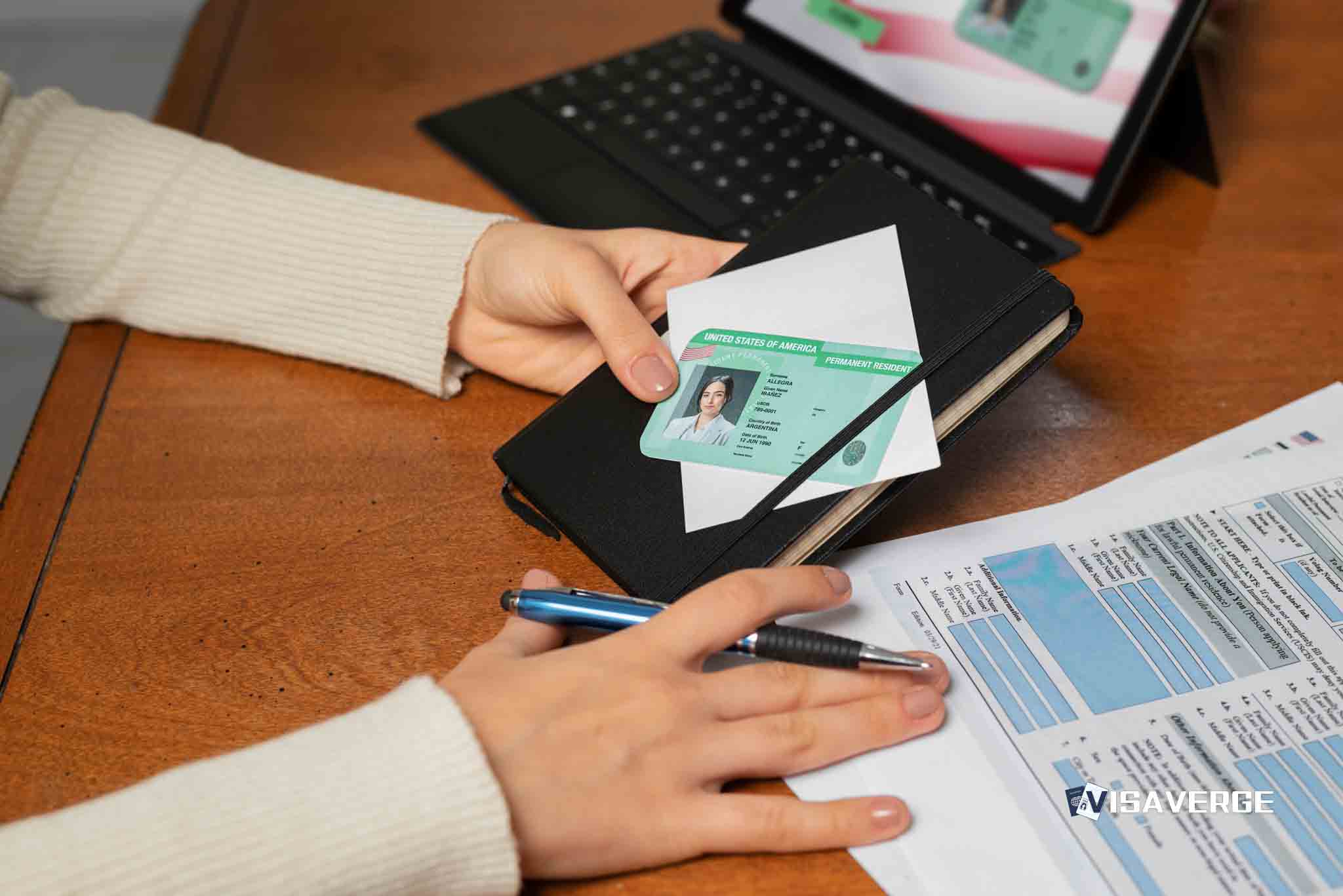
Those selected for DV-2026 must move quickly. They need to file Form DS-260 online, gather supporting documents, attend a consular interview and pay fees of around $330 per person plus medical exam costs.
Applicants already in the United States may seek adjustment of status through Form I-485 with USCIS. Delays can be costly because visa numbers run out and all processing must finish by September 30, 2026.
Each selectee receives a case number tied to the person’s country of birth. Cases are processed in ascending order, and lower numbers move first as the monthly Visa Bulletin advances toward “current” status.
That sequence shapes whether a selectee can actually secure one of the available visas. The practical result is a race against time, especially in regions with heavy demand and a reduced pool of approximately 51,850 available visas.
Consular processing averages 3–6 months. Applicants must also budget for broader costs that can range from $500–$1,500 per person, including fees, travel and medical examinations.
Eligibility Requirements
Eligibility rules for DV-2026 remain unchanged. Applicants must come from countries that sent fewer than 50,000 immigrants to the United States over the previous five years, with some exceptions allowing a spouse’s or parent’s country of birth to be used instead.
For DV-2026, the ineligible countries are Brazil, Canada, China (mainland), Dominican Republic, El Salvador, Haiti, Honduras, India, Jamaica, Mexico, Nigeria, Pakistan, Philippines, South Korea, Venezuela, Vietnam, and Cuba.
Applicants must also meet education or work standards. They need either a high school equivalent defined as 12 years formal education, with no GED or correspondence, or 2 years in the past 5 in an occupation requiring 2+ years training under an SVP 7.0+ O*NET classification.
No minimum age applies, but applicants must prove their qualifications at the interview stage. Spouses and children can receive derivative visas through the principal applicant, but the family’s success still depends on the main case meeting all requirements.
New Rule Changes for Fiscal Year 2027
The next set of changes does not end the lottery, but it will make entry more demanding. Starting April 10, 2026, fiscal year 2027 rules will require a valid passport scan at entry, though exemptions may be available for minors or hardship cases.
The government will also charge a $1 registration fee, the first fee ever imposed on entry into the lottery. Officials have presented that measure as a way to deter fraud and multiple entries while keeping the process cheaper than most other visa pathways.
Other changes will alter how applicants identify themselves. The registration form will require a precise date of birth rather than an age field, and officials will collect more detailed personal information for verification.
Those revisions arrived after a temporary halt in planning for DV-2027. No firm reopening date had been announced, though the next registration period is expected in fall 2026.
For now, none of those new rules apply to DV-2026 selectees. Their focus remains on interviews, document collection, case-number movement and the hard September 30, 2026 deadline.
Why the Program Still Matters
The program’s defenders point to its role as one of the few low-barrier paths into U.S. legal permanent residence for people from underrepresented countries. Critics favor systems modeled on Canada and Australia and argue the United States should rely more on skills-based selection.
That debate has sharpened under Trump, whose first administration branded the lottery the “Democrat Lottery” and pushed repeatedly to replace it. Yet the legal structure has held, and the Diversity Visa (DV) Program remains part of U.S. immigration law in 2026.
The immediate reality for applicants is procedural rather than political. People selected this year must complete every step on time, while those hoping to apply next year will need to prepare for tighter identity checks and a fee, however small.
The odds remain unforgiving. Even though the program is authorized for 55,000 visas and millions continue to apply, historical patterns show that only about 40% of selectees ultimately succeed because of ineligibility, delay or visa exhaustion.
That gap explains why the government selected approximately 125,000 people for DV-2026 even though fewer than half that number can receive visas. It also explains why speed matters once a person learns he or she has been chosen.
For many families, the Green Card Lottery still represents a rare shot at legal permanent residence without sponsorship by an employer or relative. In 2026, despite political pressure and tougher rules ahead, that path remains open — but only for those who meet the standards and move before the clock runs out on September 30, 2026.