(U.S.) President Trump’s sweeping expansion of ICE detention centers is moving from rhetoric to reality, backed by the largest enforcement budget in U.S. history and a rush of private and political actors seeking to cash in. On July 1, 2025, the Senate passed a budget reconciliation bill allocating about $170 billion for immigration and border enforcement. Vice President JD Vance cast the tie-breaking vote. Three days later, President Trump signed the “One Big Beautiful Bill Act,” or OBBBA, unlocking $45 billion for new detention centers and $29.9 billion for ICE operations, according to congressional actions described by advocates and industry statements.
The legislation immediately quadrupled ICE’s annual detention budget and set the stage for the largest buildout of detention infrastructure since the agency’s creation. ICE followed with July 8 interim guidance that broadened who can be detained as “applicants for admission,” sweeping more people into custody. By late July, daily updates described rapid activation of new facilities as private contractors scaled up staffing, procurement, and bed capacity.
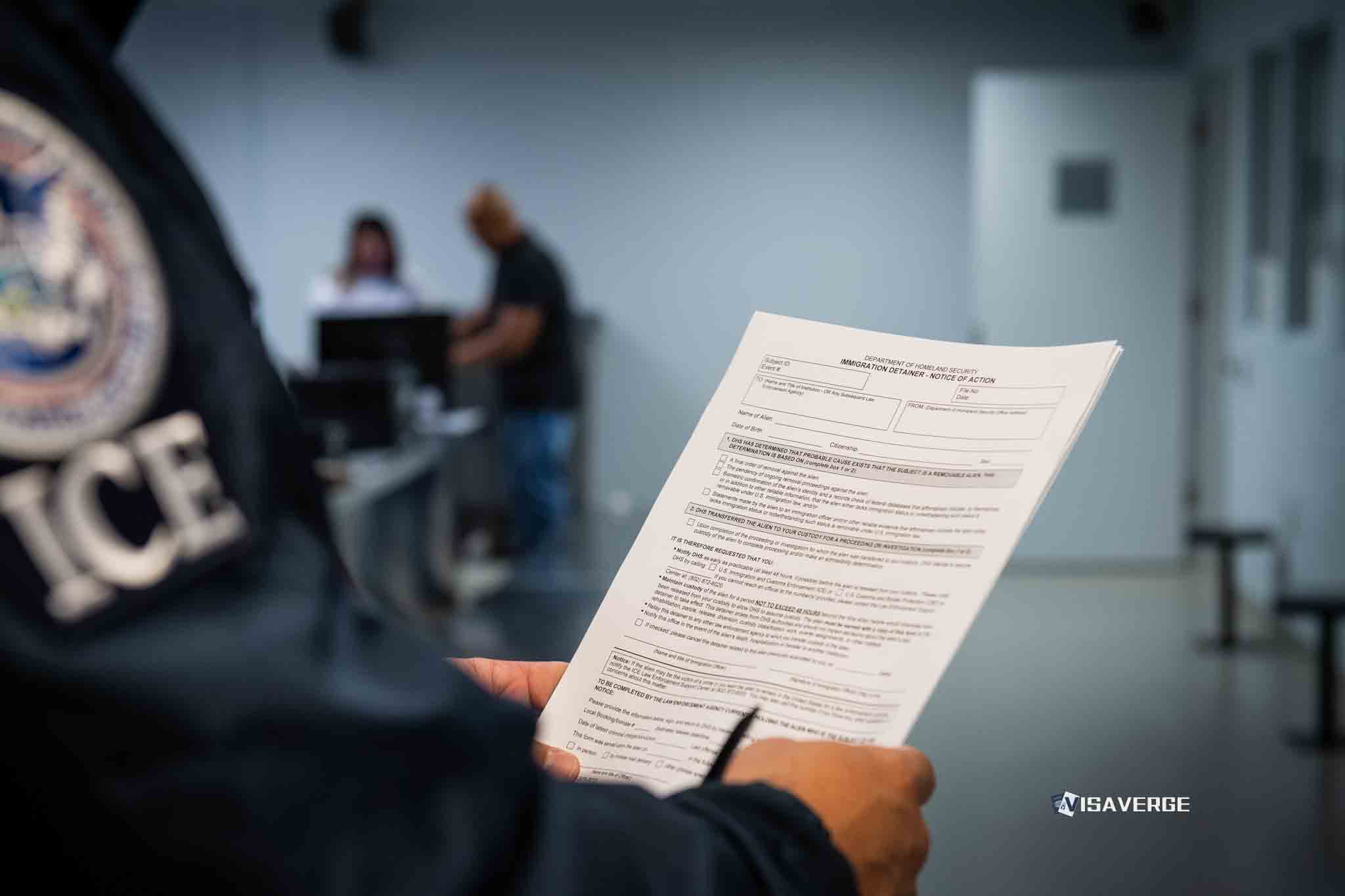
Funding and Rapid Buildout
The new law targets a near doubling of daily detention, from roughly 56,000 beds to more than 116,000, with construction dollars flowing to family sites and “megaprison” complexes. Federal reimbursements of $3.5 billion are also heading to state and local governments, encouraging deeper cooperation with ICE.
Free toolUSCIS Receipt Number DecoderField offices now face detention quotas, with directives requiring at least 75 noncitizens detained daily per office—far above arrest levels seen in 2023. Private contractors have rapidly scaled operations to meet these targets, prompting a nationwide acceleration of facility activation.
Key funding and timeline details:
– Multi-year funding extends through September 30, 2029, creating long-term contract commitments.
– Construction focuses on a mix of family sites and large-scale “megaprison” complexes.
– Federal reimbursements of $3.5 billion to states/localities aim to incentivize cooperation.
Private Contractors and Expansion
Private operators stand to benefit most from the surge in funding.
- CoreCivic, led by CEO Damon Hininger, reported a surge in demand. Hininger said in May, “Never in our 42-year company history have we had so much activity and demand for our services as we are seeing right now.”
- GEO Group, led by CEO George Zoley, is expanding as well, including a controversial 5,000-bed site in the Florida Everglades nicknamed “Alligator Alcatraz.”
- Florida Attorney General James Uthmeier oversaw the project, promoted the remote location as a security feature, and sought FEMA reimbursement.
According to analysis by VisaVerge.com, the OBBBA’s funding structure ensures long-term contracts that are difficult to unwind, effectively locking in profits for contractors and investors. Private equity firms have increased stakes in CoreCivic, GEO Group, and related service vendors (transport, food services, private security).
The Brennan Center for Justice warns that this buildout will be hard to dismantle later and that private prison companies are the primary financial winners.
Profiteers and the Business Model
The pipeline from funding to profit is straightforward and lucrative:
- Congress appropriates massive funds with looser oversight.
- Agencies award contracts to private prison firms and builders.
- Detention centers are constructed quickly.
- ICE increases daily operations to meet detention quotas.
- States and localities receive federal reimbursements for cooperation.
Companies monetize detention through:
– Per-diem payments for each occupied bed.
– Supplemental contracts for medical care, transportation, and facility operations.
Market concentration and controversy:
– CoreCivic and GEO now hold nearly 90% of ICE detainees housed in for-profit facilities.
– The “Alligator Alcatraz” plan is a national flashpoint:
– Supporters: remote location reduces escapes and community risk.
– Critics: swamp environment adds health risks, complicates oversight, and isolates families and attorneys.
Wall Street is investing heavily, with funds increasing positions in detention-linked firms, betting on steady federal payments. State and local leaders aligned with the administration’s priorities may gain through construction jobs and reimbursements, while host cities warn of pressure on hospitals, schools, and legal aid.
Human Impact and Oversight Fight
Behind the fiscal and political headlines are profound human consequences.
- New rules tighten bond eligibility and limit release options, making it harder for detained people to return home while their cases are pending.
- With only 800 immigration judges (a statutory cap), cases will accumulate for years, stretching due process thin.
- Advocacy groups report at least 10 deaths in ICE custody in 2025, with accounts of unsanitary and unsafe conditions—figures that already exceed recent years’ rates.
Medical and legal experts warn that the regime allows indefinite detention of children and families, contravening standards long associated with the Flores Settlement Agreement. The National Immigration Law Center says the law destabilizes communities while enriching private prison companies.
“Inflicting harm, sowing chaos, and tearing families apart,” said Nayna Gupta, policy director at the American Immigration Council, describing the law’s impacts and arguing it ignores public opposition to mass detention and deportation.
Broader social-service impacts:
– Millions of lawfully present immigrants and some U.S. citizens could lose access to healthcare and nutrition aid under new restrictions.
– Refugees and humanitarian arrivals face sharp limits:
– More than 120,000 refugees reportedly stranded due to bans and funding halts.
– Temporary Protected Status for Afghanistan terminated.
– Those already in the U.S. confront new limits on social services.
– Mixed-status families are particularly vulnerable, as U.S. citizen children may lose parental care or food assistance.
Oversight, Transparency, and Legal Responses
Oversight battles are intensifying. Multiple watchdogs report that ICE and the Department of Homeland Security have denied lawmakers and staff access to some facilities and field offices, hindering monitoring efforts.
Transparency concerns:
– Public posting of deaths and critical incidents is inconsistent.
– Limited visibility makes documenting abuses and pursuing accountability more difficult.
Practical guidance for families and advocates:
– Keep copies of identity documents, medical records, and legal contact information at home.
– Save money for travel if a loved one is transferred out of state.
– Reach out early to community legal clinics—waitlists are growing.
– Use ICE’s official resources for facility locations and contact numbers: ICE’s website: https://www.ice.gov.
Legal challenges:
– Lawsuits contend that indefinite family detention violates binding agreements and that new limits on release breach due process.
– Several cases could reach the Supreme Court by late 2025.
Political Stakes and Long-Term Effects
The political divide is sharp:
- Supporters argue stricter custody is needed to deter unlawful entry and reduce backlogs.
- Opponents argue the spending spree primarily rewards private contractors while doing little to fix the immigration court system, labor shortages, or humanitarian pressures at the border.
Even if future administrations attempt reversal, long timelines and buyout costs embedded in multi-year contracts could make change slow and costly.
For the near term, the path is clear: more beds, more contracts, more people in custody, and more public money flowing to private firms. Families brace for arrests and transfers, investors bank on steady returns, and communities face the long shadow of a detention-first system reshaping immigration enforcement in the United States. ??
This Article in a Nutshell
On July 1, 2025, Congress authorized massive immigration funding, triggering rapid ICE detention expansion. OBBBA funnels billions to contractors, enabling a buildout to 116,000 beds. Families face prolonged detention, tighter bond rules, and limited oversight. Legal challenges and human-rights advocates warn reversals will be difficult due to long-term contracts.