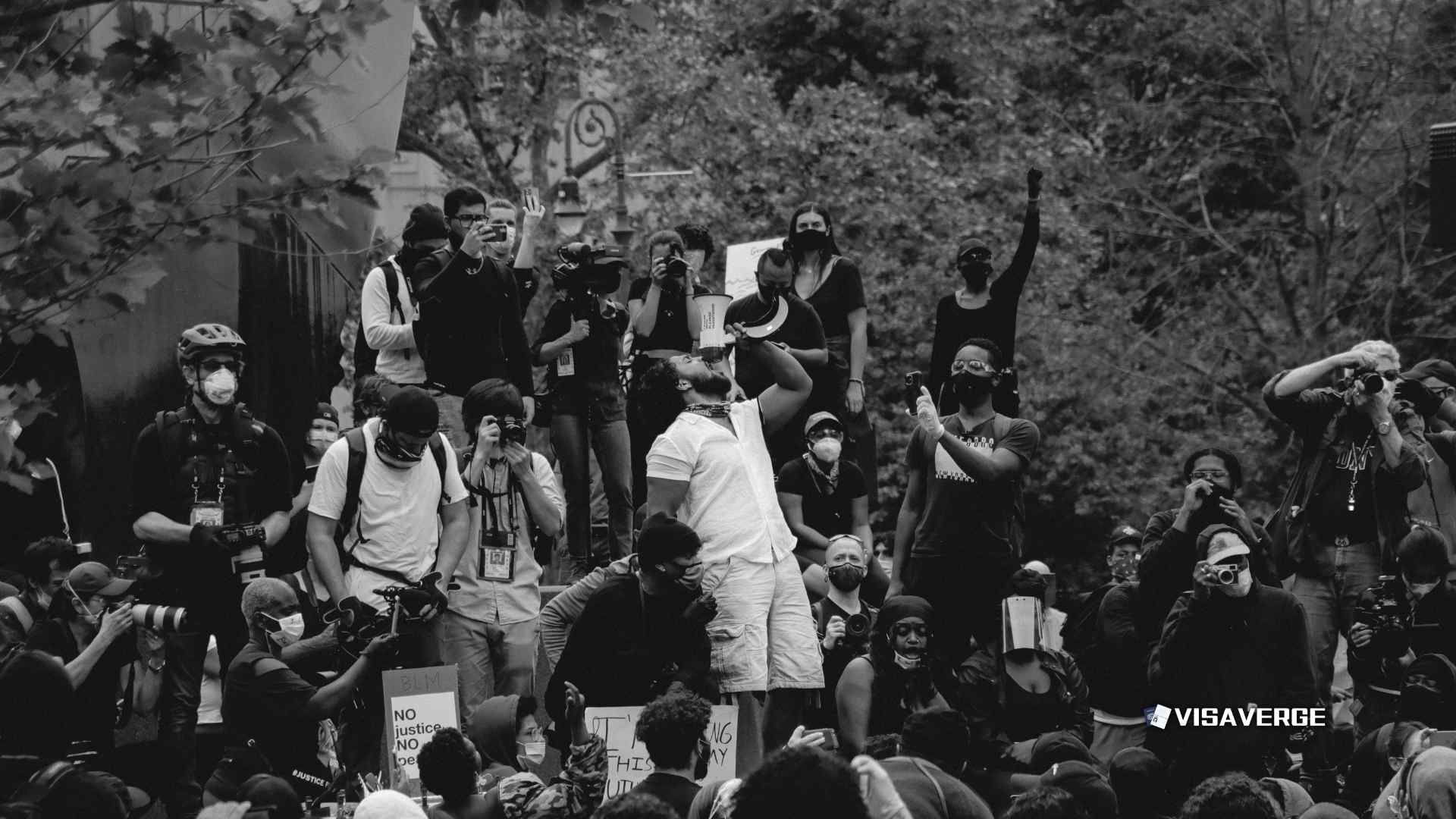
- Police Scotland arrested fifteen individuals following violent clashes between rival protest groups at Glasgow Green.
- The disorder involved assault and offensive weapons, with officers recovering pre-meditated tools of violence during the operation.
- The clashes disrupted the Commonwealth Games city-wide as police used helicopters, mounted units, and kettling tactics.
Police Scotland arrested 15 people after rival demonstrations at Glasgow Green erupted into violent clashes on Saturday, July 25, 2026. The arrests followed confrontations between anti-immigration protesters and counter-demonstrators during an afternoon police operation.
The anti-immigration rally was organized by Unite the Clans, while Stand Up To Racism organized the counter-demonstration. Officers reported arrests involving assault, possession of offensive weapons, breach of the peace, obstruction and resisting arrest.
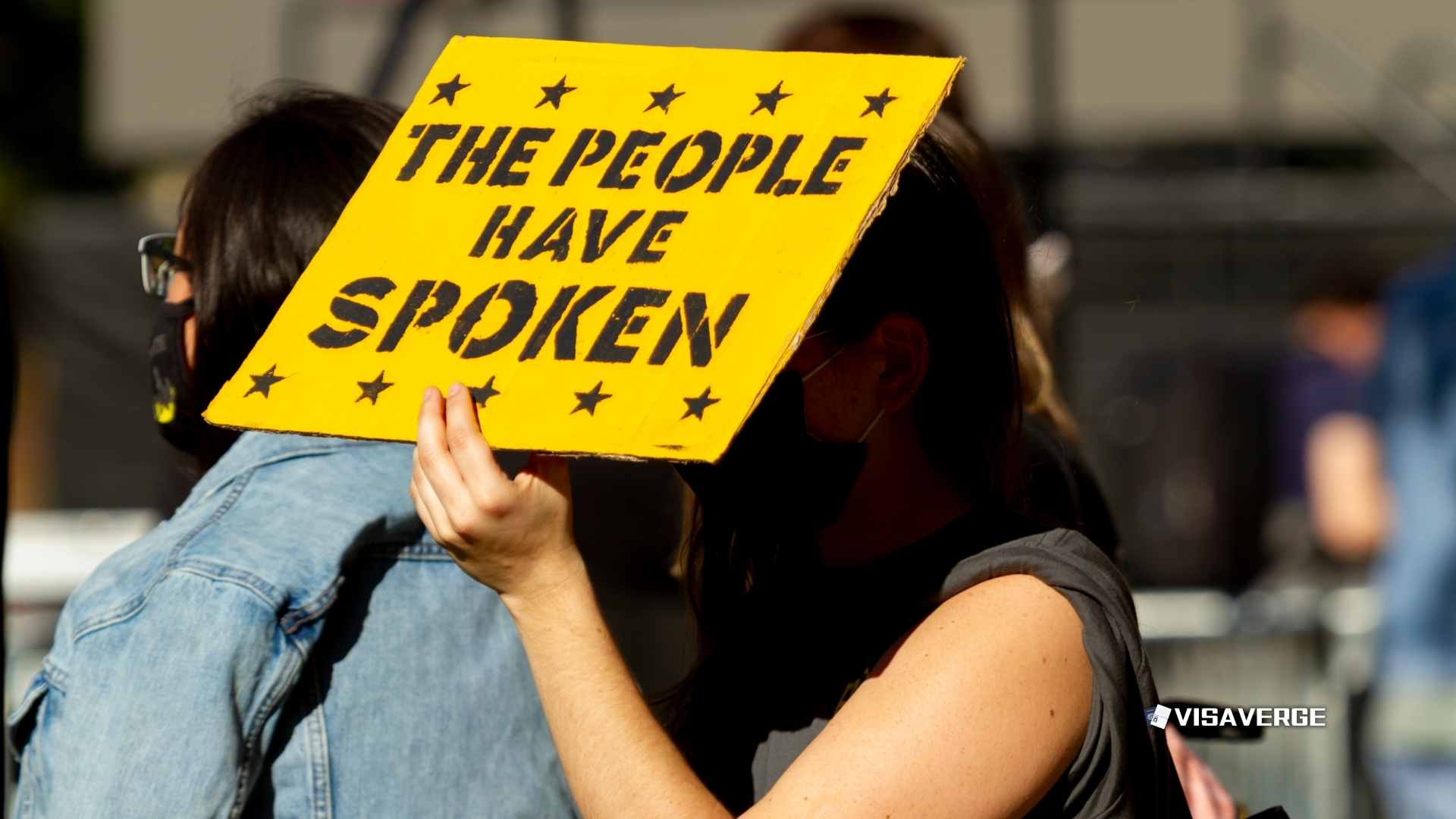
Police officers struggled to keep the groups apart. Protesters jumped fences and threw drinks and other objects at police vehicles and opposing crowds.
Chief Superintendent Emma Croft said the operation had been planned to facilitate lawful expression. She condemned the violence that followed.
| India | China | ROW | |
|---|---|---|---|
| EB-1 | Feb 01, 2023 | Aug 01, 2023 ▲31d | Current |
| EB-2 | Nov 01, 2013 | Oct 01, 2021 | Apr 01, 2025 ▲90d |
| EB-3 | Jan 22, 2014 ▲21d | Jan 22, 2022 ▲14d | Jun 15, 2024 ▲31d |
| F-1 | Jan 22, 2021 ▲366d | Jan 22, 2021 ▲366d | Jan 22, 2021 ▲366d |
| F-2A | Oct 22, 2026 ▲30d | Oct 22, 2026 ▲30d | Oct 22, 2026 ▲30d |
“We have seen significant disorder from disparate groups in Glasgow today at what should have been peaceful, lawful protests. I want to be clear that the behaviour from many of these groups is not legitimate protest, it amounts to violence, intimidation and fear and will not be tolerated. Officers have recovered weapons that clearly indicate there has been an intention for pre-meditated disorder.”
The scenes unfolded while Glasgow hosted the Commonwealth Games. Scottish Secretary Douglas Alexander described them as “Wholly unacceptable. particularly at a time when Glasgow should be shown at its best during the Commonwealth Games.”
Mounted police and helicopters separated crowds as objects flew
Mounted officers, police vans and helicopters were deployed as the rival groups moved against one another. Police vehicles came under attack from thrown drinks and other objects.
The disorder continued through the afternoon. Police used kettling tactics, and the closure of major thoroughfares including Oswald Street disrupted thousands of residents and visitors during the Games.
The operation affected people beyond the protest site. Roads closed as officers tried to contain the groups and prevent further confrontations.
Police Scotland has begun “extensive enquiries” to identify people who may have taken part in further offences. Investigators are examining CCTV and social media footage.
Additional arrests are expected as that work continues.
The rival groups brought sharply different messages to Glasgow Green
Unite the Clans promoted its rally as an effort to “save our women and kids.” Stand Up To Racism opposed the event, describing the group as a fascist organization seeking to build a street movement.
The counter-demonstration drew over 1,000 campaigners. Protesters were heard chanting “Send them home” and “Stop the boats.”
Those slogans formed part of a confrontation that moved beyond competing political messages. Police said officers recovered weapons and described conduct that included violence, intimidation and fear.
Croft said the force had prepared to protect lawful expression, but warned that the behavior seen during the event crossed that boundary. The police response included attempts to separate the groups while allowing the demonstrations to continue.
Earlier incidents had already raised tensions across Glasgow
Saturday’s violence followed weeks of anti-immigration disorder across Glasgow. Previous incidents took place in Cranhill and Castlemilk.
Refuweegee and the Human Rights Consortium Scotland expressed solidarity with migrants after the clashes. Local groups said the violence had created “unease in our communities.”
The response from those organizations focused on the effect of street disorder on migrant communities. Their statements came as police continued to examine footage from the demonstrations.
The confrontation has also been placed within a wider discussion about anti-migrant sentiment. The Soufan Center wrote on June 24, 2026, about a “Global Rise of Anti-Migrant Sentiment” and drew parallels between street violence in the United Kingdom and immigration-enforcement protests in the United States.
That comparison does not alter responsibility for the Glasgow investigation. Police Scotland is handling the arrests, evidence collection and any further criminal proceedings linked to Saturday’s events.
Police listed five categories of alleged offending
Police Scotland confirmed that the 15 arrests included allegations involving:
- assault;
- possession of offensive weapons;
- breach of the peace;
- obstruction; and
- resisting arrest.
An arrest does not establish guilt. Any cases arising from the incident will proceed through the Scottish criminal justice process.
The force has not ended its inquiries. Officers are using recorded material to assess the conduct of people who were not arrested at the scene and to establish whether further offenses took place.
The investigation also covers the wider disorder around the demonstrations. Police said the recovered weapons indicated an intention for pre-meditated disorder, while the crowd-control operation sought to prevent further clashes.
The CCTV and social media review could lead to additional arrests. It will also inform any further charges connected with the events.
This article provides general information and is not legal advice. Consult a qualified immigration attorney about your specific case.