- A federal judge blocked the passport policy limiting gender markers to birth-assigned sex, allowing ‘X’ options to continue.
- The current injunction permits applicants to self-attest their gender identity without requiring medical documentation or birth certificates.
- A ruling on nationwide class certification is expected by June 2026, potentially extending protections to all transgender citizens.
(UNITED STATES) — A federal judge blocked the Trump administration’s passport policy in January 2025, and the State Department continues in April 2026 to let transgender and nonbinary Americans request “M,” “F,” or “X” gender markers while the case moves through the courts.
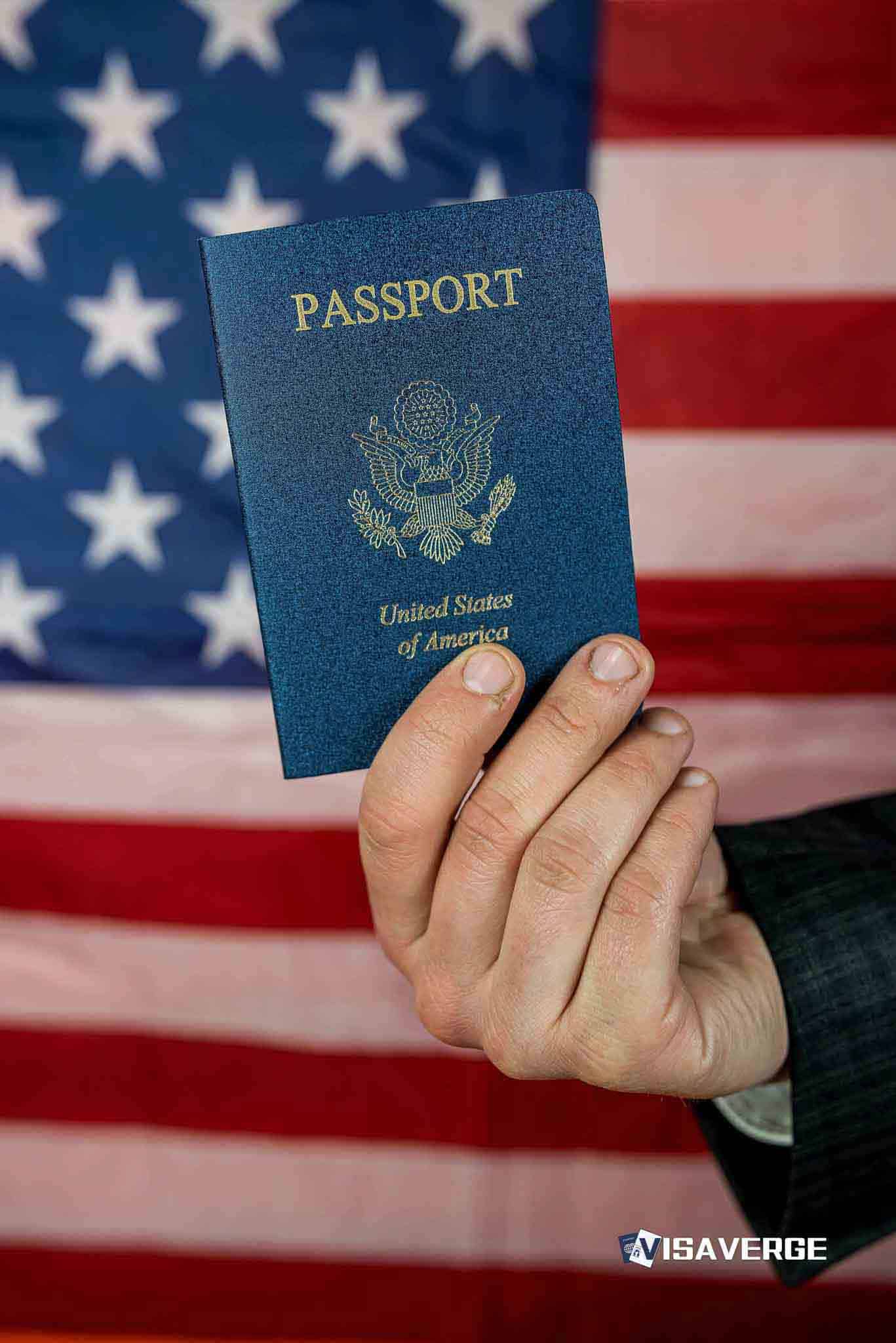
Judge Julia Kobick issued a preliminary injunction on Friday, January 24, 2025, stopping enforcement of Executive Order 14147, which President Trump signed on January 20, 2025. The order had required passports to use “M” or “F” markers matching a person’s sex assigned at birth and had eliminated the “X” option.
That injunction remains in place more than a year later. For now, the State Department cannot enforce the challenged policy, and passport applicants can request gender markers without providing medical or birth certificate documentation to prove alignment with birth-assigned sex.
Free toolSubstantial Presence Test CalculatorThe dispute sits at the center of a lawsuit filed in early 2025. Kobick’s order directly protects six named plaintiffs — three transgender women, two transgender men, and one nonbinary person — whose passport applications were denied or altered before the injunction took effect.
Plaintiffs’ attorneys filed for class certification on March 15, 2026, in the U.S. District Court for the District of Massachusetts, seeking to extend those protections nationwide to similarly situated transgender and nonbinary U.S. citizens. A ruling is expected by June 2026.
Until that happens, broader application remains unsettled even though the current practice has reverted to pre-2025 rules. Applicants seeking new passports or renewals can self-attest their gender identity, a system the State Department had used before the policy change.
People who already hold passports issued before January 2025 with “X” markers or updated gender markers keep those documents without alteration. Reports that surfaced before the injunction, in which the State Department changed markers without consent, have ceased under the court order.
Routine passport processing remains 6-8 weeks, while expedited service remains 2-3 weeks. Transgender applicants may still face additional scrutiny or delays if applications trigger internal reviews tied to the litigation.
In fiscal year 2025, the State Department processed over 18 million passports. Gender marker changes accounted for less than 0.5% of those cases.
Kobick’s 45-page ruling on January 24, 2025, halted both Executive Order 14147 and the State Department’s implementing policy memo dated January 28, 2025. The blocked measures would have limited all passports to binary markers determined solely by sex assigned at birth as listed on birth certificates or medical records.
The policy also ended the “X” marker, which prior administration guidance introduced in 2022. By December 2024, more than 2,400 passports carried that designation.
Under the blocked policy, applicants could no longer choose a marker based on current identity. Surgical or hormonal transition alone did not qualify unless it changed birth records.
The policy affected an estimated 500,000 pending applications in early 2025. That stalled passport issuance for transgender travelers planning international moves, family reunifications or employment abroad.
Kobick wrote in her ruling: “The executive order and passport policy classify passport applicants on the basis of sex and must be reviewed under intermediate judicial scrutiny; the government has failed to meet this standard.”
She found the policy likely violated the Fifth Amendment’s Equal Protection Clause. Her ruling also found the executive order lacked reasoned analysis and ignored the earlier rollout of “X” markers in 50+ countries and U.S. territories.
The government appealed on February 10, 2025, to the First Circuit Court of Appeals. Oral arguments took place in September 2025, and no decision had been issued as of April 2026.
The case has implications beyond the six plaintiffs because passport processing continues under the injunction while the legal fight remains open. If the Massachusetts court grants class certification, the order could extend to all similarly situated transgender and nonbinary U.S. citizens nationwide.
That potential class reaches a large population. The source cites 2025 Williams Institute data estimating 1.6 million transgender adults in the United States.
For applicants filing now, the practical process remains the same as it was before the challenged policy took effect. People applying for a first passport use Form DS-11, while most renewals use Form DS-82, and applicants can select “M,” “F,” or “X” in the gender field.
They can submit applications by mail, online through MyTravelGov or in person. People facing denials can appeal through Form DS-5504 within 12 months.
The broader immigration effects have drawn attention because passports often serve as core identity documents in visa and travel systems. Dual nationals or green card holders naturalizing in 2026 can face extra risks if mismatched markers complicate consular interviews or reentries.
Those concerns come as Proclamation 10998, effective January 1, 2026, subjects documents to added scrutiny based on birth country and travel history.
Naturalizing citizens also face a crowded administrative environment. 1 million green cards were issued in FY2025, and new vetting procedures launched December 5, 2025, through the USCIS Vetting Center.
Family travel can also be affected. Transgender parents renewing passports for child visa cases can face holds that disrupt reunifications while employment-based visa processing moves under the April 2026 Visa Bulletin.
The source ties those passport issues to work-related travel as well. H-1B holders, facing a new $100,000 fee for offshore petitions, must keep passports aligned with I-94 records to avoid entry denials under expanded 287(g) enforcement.
Before the policy fight, 78% of transgender applicants successfully obtained updated markers. During the period when the January 2025 policy was in force before the injunction, that figure dropped to 12%.
Applicants who plan international travel still need to think about how foreign authorities will read their documents.
The legal challenge over passport gender markers also intersects with wider fights over federal identity documents.
A separate class-action suit filed in March 2026 in the Southern District of New York challenges immigrant visa pauses under Proclamation 10998. That case argues similar equal protection issues for transgender applicants from 75 restricted countries.
Other immigration restrictions form the backdrop to the passport fight.
It also says deportation priorities expanded to “re-vetting” 1.5 million parolees. For transgender immigrants, the passport dispute adds another layer to those existing hurdles.
Global mobility has become part of the legal and personal stakes. Before 2025, S. entry risks for nonbinary holders.
Students and exchange visitors also appear in that wider picture.
Employment-based immigration has moved faster in some categories, but document issues still matter. The April 2026 Visa Bulletin lists EB-1 as current except for China and India, where the date is Apr 1, 2023; EB-2 is current except for China and India; and EB-3 stands at Jun 1, 2024 for most applicants, with other dates varying.
In that setting, the passport marker on a single document can shape travel, work authorization and identity checks across multiple systems.
Many applicants have responded by filing early.
The next scheduled milestone is a class certification hearing set for May 20, 2026. A First Circuit ruling could follow later in 2026, while the injunction continues to govern current passport processing unless a higher court changes it.
For now, the State Department still processes passports under the court-ordered rules, and transgender and nonbinary Americans can request the gender markers they choose. With 2.5 million annual international trips by LGBTQ+ travelers cited in the source, the reach of Kobick’s order extends well beyond one lawsuit and into the documents people carry every time they cross a border.