- President Trump redirected 3,000 FBI agents to prioritize mass immigration enforcement and deportation operations.
- Over 28,000 federal law enforcement officers from various agencies were diverted from their original specialized missions.
- Experts warn that national security and crime investigations are being sidelined due to this massive resource shift.
(UNITED STATES) — President Donald Trump redirected thousands of federal law enforcement personnel toward immigration enforcement after issuing an executive order shortly after January 20, 2025 that told agencies to work together against unauthorized immigration.
That shift pulled about 3,000 FBI agents, roughly a quarter of the bureau’s workforce, away from investigations into drug smuggling, sexual exploitation, organized crime and national security threats, and into the administration’s deportation push.
Free toolUSCIS Receipt Number Decoder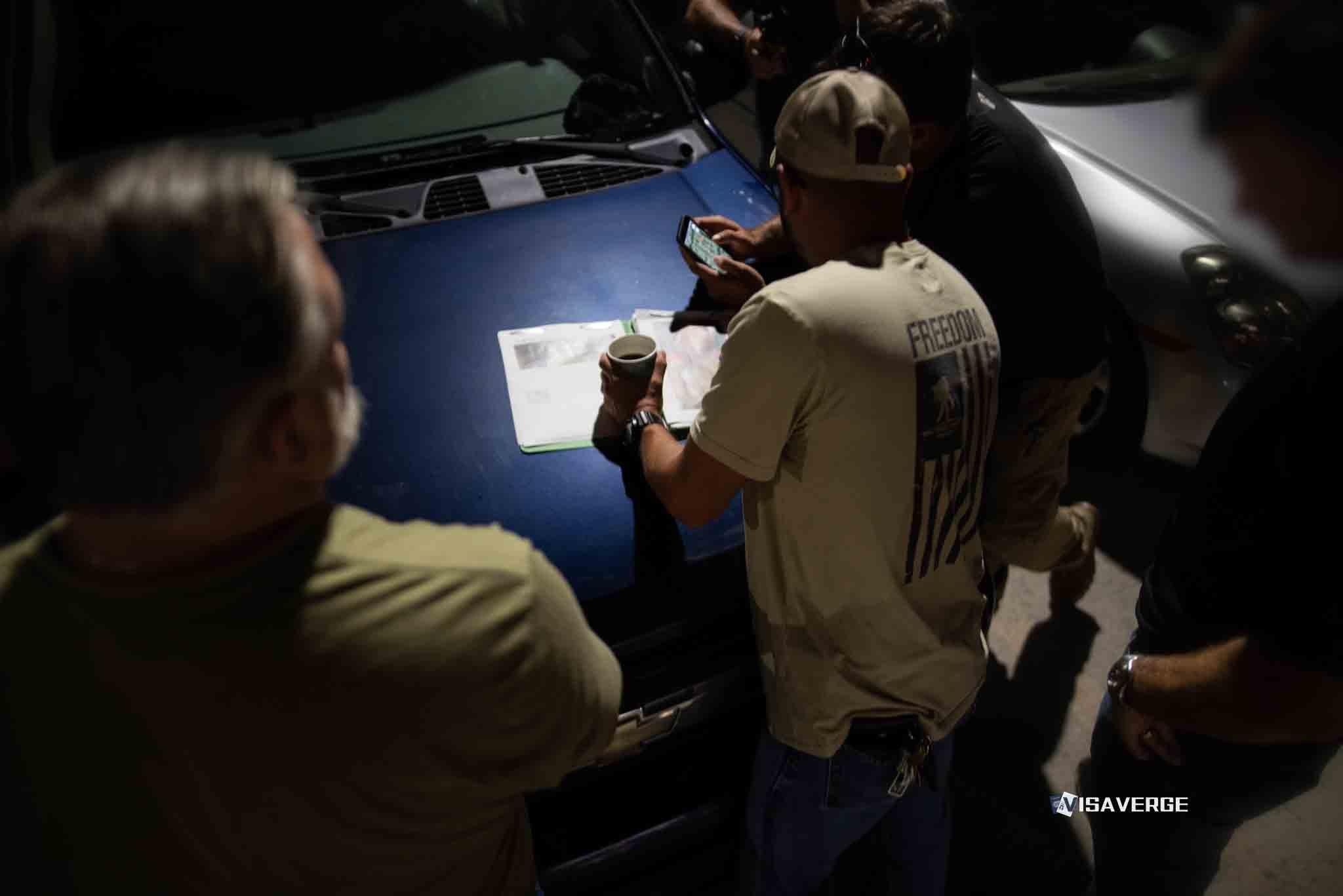
In the order, Trump described unauthorized immigrants as an “invasion” and put the estimated unauthorized immigrant population at 11 million. The administration linked that population to crime, gangs and strain on public resources, despite contrary government statistics.
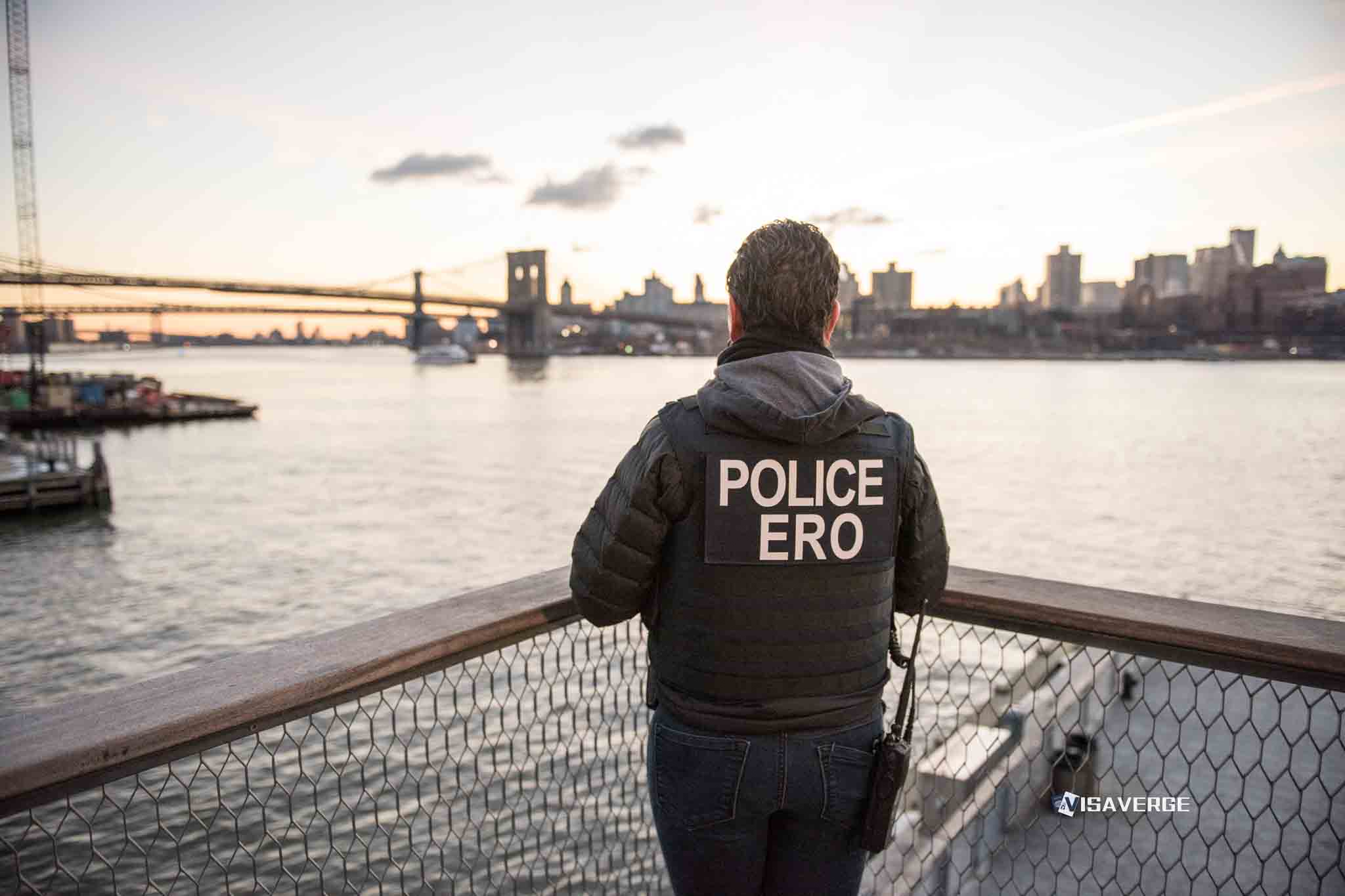
Homeland Security Investigations, the investigative arm under ICE, also changed course. Its 7,100 special agents, who usually handle terrorism, human trafficking, child sex offenses and financial crimes, received a January 31, 2025 internal email that recast their mission as “protecting the American people against invasion.”
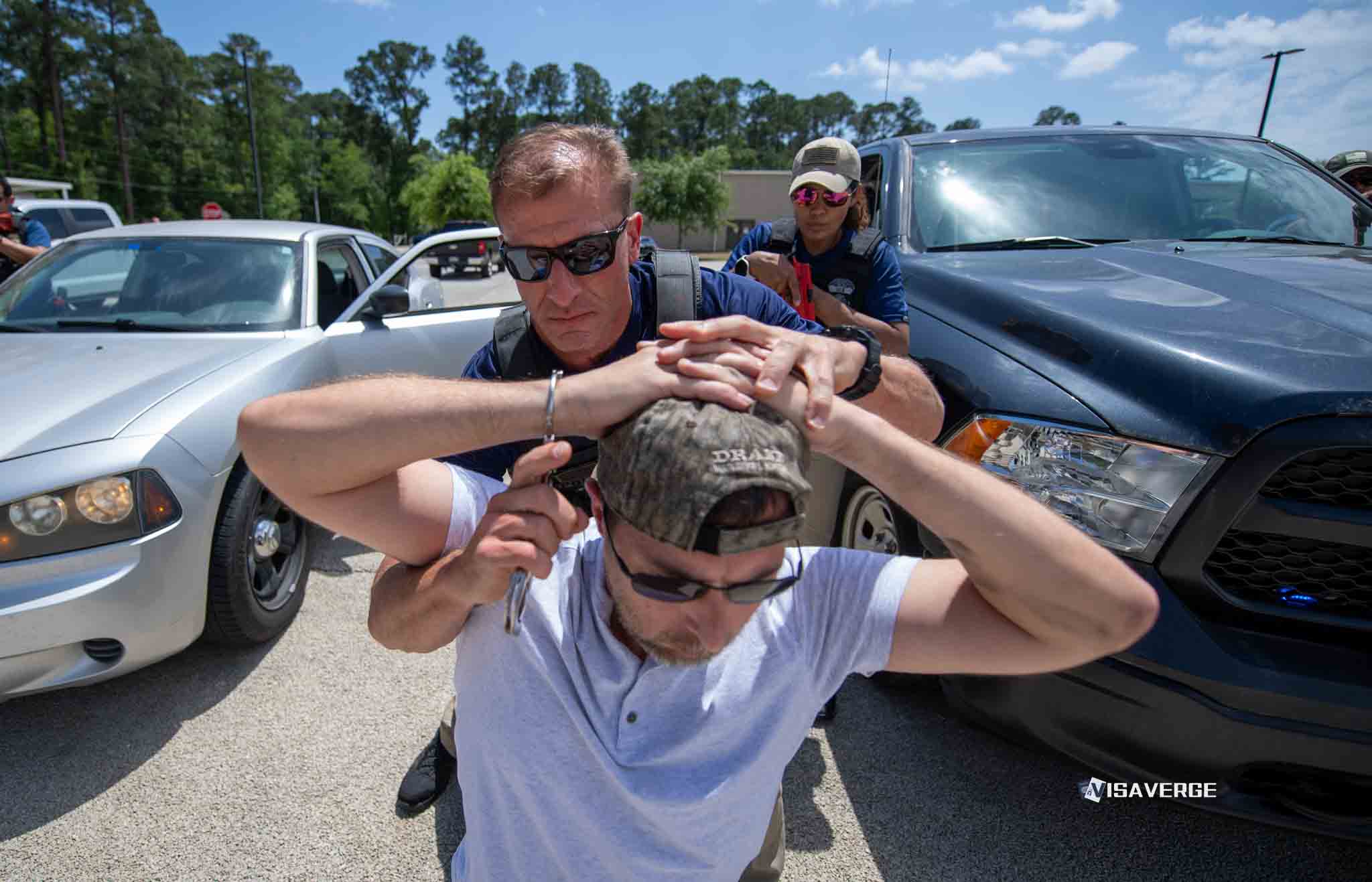
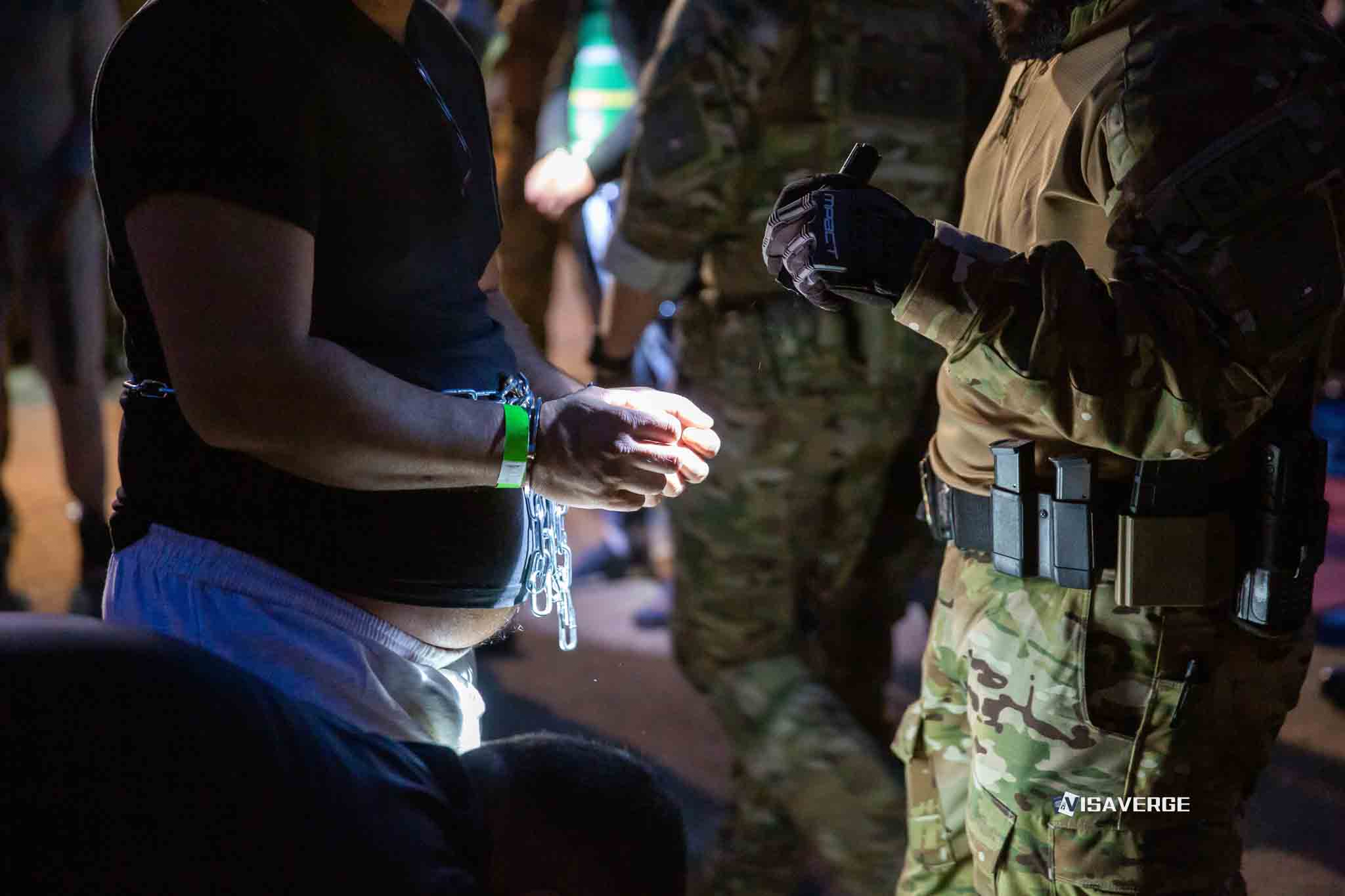
Agents then took on immigration enforcement tactics that included “knock and talk” visits, stop-and-frisk operations, warrantless arrests, business raids for unauthorized workers, home surveillance, license plate tracking and the distribution of target photos.
DEA, ATF and Border Patrol personnel joined the effort after crash courses in immigration enforcement that lasted up to two weeks. CISA cyber personnel also shifted away from infrastructure threat alerts and onto immigration-related duties.
The scale reached beyond a single bureau. CATO Institute data showed 42,153 individuals diverted to assist ICE, including 28,390 from federal law enforcement.
That broad redeployment touched agencies built for other missions. The FBI, for years centered on post-9/11 national security work, moved agents from long-running and complex investigations into a campaign focused on arrests, raids and removals.
Current and former officials reported low morale inside the bureau as that reassignment took hold. They also raised concerns that complex cases received less attention while FBI agents were reassigned to immigration duties.
HSI saw a similar change in daily work. Special agents who had focused on transnational crime, trafficking and financial investigations instead joined operations aimed at locating and arresting immigrants without legal status.
In cities including Los Angeles, Chicago and Charlotte, multi-agency teams in body armor carried out raids and posted operation photos on social media. Chicago operations included checkpoints in Little Italy.
Tactics escalated during some operations. Teams pinned protesters, smashed car windows and separated family members during enforcement actions.
Critics said the resource shift weakened efforts against human trafficking, fentanyl trafficking, sex crimes and cyber threats. America’s Voice and current and former agents argued that criminal networks “don’t quit” while agents are diverted elsewhere.
The criticism centered not only on numbers, but on what those numbers represented inside federal casework. Drug smuggling investigations can stretch across jurisdictions, sexual exploitation cases often demand months of digital review, and organized crime and national security inquiries usually rely on sustained staffing.
When agencies move investigators in large blocks, those cases do not disappear. They wait, slow down or compete for fewer people.
The new immigration role also arrived with uneven preparation across agencies. HSI provided immigration-specific tactics training to non-specialists, but no special pre-raid training beyond brief courses was reported for FBI and DEA agents.
That gap mattered because the tactics went beyond paperwork enforcement. Officers carried out home surveillance, tracked license plates, raided businesses for unauthorized workers and made arrests in the field, sometimes without warrants.
Trump’s order set the tone early in his second term by directing federal agencies to collaborate against unauthorized immigration across the government, not only through ICE. The result was a deportation push that drew in investigators, cyber personnel and officers from agencies whose normal assignments sit far from civil immigration work.
The administration’s language framed the campaign in security terms. HSI’s internal message adopted that language directly, instructing agents to see their work as “protecting the American people against invasion.”
Inside operations, that language translated into a visible federal posture in major cities. Teams appeared in body armor, used social media to publicize actions and relied on tactics more often associated with criminal enforcement than with routine immigration case processing.
Critics argued that the change carried public safety costs beyond immigration enforcement itself. Human trafficking rings, fentanyl pipelines, sex crime investigations and cyber threat monitoring all depend on agents with specialized training, and those specialists were among the people reassigned.
CISA’s inclusion in the effort sharpened that concern. Cyber personnel who had worked on infrastructure threat alerts were redirected to immigration-related duties even though their usual portfolio sits in the digital protection of critical systems.
The same pattern appeared across other agencies. DEA, ATF and Border Patrol officers joined raids after short courses, while HSI agents absorbed new field duties and the FBI shifted a large share of its workforce into enforcement tied to the White House order.
By the numbers, the federal response became a government-wide reallocation of personnel rather than a narrower ICE operation. By the tactics, it moved immigration enforcement deeper into the methods and posture of criminal raids.
Critics said that posture left both agents and the public facing a sharper edge, with investigators pulled from long-term cases and sent into fast-moving operations that included warrantless arrests, stop-and-frisk actions and family separations.
The burden fell heavily on agencies that had spent years building expertise in other areas. At the FBI, that meant agents who once tracked national security threats, organized crime and exploitation cases now worked immigration assignments under the administration’s order.
At HSI, it meant an investigative branch long associated with terrorism, trafficking and financial crime took on a mission explicitly defined around immigration arrests. At CISA, it meant cyber staff no longer focused on warning about threats to infrastructure.
CATO’s figure of 42,153 diverted personnel, including 28,390 from federal law enforcement, captured the breadth of that change. The count showed the deportation push had become a cross-agency project measured not only in arrests and raids, but in the number of people no longer doing the work they handled before.