- A federal appeals court vacated the release order for pro-Palestinian activist Mahmoud Khalil due to jurisdictional limits.
- The court ruled the Immigration and Nationality Act restricts habeas corpus petitions during ongoing removal proceedings.
- Khalil’s arrest followed a determination that his activism threatened U.S. foreign policy interests.
NEW JERSEY, UNITED STATES — A three-judge panel of the U.S. Court of Appeals for the 3rd Circuit ruled 2-1 on Thursday that the U.S. District Court for the District of New Jersey lacked subject-matter jurisdiction to order the release of pro-Palestinian activist Mahmoud Khalil via his habeas corpus petition, vacating Judge Michael E. Farbiarz‘s June 2025 release order.
Judges Thomas L. Hardiman and Stephanos Bibas directed the district court to dismiss the petition, concluding that the Immigration and Nationality Act (INA) limits collateral challenges while removal proceedings are ongoing and requires many claims to be brought in a petition for review after a final removal order.
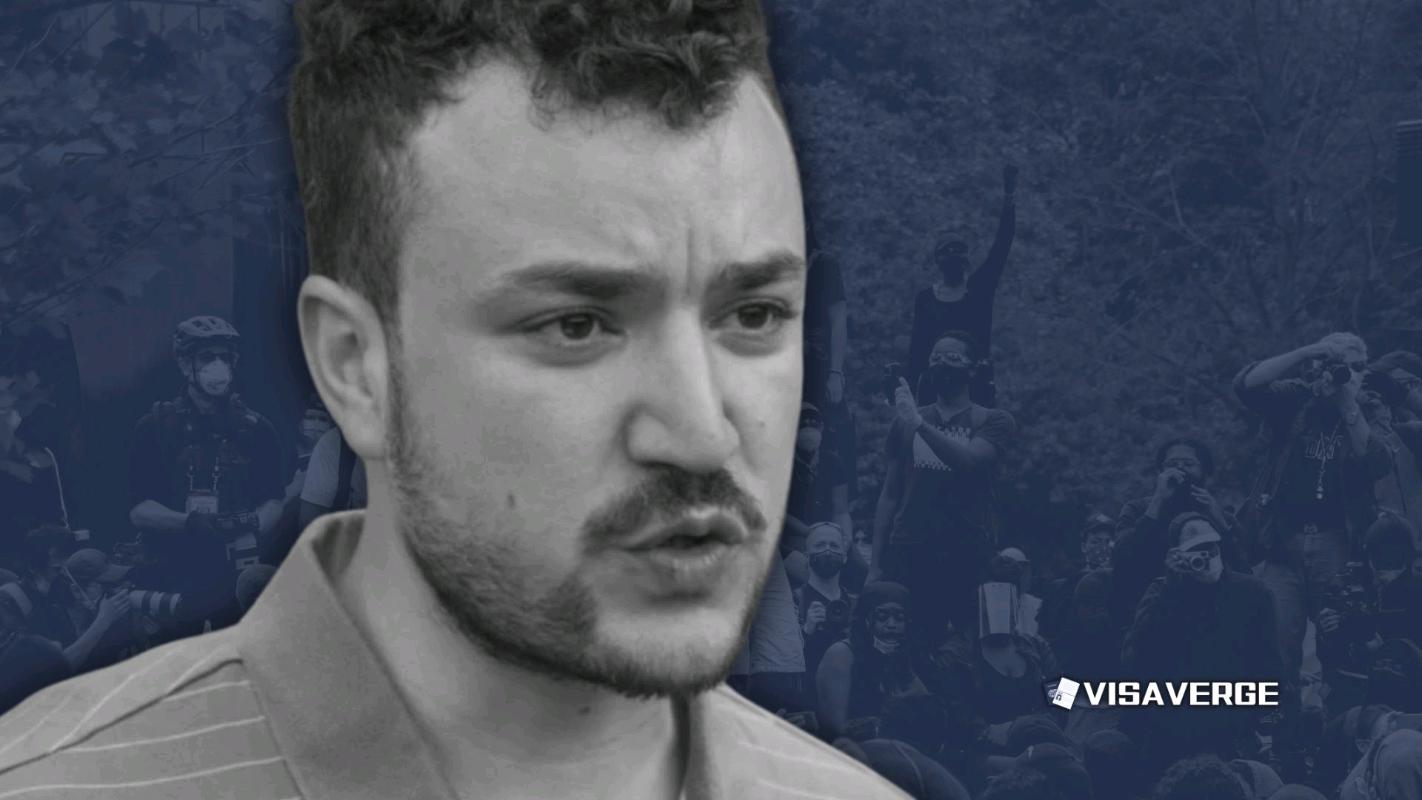
The panel’s split decision turned on jurisdiction, not the merits of Khalil’s constitutional claims, and it left unresolved issues that Khalil and his lawyers have pressed about free speech and retaliation.
Judge Arianna Freeman dissented, arguing the district court had jurisdiction to hear the habeas challenge.
The ruling centered on how the INA structures judicial review in deportation cases, channeling many disputes away from district-court habeas litigation and into the review process that follows a final order of removal.
Under the panel’s approach, the district court’s power to order release through habeas relief was constrained because the case was intertwined with ongoing removal proceedings, even though the district judge had previously granted bail and found the detention extraordinary.
That framework matters for detainees because it can shape where, and when, courts can intervene during a removal case, particularly when a noncitizen argues that detention or the basis for deportation violates the Constitution.
Mahmoud Khalil is a 30-year-old Palestinian green card holder and former Columbia University graduate student originally from a refugee camp in Syria.
His case drew national attention because it tied immigration enforcement to campus protest activity, with the government invoking foreign-policy concerns connected to his pro-Palestinian activism.
Khalil was arrested without criminal charges on March 8, 2025, at his Columbia housing by DHS agents under INA Section 237(a)(4)(C)(i), after Secretary of State Marco Rubio determined that Khalil’s activism “would compromise a compelling U.S. foreign policy interest.”
Authorities moved him far from New York during his detention, holding him in a Louisiana ICE facility after transferring him 1,300 miles.
Khalil spent 104 days in detention, a period his lawyers and supporters cited as intensifying the practical burdens of fighting a removal case, including access to counsel and the logistics of hearings.
During that detention, Khalil missed his firstborn son’s birth while his wife was eight months pregnant.
In a March 18 letter, he described himself as a “Palestinian political prisoner” arrested for “exercising my right to free speech” and advocating “a free Palestine.”
Judge Michael E. Farbiarz, the district judge in New Jersey, granted Khalil’s habeas petition and bail in June 2025, calling his detention “highly unusual,” finding no flight risk or community threat, and concluding the foreign policy ground was likely unconstitutional, though he paused the release order for appeal.
Thursday’s appellate ruling vacated that June 2025 release order and instructed the district court to dismiss the habeas corpus petition, removing the district-court pathway that had produced Khalil’s release.
The panel did not decide Khalil’s First Amendment claims, framing its decision around the limits of district court jurisdiction while removal proceedings are still unfolding.
Those jurisdiction limits have become a recurring flashpoint in immigration detention litigation, as advocates seek district-court orders to end detention during protracted removal cases while the government argues that the INA routes such disputes into the review process at the end of the administrative case, a dynamic also seen as courts weigh detention and removal procedures in cases such as the expedited removal expansion disputes.
Khalil’s immigration case has proceeded on a separate track in immigration court in Louisiana.
Immigration Judge Jamee Comans ruled in April 2025 that DHS had deportation grounds tied to Rubio’s letter, which deemed Khalil’s activism antisemitic.
On September 12, 2025, Comans found him deportable to Syria or Algeria for “willfully misrepresent[ing]” green card application details about organization memberships, and Khalil’s team said it plans to appeal to the Board of Immigration Appeals.
The government’s reliance on INA Section 237(a)(4)(C)(i) and the foreign-policy determination became a focal point because the district judge questioned the constitutionality of that basis for detention and removal, while the appellate panel focused on whether the district court could decide the detention question at all through habeas.
The ruling also advances the Trump administration’s campaign against noncitizens in pro-Palestinian protests, and it bars habeas challenges until immigration proceedings end, though it does not address First Amendment claims.
“Today’s decision is deeply disappointing, and by not deciding or addressing the First Amendment violations at the core of this case, it undermines the role federal courts must play in preventing flagrant constitutional violations. Dissent is not grounds for detention or deportation.”
Bobby Hodgson, deputy legal director at NYCLU and an ACLU and NYCLU attorney on the case, criticized the decision in a statement, saying the decision was deeply disappointing and undermining the role of federal courts.
“Today’s ruling is deeply disappointing, but it does not break our resolve. I will continue to fight, through every legal avenue. until my rights, and the rights of others like me, are fully protected.”
Khalil also responded in a statement that emphasized continued litigation. His legal team includes ACLU affiliates, Center for Constitutional Rights, and Dratel & Lewis, and it is pursuing en banc review, a Supreme Court appeal, or other options.
The court’s order does not take immediate effect, so ICE cannot re-detain him pending review.
International attention has also followed the case, including a March 20, 2025 statement by UN experts calling for Khalil’s release.
“The targeting of foreign nationals. is not only discriminatory and violates constitutional protections, but. seeks to exert a chilling effect on free expression.”
The UN experts described the arrest as a “dangerous escalation” in censoring pro-Palestinian voices.
Khalil’s case has unfolded as DHS and ICE detention decisions, transfers, and access-to-counsel disputes remain central issues in immigration litigation, including controversies described in coverage of detention expansion and other cases raising family-separation and representation concerns.
Beyond the immigration-court proceedings, Khalil has also pursued civil claims tied to his arrest and detention.
On July 7, 2025, Khalil filed a $20 million Federal Tort Claims Act suit alleging false arrest and retaliation for speech, a filing that runs separately from the immigration system’s determination of removability and the appellate pathways defined by the INA.
The FTCA claim alleges misconduct in the arrest and seeks damages, while the removal case centers on whether the government can deport him under the grounds asserted in immigration court, including the foreign-policy framing and the separate finding tied to alleged misrepresentations.
For Khalil, the 3rd Circuit ruling narrows the route that produced his release and underscores the panel’s view that challenges tied to ongoing removal proceedings must typically be pursued through the petition-for-review process after a final removal order, rather than through a district court habeas corpus petition.