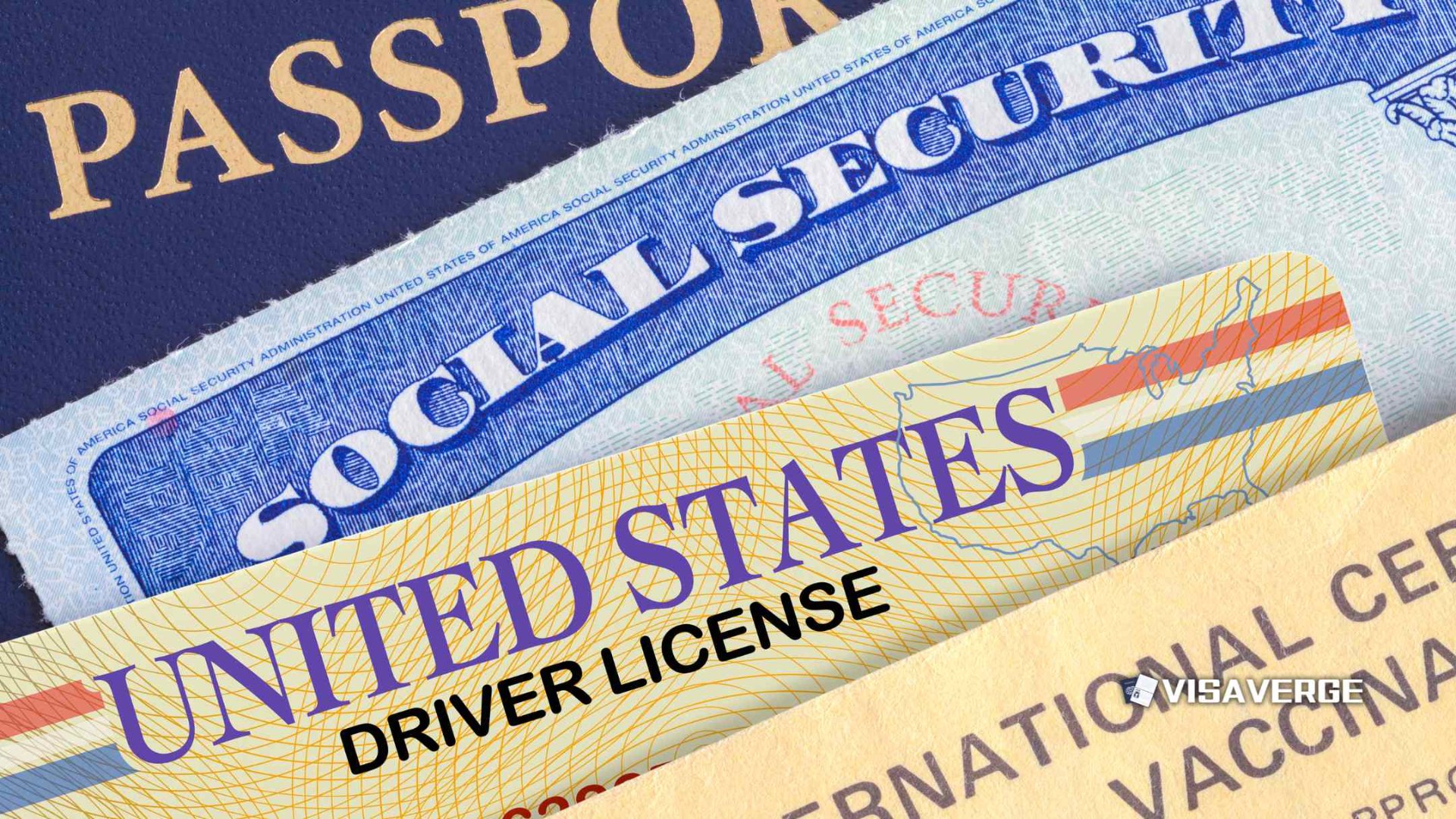
- Undocumented immigrants remain ineligible for REAL ID cards under federal law in 2026.
- Domestic air travelers without proper ID now face a non-refundable 45 dollar fee.
- Eligible noncitizens with lawful status can still obtain compliant identification through state offices.
(UNITED STATES) Undocumented immigrants cannot get a REAL ID in 2026. The federal law requires proof of lawful presence, so the card is reserved for people with legal status in the United States. That rule shapes travel, licensing, and access to federal buildings for millions of people.
The gap between federal ID rules and state ID programs has grown more visible this year. States still issue licenses for driving and local use, but those cards do not count for domestic flights or entry into many federal sites unless they meet REAL ID standards.
Federal ID rules now govern domestic air travel
The REAL ID Act, passed in 2005, sets security rules for state licenses and ID cards used for federal purposes. Those purposes include boarding domestic flights, entering military bases, and visiting certain federal facilities, such as courthouses. The law does not require every person to carry a REAL ID. It sets the standard for what the federal government accepts.
A compliant card usually has a star in the upper right corner. Applicants must show proof of identity, a Social Security number, state residency, and lawful presence. That last item blocks undocumented immigrants from qualifying. It also means many people with lawful temporary status remain eligible. U.S. citizens, green card holders, DACA recipients, asylees, refugees, visa holders, and people with Temporary Protected Status can qualify when they present the right papers.
For federal guidance, the TSA and Department of Homeland Security explain the rules on the REAL ID information page. That page remains the clearest federal reference for travelers and license holders.
Airport checks and the new February fee
REAL ID enforcement began on May 7, 2025, and it is now fully active in March 2026. Since then, passengers using state licenses for domestic flights must show a REAL ID or another approved form of identification.
On February 1, 2026, TSA added a $45 fee for travelers 18 and older who show up without proper ID. TSA says payment does not guarantee identity verification through TSA ConfirmID. The fee is also non-refundable. Receipts remain valid for 10 days, which gives travelers a short window to try again if the first attempt fails.
That change matters for undocumented immigrants because federal officials have tied REAL ID enforcement to travel screening. A foreign passport may still get a person through airport security, but it can also bring contact with Customs and Border Protection officers. The risk is real, especially during tighter enforcement periods.
State licenses still exist, but they stop at the federal line
Many states issue driver’s licenses or ID cards that are legal for state use only. Those cards let people drive, open bank accounts in some cases, and show identity for local services. They do not work for domestic flights or federal buildings unless they are REAL ID compliant.
California offers a clear example. The state runs two separate systems. Under AB 60, undocumented immigrants can get a driver’s license for driving only. Under AB 1766, California is expanding standard ID access to all Californians, with full implementation by 2027. Neither card is REAL ID-compliant. For people with lawful presence, California also issues REAL ID cards after federal verification.
In December 2025, the California DMV said about 325,000 people, or about 1.5% of California REAL ID holders, needed updated cards because of an expiration-date calculation issue. The agency also said no REAL IDs were issued to undocumented immigrants.
Other states with similar standard ID options include Colorado, Connecticut, Delaware, Illinois, New Mexico, and Washington. Each state uses its own rules.
Lawful status changes the result
REAL ID eligibility turns on immigration status. That is the line that separates undocumented immigrants from other noncitizens.
DACA recipients can get REAL ID in most states. Colorado, Kentucky, and Washington State do not issue REAL ID cards to DACA recipients, so people there use their Employment Authorization Document, also called Form I-766, for domestic travel.
People with Temporary Protected Status can qualify when they show documents proving TPS eligibility. Visa holders can qualify with an unexpired passport, valid visa, and approved I-94. Asylees and refugees can qualify with the right immigration papers. Green card holders can use a valid or expired Permanent Resident Card, often with an I-797 notice.
These cards may carry a limited term expiration date tied to immigration status. That means renewal dates often follow the end of authorized stay, not the usual driver’s license cycle.
For people who need to file or renew immigration paperwork, USCIS keeps official forms on its site, including Form I-765 for work authorization and Form I-485 for adjustment of status.
Texas is tightening status checks beyond the airport
Texas has moved in a similar direction on state services. In March 2026, the Texas Commission of Licensing and Regulation approved a new rule requiring proof of legal immigration status for professional licenses. The rule covers jobs from electricians to dog breeders. The Texas Department of Licensing and Regulation plans to start the rule on May 1, 2026.
The state says the change follows federal law that limits certain public benefits for people who are in the country unlawfully unless a specific exception applies. Texas also has an estimated 1.7 million people without authorization working in industries regulated by the department, including construction and hospitality.
Texas has also tightened vehicle registration rules in early 2026. The new identification standards make it harder for undocumented immigrants to register or renew vehicles because they cannot show the documents the state now accepts.
False documents bring criminal and immigration penalties
Trying to get a REAL ID with false papers is not a paperwork mistake. It is a crime. Possible charges include fraud, false statements, and identity theft. A conviction can bring fines and removal proceedings.
The federal government treats false ID applications as serious offenses. Agencies review these cases closely, and the consequences can follow a person long after the application is denied. For undocumented immigrants, that risk outweighs any short-term gain from fake documents or borrowed identity records.
How the process works for people with legal status
For noncitizens who do qualify, the REAL ID process follows a simple path.
- Gather identity papers, residency proof, and immigration documents.
- Make sure the immigration document is valid and unexpired when required.
- Visit the state licensing office and submit the application.
- Receive either a REAL ID card or a limited-term card tied to status.
Processing times vary by state office, but the rules are fixed. The applicant must prove identity first, then lawful presence, then state residence.
VisaVerge.com reports that the most important point for 2026 is the same one federal officials keep repeating: undocumented immigrants cannot obtain REAL ID, but people with lawful temporary or permanent status often can. That difference now affects daily life, from airport lines to state licensing desks.
For many families, the issue is not abstract. A parent with Temporary Protected Status can apply for a compliant card. A neighbor without status cannot. That divide now shapes who can fly, who can enter certain buildings, and who can move through state systems with less friction.