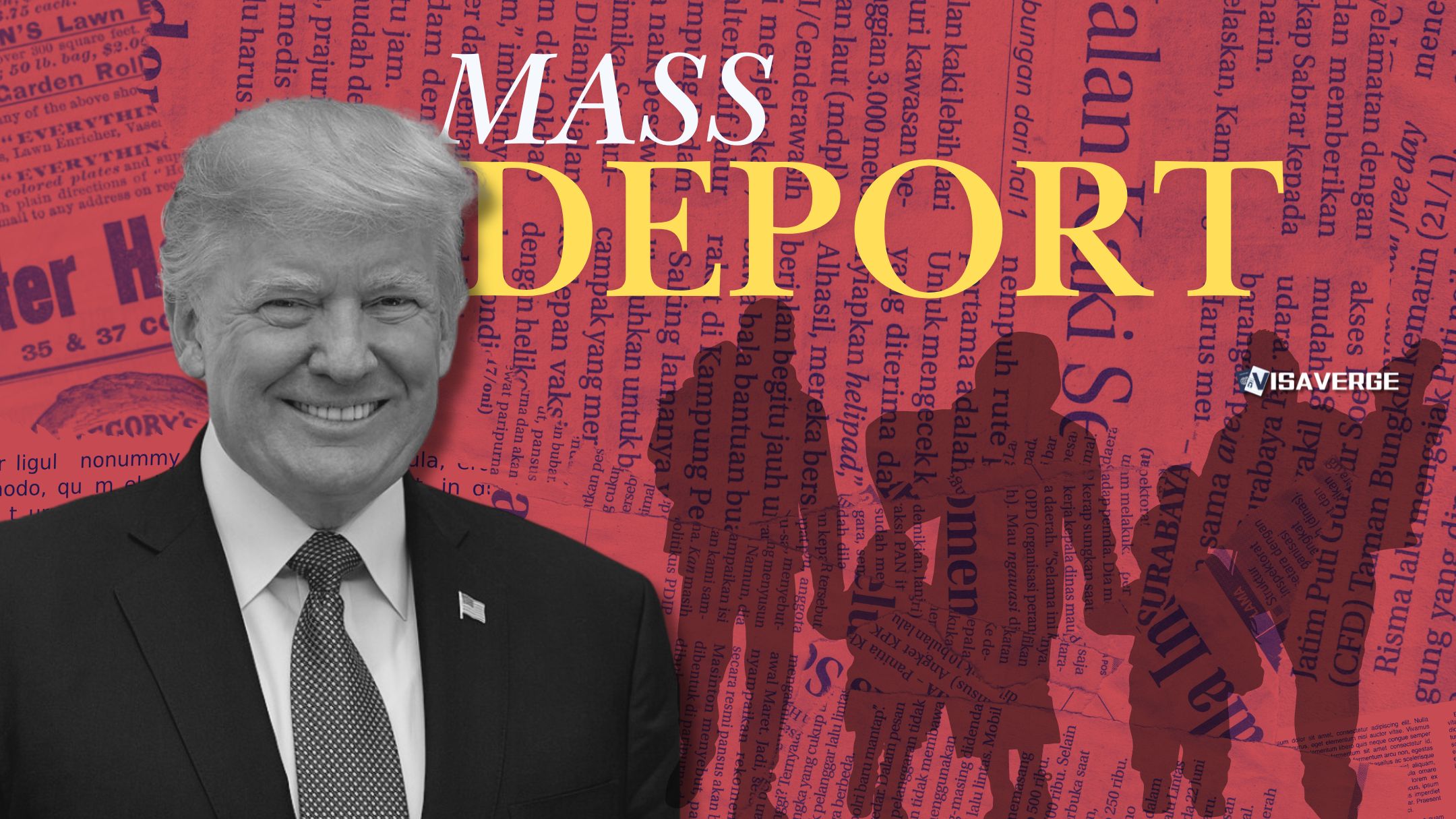
Gregory Bovino escalated his 2028 political messaging Monday by posting on X that his “one and only priority is deporting the 106 million illegals who are here,” after a NewsNation report said he had launched an exploratory committee. His post ties the former Border Patrol commander’s possible campaign to an extreme enforcement agenda centered on mass deportation.
- Gregory Bovino responded to the NewsNation report on Monday evening and wrote: “Here’s the truth: My one and only priority is deporting the 106 million illegals who are here. That’s it,”
- The report said Bovino had launched an exploratory committee to determine whether he should run in 2028, and supporters have rolled out Bovino2028.com to build momentum around the bid.
- His campaign site describes a platform of “total border closure”, a “permanent immigration hold”, and “immediate forced remigrations of all illegals”.
ICE enforcement has surged to new highs under President Donald Trump, with 43,138 arrests in June marking the agency’s biggest monthly total so far this year. On July 11, ICE custody stood at 65,765 people, and Tom Homan is now pressing for a larger enforcement footprint in New York City as the administration expands deportation operations.
- ICE arrested 43,138 people in June, the highest monthly arrest total since Trump returned to office.
- As of July 11, ICE custody totaled 65,765 people, below the January peak of 70,770 but still near record levels.
- Homan said the administration is prepared to send “more ICE agents than you’ve ever seen” to New York City as part of the expanded crackdown.
- On June 23, 2026, the D.C. Circuit allowed the Trump administration’s nationwide expedited removal expansion to take effect.
1 earlier update
Gregory Bovino escalated his 2028 political messaging Monday by posting on X that his “one and only priority is deporting the 106 million illegals who are here,” after a NewsNation report said he had launched an exploratory committee. His post ties the former Border Patrol commander’s possible campaign to an extreme enforcement agenda centered on mass deportation.
Free toolUSCIS Receipt Number Decoder- Gregory Bovino responded to the NewsNation report on Monday evening and wrote: “Here’s the truth: My one and only priority is deporting the 106 million illegals who are here. That’s it,”
- The report said Bovino had launched an exploratory committee to determine whether he should run in 2028, and supporters have rolled out Bovino2028.com to build momentum around the bid.
- His campaign site describes a platform of “total border closure”, a “permanent immigration hold”, and “immediate forced remigrations of all illegals”.
- White House official Tom Homan announced intensified mass deportations during a major border security conference in Phoenix.
- The administration plans to flood the zone with federal agents in sanctuary jurisdictions that limit ICE cooperation.
- New administrative rules include an Annual Asylum Fee starting May 29, 2026, risking work permit cancellations.
(PHOENIX, ARIZONA) — White House Border czar Tom Homan used the Border Security Expo in Phoenix on May 5, 2026, and May 6, 2026, to declare that the Trump administration would widen immigration enforcement across the country, saying, “Mass deportations are coming.”
Homan told the gathering the administration would press ahead after a period of recalibration earlier this year, and he rejected criticism that the White House had eased off its deportation plans. “For the people out there saying ‘President Trump’s getting weak on mass deportation,’ you don’t know what the hell you’re talking about. You ain’t seen [anything] yet. This year will be a good year. Mass deportations are coming.”

He also described a broader tactic in places that limit cooperation with Immigration and Customs Enforcement. Homan said he would “flood the zone” with federal agents in those jurisdictions and added, “I don’t care how long you’ve been here, if you’re here illegally, entered this country illegally, you cheated. You cheated the system.”
The remarks marked a sharper public turn after the administration briefly emphasized a more targeted approach following deaths of two U.S. citizens during an operation in Minneapolis in early 2026. Officials now describe the next phase as broader and “smarter,” with more agencies involved and more surveillance brought to bear.
On May 6, 2026, Homan said criminal and public safety threats remained the priority, but he left little room for narrower enforcement limits. He said “no one is off the table,” including people without criminal records.
Department of Homeland Security Secretary Markwayne Mullin has coordinated with Homan on how to execute those plans after public backlash tied to earlier operations, including Operation Metro Surge. The administration’s message in Phoenix was that the pause had ended and a more intense phase had begun.
Administration figures released for the campaign are large. Officials reported more than 605,000 deportations in 2025, alongside 1.9 million people who “self-deport[ed]” through the CBP Home App.
By May 2026, immigration officers were averaging about 1,200 arrests per day. The detention population stood at about 60,000.
DHS also reported in February 2026 that the United States recorded negative net migration in 2025 for the first time in more than 50 years. The department tied that result to what it called an “ironclad commitment” to law and order.
The funding backbone for the crackdown is the One Big Beautiful Bill Act (H.R. 1), the 2025 reconciliation measure that the administration is using as its primary enforcement vehicle. The law provides money to hire 10,000 new ICE agents and directs billions of dollars to private contractors involved in targeting and surveillance.
That combination, more personnel and expanded contractor support, sits at the center of the new push. The administration’s strategy now reaches beyond ICE alone and draws on federal police agencies including the DEA, ATF and Marshals Service.
Another part of the crackdown arrives through immigration administration rather than arrests. USCIS will begin charging a new Annual Asylum Fee under an interim final rule that takes effect on May 29, 2026.
Nonpayment carries immediate consequences for applicants with pending Form I-589 cases. USCIS will reject those pending asylum applications and end work authorization for applicants who do not pay the new fee.
Legal access is also narrowing. Starting on May 18, 2026, USCIS will no longer allow attorneys to join most asylum and field office interviews remotely, requiring in-person attendance by legal representatives.
The new restrictions arrive as immigrant communities in sanctuary jurisdictions report fear and disruption. Businesses have temporarily closed, and some parents have kept children home from school as rumors of stepped-up enforcement spread through neighborhoods.
Conditions inside detention facilities remain under scrutiny as the detained population rises. DHS reported a death rate in custody of 0.009% as of April 16, 2026, and attributed the increase in deaths to the high number of detainees.
Homan’s comments in Phoenix reflected a shift from earlier messaging that focused more tightly on people accused of violent crime. The Border czar now frames the campaign as a systemwide effort, with priority tiers still in place but no broad carveout for people without criminal histories.
That matters in practice because the administration is no longer presenting mass deportations as a future goal or campaign slogan. In Phoenix, officials described them as the next operating phase, supported by daily arrest numbers, expanded detention, a larger federal footprint and fresh administrative pressure on asylum applicants.
The venue itself underscored the audience the administration wanted to reach. At the Border Security Expo, where enforcement officials, contractors and security companies gather around border and interior enforcement technology, Homan paired political language with an operational message about personnel, detention space and surveillance.
His language also suggested that sanctuary jurisdictions will remain a central target. By pledging to “flood the zone,” Homan signaled that cities and states limiting cooperation with ICE can expect more federal presence, not less.
Administration agencies have also laid out the policy architecture in official public postings. DHS has published enforcement releases through its DHS Newsroom, the White House has posted immigration fact sheets through its briefing room, and USCIS has issued fee and interview updates through its alerts page.
Taken together, the public statements and rule changes point in one direction: a broader enforcement drive backed by new money, more agents, wider use of federal police and tighter administrative rules for people seeking protection or trying to keep work authorization while their cases remain pending.
Homan left little doubt about the administration’s intent in Phoenix. “Mass deportations are coming,” he said, reviving the promise that has defined Trump’s immigration agenda and turning it into an operating order for the agencies gathered around him.