The Biden Administration’s Commitment to Expanding the U.S. STEM Workforce
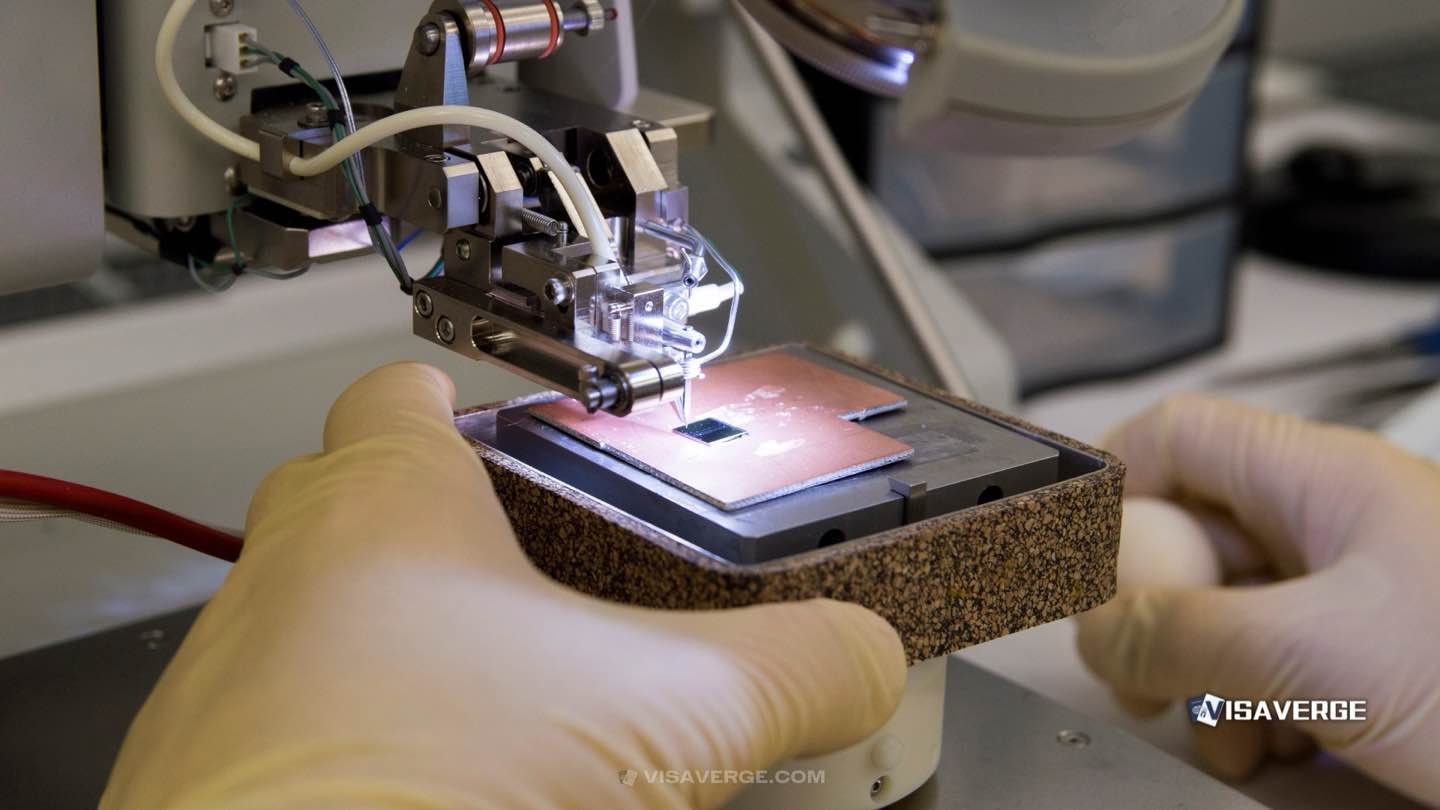
The landscape of immigration, particularly for the STEM sector, is experiencing transformative changes under the Biden administration. With a clear directive to strengthen the U.S. presence in critical technologies, including semiconductors, the government is aggressively pursuing reforms to attract international talent to American soil.
Streamlining STEM Visa Policy
During a recent webinar hosted by the National Institute of Standards and Technology, key figures from various governmental agencies detailed the proactive steps being taken to simplify visa processes for those skilled in semiconductors and related technologies. This push is in response to the CHIPS and Science Act and President Joe Biden’s executive order on AI which was designed to bolster innovation and build a robust talent pipeline for these essential sectors.
Free toolI-94 Expiration Calculator OnlineMorgan Dwyer, the Chief Strategy Officer in the CHIPS Program Office, cited Commerce Secretary Gina Raimondo’s ambitious target: to double the U.S. semiconductor workforce in the next decade. Secret Raimondo has also called upon American colleges and universities to triple the number of graduates in semiconductor-related fields, demonstrating a dual approach to workforce development – nurturing domestic talent while attracting expertise from abroad.
Initiatives to Attract and Retain Global STEM Talent
The government’s strategy to recruit international experts was further elucidated by Simon Nakajima, the assistant director for STEM immigration at the White House Office of Science and Technology Policy (OSTP). He highlighted the launch of a dedicated webpage providing comprehensive information on existing immigration pathways for STEM professionals.
In January 2022, the White House kicked off several initiatives to draw and keep STEM talent within the U.S. These efforts included expanding the STEM Optional Practical Training program, renewing guidance on national interest waivers for EB-2 immigrant visas, and clarifying eligibility for O-1A nonimmigrant visas, which recognize individuals with extraordinary abilities.
Doug Rand, a senior advisor at U.S. Citizenship and Immigration Services (USCIS), emphasized the advantages of securing a national interest waiver for an EB-2 visa:
“They can sponsor themselves and save some time on their application. Working in the semiconductor industry is considered an especially positive factor in these waiver determinations.”
Further, Rand revealed there has been a significant rise in the number of applicants for the O-1A visa pathway, with an impressive approval rate remaining north of 90%. He clarified, “We’re applying the same standards. There are a lot of people out there who might have been intimidated at first but are starting to apply for this pathway.”
Beyond these measures, the Department of Labor is reviewing its list of occupations, known as Schedule A, to potentially include AI and other STEM fields. This review is a direct result of Biden’s AI order, as per Nakajima’s statement.
Simplifying Visa Renewal Process
In an unprecedented move, which hasn’t been seen for two decades, the State Department is initiating a pilot program allowing current H-1B visa holders the ability to renew their visas domestically. Morgan O’Brien, an industry liaison at the State Department, hopes that the program will alleviate burdensome wait times. O’Brien conveyed the program’s potential impact:
“This is hopefully going to knock out tens if not hundreds of thousands of visa appointments that we don’t have to do overseas, opening up space for those that we do by law have to process outside the country.”
This pilot program might just be the start, as there is an indication that STEM students on F-1 visas and visiting scholars on J-1 visas might also benefit from a domestic renewal option in the near future.
Conclusion
The Biden administration’s efforts to expand the semiconductor workforce immigration clearly illustrate a strategic vision to establish the United States as a leader in STEM innovation. By streamlining policies, offering critical waivers, and modernizing visa renewals, the nation is poised to welcome a wave of global talent essential for technological advancement and economic growth. These developments not only favor the immigration of skilled workers but also solidify the U.S.’s commitment to remaining at the forefront of the semiconductor industry and other pivotal STEM areas. For more detailed information on these visas and processes, potential applicants can visit the USCIS website or the State Department’s visa page.
Learn Today:
Glossary
- STEM: An acronym standing for Science, Technology, Engineering, and Mathematics. In the context of immigration, it refers to the fields of study and employment related to these disciplines.
-
Semiconductors: Materials that have electrical conductivity properties between insulators and conductors. They are critical components used in various technologies, including electronics and computer systems.
-
Visa: An official document issued by a government that allows a foreign individual to enter, stay, or work in a country for a specified period of time.
-
Visa processes: The procedures and requirements that individuals need to follow to obtain a visa, including submitting applications, providing supporting documents, and attending interviews.
-
CHIPS: An abbreviation for Creating Helpful Incentives to Produce Semiconductors. It refers to the CHIPS Act, a bill aimed at bolstering domestic semiconductor production and addressing supply chain challenges in the United States.
-
Science Act: Refers to the Science and Engineering Leadership Act, a proposed legislation focused on advancing scientific and technological innovation in the United States.
-
Executive Order: A directive issued by the President of the United States to manage and govern operations of the federal government. Executive orders have the force of law and can be used to implement policy changes.
-
AI: Short for Artificial Intelligence, it refers to the development of computer systems capable of performing tasks that would normally require human intelligence, such as speech recognition, decision-making, and problem-solving.
-
Talent pipeline: The pool of skilled individuals who are available or are being developed to meet the needs of specific industries or sectors.
-
Domestic talent: Refers to individuals who are already citizens or residents of the country where they are seeking employment or educational opportunities. In this context, it refers to nurturing and developing talent within the United States.
-
International talent: Skilled individuals from other countries who possess the knowledge, experience, and expertise necessary to contribute to and support the workforce and innovation in a particular country.
-
Immigration pathways: Legal routes available for individuals to immigrate to another country. In this context, it refers to the various options and processes available for STEM professionals to immigrate to the United States.
-
Optional Practical Training program (OPT): An immigration benefit program in the United States that allows international students with F-1 visas to work temporarily in their field of study for up to 12 months after completing their degree programs.
-
National interest waiver: A provision that allows certain individuals to bypass the labor certification process when applying for an employment-based immigrant visa (EB-2) in the United States. It is granted to individuals whose employment is deemed to be in the national interest of the country.
-
O-1A visa: A nonimmigrant visa category in the United States that is available to individuals who possess extraordinary ability in sciences, education, business, or athletics. It allows them to work in their field of expertise for a temporary period.
-
Schedule A: A list of occupations in the United States that are considered to be in high demand and experiencing labor shortages. Jobs listed on Schedule A have certain advantages in the immigration process.
-
H-1B visa: A nonimmigrant visa category in the United States that allows employers to temporarily hire foreign workers in specialized occupations.
-
State Department: The U.S. Department of State, responsible for managing the country’s foreign affairs, including visa issuance and international relations.
-
Pilot program: A small-scale test or trial program implemented to assess the feasibility and effectiveness of a new initiative before it is fully implemented.
-
F-1 visa: A nonimmigrant visa category in the United States for international students pursuing academic studies at approved institutions.
-
J-1 visa: A nonimmigrant visa category in the United States for individuals participating in approved educational and cultural exchange programs.
-
USCIS: An acronym for U.S. Citizenship and Immigration Services, a component of the U.S. Department of Homeland Security responsible for processing immigration-related applications, petitions, and benefits.
-
State Department’s visa page: Refers to the webpage of the U.S. Department of State that provides information on the different types of visas available and the related application processes.
So there you have it! The Biden administration is on a mission to attract and retain global STEM talent, simplifying visa processes, offering valuable waivers, and even piloting programs for visa renewals. These initiatives demonstrate a clear commitment to expanding the U.S. semiconductor workforce and strengthening our position in critical technologies. If you want to dive deeper into the world of visas and immigration, be sure to check out visaverge.com for more helpful information and resources. Happy exploring!
This Article in a Nutshell:
The Biden administration is taking steps to expand the U.S. STEM workforce by simplifying visa processes, attracting international talent, and supporting domestic graduates in semiconductor-related fields. Initiatives include dedicated web pages, expanding the STEM Optional Practical Training program, and clarifying eligibility for visas. These efforts will position the U.S. as a leader in STEM innovation and economic growth.