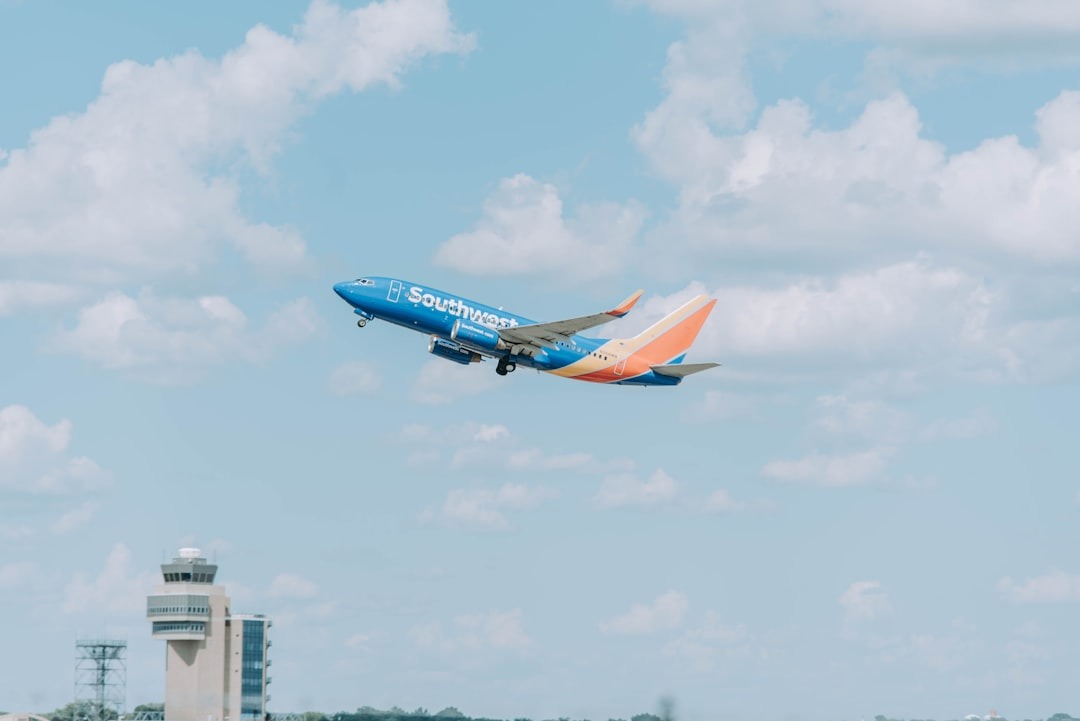
Airlink’s regional network has been thrown off course since early October 2025, with flights delayed, diverted, or cancelled at airports across South Africa after a fresh wave of Instrument Flight Procedures (IFP) suspensions. The latest disruptions trace back to Air Traffic and Navigation Services (ATNS), where missed renewal deadlines and a long-running backlog have kept critical procedures inactive.
The effect has been felt acutely at Kruger Mpumalanga International Airport (KMIA), Richards Bay, Pietermaritzburg, Polokwane, Port Elizabeth, and other regional hubs. Airlink says the situation has inconvenienced nearly 4,000 passengers in the latest phase alone — including 2,300 on cancelled flights and 1,610 on delayed flights — much of it tied to weather days when instrument-based approaches are essential for safe operations.

What are IFPs and why they matter
IFPs — short for Instrument Flight Procedures — are the precise routes, altitudes, and steps pilots use to take off, approach, and land when visibility drops. They are part of the invisible safety net that allows aircraft to move safely through clouds, fog, smoke, or nighttime conditions.
Free toolB1/B2 Tourist Visa Stay Calculator online- When IFPs expire or lose regulatory validity, pilots cannot legally use them.
- In plain terms: without current IFPs, flights that would normally land or depart in poor weather have to hold, divert, or cancel.
Because Airlink operates many of South Africa’s thinner regional routes, cancellations have cut deeply into tourist itineraries and local business plans — particularly for trips linked to Kruger National Park and other high-demand sites.
Background: how the problem started and where it stands
- In July 2024, ATNS suspended 226 procedures after missing a renewal deadline set by the South African Civil Aviation Authority (SACAA).
- As of late October 2025, only about 26 of the original 226 suspended IFPs have been renewed.
- Additional procedures have lapsed since, leaving more than 200 procedures inactive nationwide according to industry tallies.
When a cold front rolls through the Lowveld or coastal mist sets in over Richards Bay, the lack of valid instrument approaches forces crews to wait for a weather break or move passengers to alternate airports. Either scenario leads to long lines, missed connections, and frustrated travelers.
Operational impact — why routes like KMIA are especially vulnerable
Airlink’s route map places it squarely in the path of these ATNS failures. Reported operational effects include:
- More than 3,000 passengers affected since early October, with cancellations outpacing delays on the worst days.
- Domino effects for travelers: late ground transfers, lost hotel nights, rebooked plans, and extra costs.
- Extra operational expenses for the airline, notably about R9 million per month in extra fuel as aircraft hold, divert, or reposition.
Operational law requires pilots to use current IFPs in marginal or poor weather. When they are not available, safety takes priority and flights halt or reposition. That’s why routes with variable weather or challenging terrain (e.g., KMIA, Pietermaritzburg, Mthatha) feel the strain most.
Recent fixes, exemptions, and timelines
ATNS has used a mix of renewals, updates, and exemptions to try to restore service:
- ATNS submitted exemptions to SACAA to temporarily reinstate procedures at priority locations.
- KMIA officials told stakeholders they hoped for approvals within roughly two weeks, which would ease pressure on Mbombela if granted.
- Updated procedures for Richards Bay, Bloemfontein, Kimberley, and Port Elizabeth are due for implementation on November 27, 2025.
- Pietermaritzburg and Mthatha have seen partial relief, with procedures for main runways reported operational again.
For authoritative regulatory updates, stakeholders should follow the South African Civil Aviation Authority. SACAA’s approvals set the operational boundary; ATNS performs the technical work but cannot return procedures to use without SACAA sign-off.
“Even small shifts in SACAA’s processing schedule can ripple across airline timetables, pushing some flights back into the air and keeping others stuck on the ground.”
Technical and resourcing constraints
Procedure updates require careful validation to ensure:
- Terrain clearance
- Accurate obstacle data
- Proper alignment with navigation systems
ATNS has cited shortages of critical skills and limited resources as reasons for the slow renewals. Industry experts argue more urgency is needed and that surge plans or external support could accelerate reinstatements. The consensus: the cost of delay is borne by regions least able to absorb it — towns dependent on scheduled flights for tourism, medical travel, and business connectivity.
Economic stakes
The financial and social impacts are broad:
- Airlink reports roughly R9 million per month extra on fuel alone.
- Additional costs include crew time, maintenance from extra flight hours, customer care, vouchers, and refunds.
- Local economic effects: empty shops, idle ground handlers, lost landing fees, late arrivals for lodges, missed transfers, and tighter budgets for tourism operators.
- Reputational damage may shift traveler preferences away from affected routes.
Passenger guidance — how to reduce disruption risk
Airlink urges passengers on impacted routes to be proactive:
- Check flight status often.
- Contact the airline or a trusted travel agent for rebooking options.
- Use Airlink’s support lines for fastest help:
- Phone: +27 11 451 7300
- Email: [email protected]
- Enable notifications and keep contact details current in your booking.
- Build in buffers for connections or transfers, especially for safari or group-tour itineraries.
- Consider travel insurance that covers missed connections and extended delays.
Practical traveler tips:
– Book earlier flights in the day when possible.
– Avoid razor-thin same-day connections between regional and long-haul flights.
– Add a buffer night near KMIA if your lodge transfer is time-sensitive.
Industry view and policy recommendations
The debate is not about bending safety rules, but about restoring the tools that support those rules faster. Suggested measures include:
- Hiring and training more procedure designers.
- Creating surge teams or bringing in external contractors.
- ATNS and SACAA standing up a joint task plan with weekly targets and public scorecards.
- Clear weekly bulletins and early warnings on high-risk weather days to reduce surprises.
Industry associations have described the situation as an “economic disaster,” calling for urgent action to restore IFPs at a pace that matches the stakes.
Short-term outlook and milestones to watch
Key items to monitor:
- SACAA approvals for KMIA exemptions (the stated two-week window).
- Implementation of updated procedures on November 27, 2025 for Richards Bay, Bloemfontein, Kimberley, and Port Elizabeth.
- Ongoing reinstatements beyond those dates — more than 200 procedures remain inactive as of October 2025.
If the KMIA exemptions and the November 27 updates proceed as planned, they should ease pressure during a busy season. Even so, a large backlog will remain to address.
Final takeaways
- Core facts: ATNS suspended 226 IFPs in July 2024 after missing a SACAA deadline; as of October 2025 more than 200 remain inactive.
- Impact: Airlink reports nearly 4,000 passengers inconvenienced in the latest phase.
- Milestones: Some approvals and updates are expected within two weeks for KMIA and on November 27, 2025 for other locations.
For immediate help, Airlink passengers can reach reservations at +27 11 451 7300 or [email protected]. For regulatory status — including approvals, exemptions, and implementation milestones — watch the South African Civil Aviation Authority.
The safest plan for travellers: check your flight status early and often, build in breathing room, and be ready to adapt if weather and paperwork collide.
This Article in a Nutshell
ATNS’s missed renewal deadlines in July 2024 triggered the suspension of 226 Instrument Flight Procedures, a backlog that persisted into late October 2025 with only about 26 procedures reinstated. The inactivation of more than 200 IFPs across South Africa has disrupted regional operations, particularly at Kruger Mpumalanga International Airport, Richards Bay, Pietermaritzburg, Polokwane and Port Elizabeth. Airlink reports nearly 4,000 passengers affected in the latest phase — 2,300 cancelled and 1,610 delayed flights — and faces roughly R9 million per month in extra fuel costs. ATNS has submitted exemptions to SACAA and targets updates for several airports on 27 November 2025, while industry experts call for surge staffing, external contractors and clearer weekly targets to accelerate renewals. Travellers are advised to check flight status, allow buffers, and use Airlink contact points for rebooking.