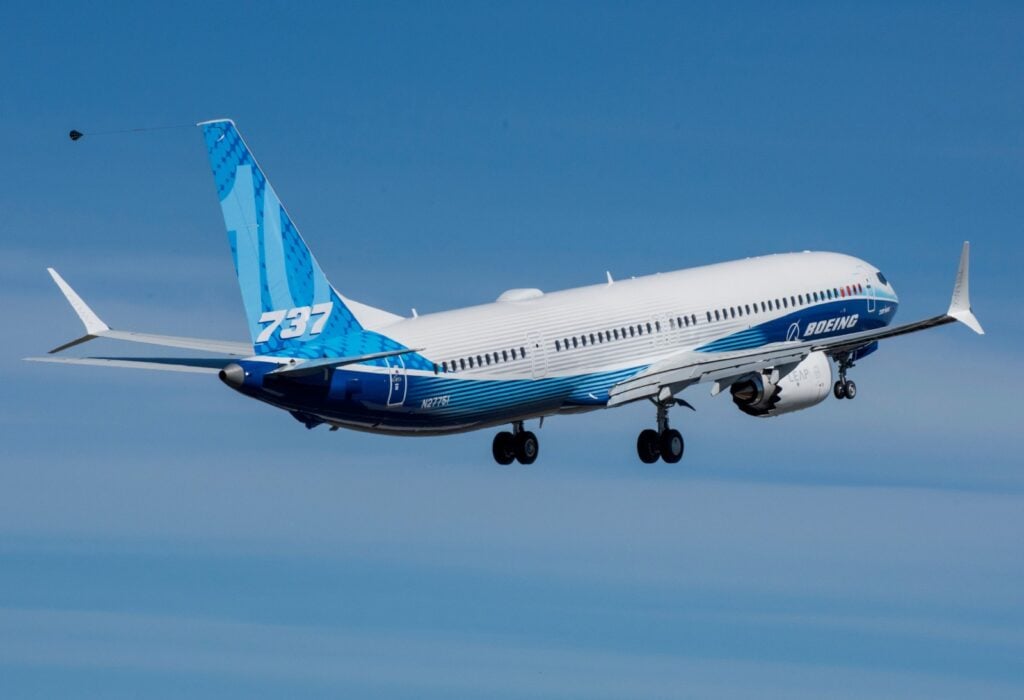
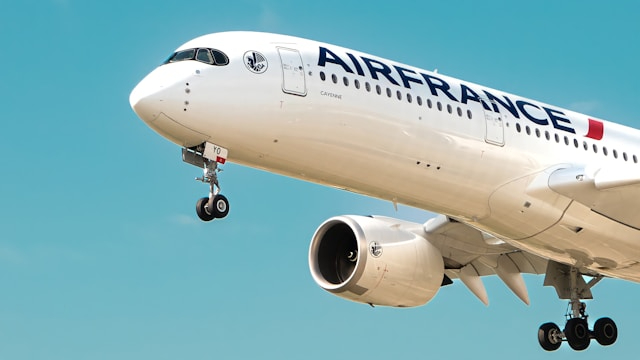
(PARIS) Air France passengers on Flight 652 faced a “flight to nowhere” on a late October Friday when a Paris–Réunion Boeing 777 turned back to Charles de Gaulle after the cabin heat became unbearable, according to passenger accounts and airline statements.
The long-haul flight departed Paris around 6 p.m. local time and was set to land in Réunion 10½ hours later. Instead, the aircraft reversed course near the Swiss Alps and touched down safely in Paris about 1 hour and 40 minutes after takeoff. Air France said the return followed a malfunction in the air-conditioning system that led to extreme cabin temperatures and a strong “smell of hotness,” raising comfort and safety concerns.
The airline confirmed the jet carried 472 passengers and that the crew first declared a PAN-PAN (an urgency call) before upgrading to a Mayday after Swiss air traffic control advised that a distress call was needed to begin fuel dumping for a safe return. After landing, Air France staff cared for the passengers and rebooked them on a replacement aircraft that departed at 00:13 a.m., reaching Réunion roughly six hours late. The original Boeing 777 was later inspected and cleared; it operated the same route the next day without incident.
Free toolB1/B2 Tourist Visa Stay Calculator onlineAs of October 27, 2025, the airline has not announced new protocols tied to the case but says the safety of customers and crew is its “absolute imperative.”
Passenger experience and wider impacts
Passengers described rising panic as the cabin heat built, with families and older travelers struggling most. One traveler said people stood in the aisles to get air and asked crew for water while the plane circled to lose fuel. These scenes are especially hard on migrants, international students, and workers who use the Paris–Réunion route to visit family or keep tight job schedules.
For anyone with onward travel or time-bound immigration steps—such as visa interviews, residence permit appointments, or expiring entry stamps—hours lost to a flight to nowhere can mean missed deadlines and new costs. Small disruptions on paper can translate into major consequences for people with time-sensitive legal and work arrangements.
Context: similar incidents in 2025
This was not the only Air France heat-related episode in 2025. During an August heatwave in Europe, a Paris–Toronto flight sat with no working air-conditioning. Passengers, including infants and young children, reported distress and signs of heat exhaustion while waiting to deplane.
Air France cited a ground handling fault and offered overnight stays, but many criticized the slow response and the lack of timely relief on board. VisaVerge.com reports that both cases have fueled public questions about how airlines manage cabin heat, when they should let people off, and how compensation rules apply.
Safety response and operational procedure
In the Paris–Réunion case, the crew moved from PAN-PAN to Mayday to enable fuel dumping and an immediate return—a decision aligned with safety training when an onboard environment becomes unsafe. Declaring Mayday also speeds coordination with air traffic control and airport services.
The airline emphasized that the flight landed without further incident and that engineers inspected the aircraft before placing it back into service the next day.
While technical, this sequence matters for travelers:
- A Mayday tied to a technical issue often signals the airline had to choose safety over schedule.
- That can reduce the chance of quick rebooking, especially on long-haul leisure routes with limited daily frequencies.
- For people on strict immigration timetables—like those with short-stay visas, work permit activation windows, or students needing to register—delays can snowball.
Practical advice: keep proof of the disruption (boarding passes, rebooking emails), and alert consulates, schools, or employers right away if you will miss a set appointment.
Declaring PAN-PAN then Mayday is a safety-driven escalation that enables fuel dumping and faster coordination for an immediate return.
Passenger rights, compensation, and practical steps
Under European rules, travelers starting from an EU airport may qualify for care (meals, communication, and hotel if needed) during long delays and for compensation if the disruption is not due to “extraordinary circumstances.” Mechanical faults are often considered within the airline’s control, while extreme weather or airport shutdowns are not. Each case depends on the facts, including whether a safety-based return was tied to a preventable technical fault or to factors beyond the airline’s control.
For official guidance on air passenger rights in the EU, see the European Commission’s page on air travel protections under Regulation 261/2004:
European Commission – Air passenger rights.
Air France apologized in both 2025 incidents and stressed safety first. The airline rebooked travelers and, in the heatwave case, arranged lodging. Still, many passengers voiced frustration about slow updates and the lack of swift relief when the cabin heat became harsh.
Immediate steps for affected travelers
- Ask for written proof of the delay, reroute, or cancellation at the airport.
- Keep all receipts for meals, transport, and lodging for potential reimbursement.
- If you miss an immigration appointment, email or call the authority the same day, explain the airline disruption, and attach proof.
- If your Schengen stay is near the 90-day limit because of a delay, keep travel records ready to show legal departure or to request help if needed.
- For onward long-haul trips, check whether the new flight timing affects entry permissions or transit rules at your next destination.
Causes, responsibilities, and possible improvements
The Paris–Réunion incident raises a basic question: how do airlines guard against heat build-up during ground holds and early flight segments?
- The August episode happened in a heatwave with a ground system fault that left the cabin without cooling.
- The October case occurred in flight after departure, reportedly from an onboard air-conditioning malfunction.
Different causes, same human effect—people in distress inside a sealed cabin.
Potential mitigations include:
- Technical redundancy for environmental control systems.
- Faster deplaning decisions when feasible.
- Clearer, more frequent communication to passengers while problems are being resolved.
- Operational changes like earlier water service, opening doors with ground power connected, or prioritizing gate access to reduce time in hot cabins.
Airlines, airports, and ground handlers all share parts of this chain. For vulnerable groups—families, migrants with documents, and older travelers—small operational changes can make a real difference.
Final assessment and traveler checklist
Air France’s handling after the October return—swift rebooking and maintenance checks—shows one side of the system working as intended once the aircraft landed. But the recurring theme from passengers in 2025 is timing and relief while the problem is happening. People want quick updates, cooler air fast, and a way out if the cabin becomes too hot to bear.
These expectations are not just comfort-based. For someone with a visa interview the next morning, or a child starting school abroad, an overnight delay can upend plans made months in advance.
For now, there is no new Air France policy announcement. The airline says safety remains its top priority and that it regrets the disruption. Inspectors cleared the aircraft and operations continued. Public pressure may continue, especially as climate change brings hotter summers and as aircraft and ground systems face more strain. Clear standards for when to let passengers off during extended ground delays and for managing cabin temperatures could reduce harm and confusion.
Traveler checklist if you face extreme heat on board:
- Speak up early to crew about health concerns.
- Request water and, if needed, medical help.
- Ask whether deplaning is possible if cooling cannot be restored soon.
- Document events calmly, noting times and crew announcements.
- File a claim with the airline and, if needed, with the national enforcement body listed on the EU passenger rights page.
As VisaVerge.com notes, these cases are a test of both technical reliability and customer care. For people whose lives and legal status turn on a travel day, small decisions on the aircraft can echo far beyond the runway.
This Article in a Nutshell
Air France Flight 652, a Boeing 777 carrying 472 passengers from Paris to Réunion, returned to Charles de Gaulle about 1 hour 40 minutes after takeoff when an air-conditioning malfunction caused extreme cabin heat and a burning smell. Crew first declared PAN-PAN, then upgraded to Mayday on Swiss ATC advice to permit fuel dumping for a safe immediate return. Passengers were treated on landing, rebooked onto a replacement aircraft that departed at 00:13 a.m., and reached Réunion roughly six hours late. The original aircraft was inspected and resumed service the following day. The incident follows a similar heat-related episode in August 2025, prompting questions about airline protocols, passenger care, and compensation under EU rules. Authorities have not announced new policies; Air France reiterated safety as its top priority.