(UNITED STATES) More than 33 million voter records have been run through a federal citizenship check as of September 14, 2025, marking a sweeping expansion of federal involvement in state election systems. Under a Trump administration overhaul of the SAVE program—the Systematic Alien Verification for Entitlements system maintained by U.S. Citizenship and Immigration Services—election officials began large-scale citizen verification after a major upgrade took effect on August 15, 2025.
USCIS says nearly 80% of the checks occurred after that upgrade, which enabled faster lookups using limited data. The upgrade also made SAVE access free for states and added bulk search capability, allowing election offices to run lists instead of individual queries.
How the upgraded SAVE works
- Election officials can submit a voter’s name, date of birth, and the last four digits of their Social Security number to check whether a person appears to be a U.S. citizen.
- SAVE returns an automated match for most records; results that don’t match may trigger requests for additional documentation.
USCIS reports that less than 1% of the 33 million checks required manual review. The agency instructs election offices not to remove or reject a voter solely because a SAVE response is delayed or inconclusive.
Free toolSubstantial Presence Test CalculatorWho’s using SAVE and scale of adoption
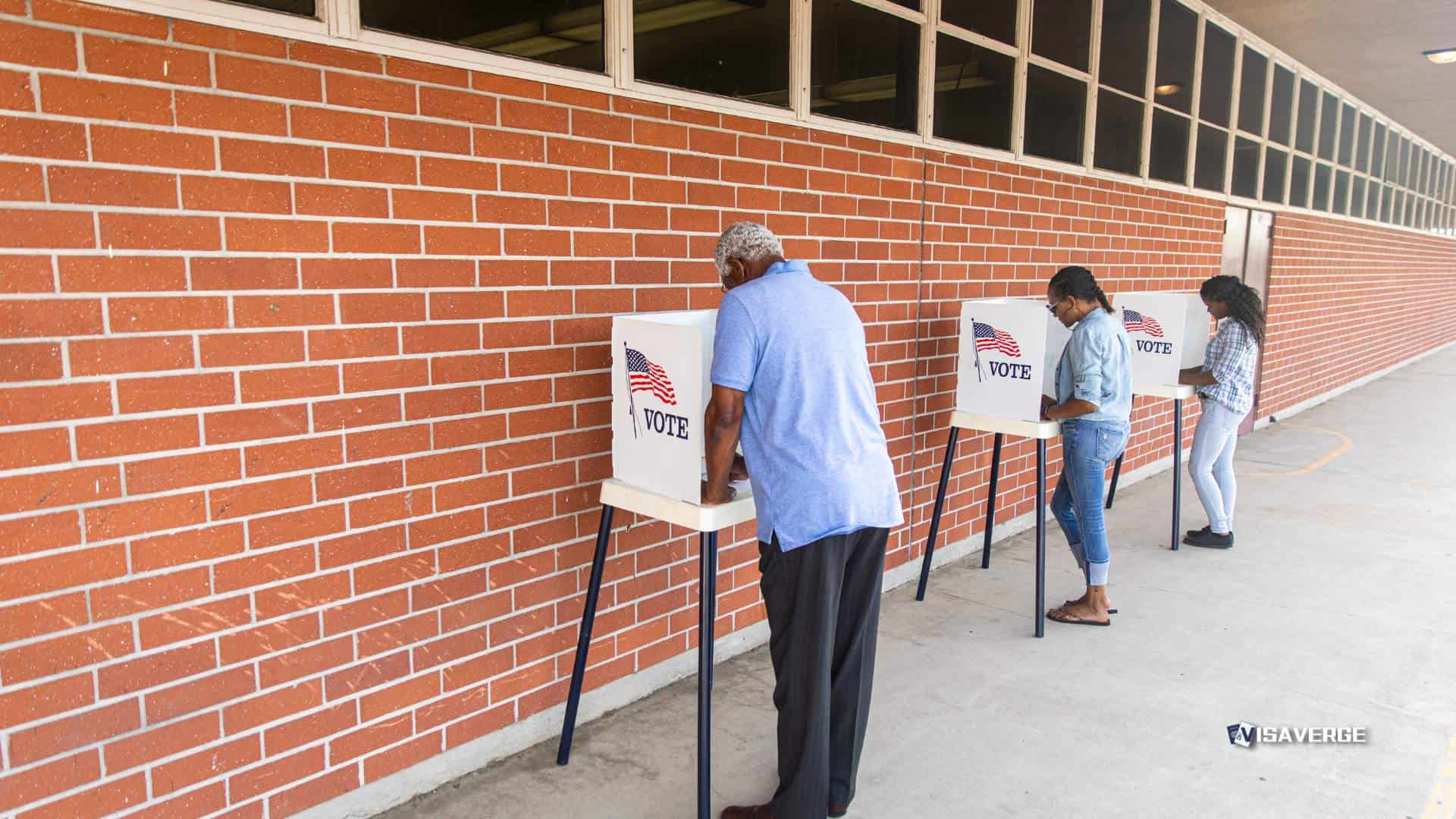
- As of mid‑September 2025, 21 states and 29 local governments had registered to use SAVE for voter checks.
- Five states and 27 counties joined since May 2025.
- States using or piloting SAVE include Louisiana, South Carolina, Wyoming, Indiana, Alabama, and Idaho.
Many states—across both parties—have held back, citing data accuracy, legal risk, and the lack of clear privacy disclosures.
Policy, legal status, and federal limits
- Officials emphasize there is currently no federal proof‑of‑citizenship requirement to vote in federal elections.
- The SAVE upgrade changes the speed and scope of citizen verification but does not set eligibility rules; states decide how to use SAVE results.
- Federal courts are already involved: judges have preliminarily blocked parts of President Trump’s executive order that would have required documentary proof of citizenship at the polls.
- The House‑passed SAVE Act (separate from the SAVE program) has not cleared the Senate, keeping any nationwide proof rule on hold.
The Department of Justice and the Department of Homeland Security have sought and are sharing voter data to identify possible noncitizens on state rolls. DOJ has requested full voter files from dozens of states and has warned of legal action when states resist.
Privacy lawyers and civil‑rights groups question whether this broad data sharing complies with the Privacy Act, particularly since there has been no recent Federal Register notice describing the new uses. Legal scholars say that gap could expose the government to court challenges and states to lawsuits if eligible voters are swept up in list maintenance.
The patchwork of state responses means voters may face different verification standards depending on where they live, with litigation likely through the 2026 midterms.
State reactions and political split
- Supporters (primarily conservative election‑integrity groups) call the changes common sense, arguing the upgrades let states focus resources on a smaller set of questionable records.
- Opponents (progressive groups and many civil‑rights organizations) warn the system can mislabel eligible voters, particularly naturalized citizens and married women with name changes, risking disenfranchisement.
- Some state election officials welcome the speed and targeting SAVE enables; others fear false positives and political pressure to remove names quickly.
Early outcomes and case studies
- Louisiana reported 390 suspected noncitizens on the rolls, with 79 having cast ballots in past elections. Each person received a notice and 21 days to provide proof of citizenship before removal. The office said it referred noncitizen registrations for prosecution.
- The suspected noncitizen voting rate in Louisiana was under 0.003% of registered voters—consistent with research showing noncitizen voting is rare.
Past misfires include 2024 instances in Alabama, Virginia, and Texas where U.S. citizens were flagged as noncitizens and faced removal or were asked for proof after the fact. Naturalized citizens are especially at risk because immigration databases may reflect earlier noncitizen status and may not capture later updates or name changes.
Practical mechanics and protections
How checks are run:
1. Officials send a batch file with name, date of birth, and last four SSN digits.
2. SAVE returns automated matches or “no match” responses.
3. Records requiring adjudication prompt requests for documents such as a naturalization certificate number or alien registration number.
USCIS guidance:
– Election offices should not remove a voter solely because a SAVE response is delayed or inconclusive.
– A “no verification” response is not proof that someone is a noncitizen; results should be read alongside other records.
Suggested guardrails (examples raised by supporters and experts):
– Multiple notices before removal
– Clear timelines and acceptance of a wide range of proof
– Robust notice and appeal rights
– Phone‑bank and online support to help residents respond quickly
Risks and expert concerns
- Because the underlying incidence of noncitizen voting is very small, even a modest error rate in bulk checks can incorrectly affect more eligible voters than ineligible ones.
- Bulk list maintenance without strong due‑process protections can lead to wrongful purges.
- The lack of a recent privacy notice is significant: federal law expects agencies to announce and explain new routine uses, and the absence of such transparency could prompt legal challenges.
What voters should know and do
- Most voters will see no change unless flagged by a SAVE result.
- If flagged, voters may receive a notice asking for proof (commonly a U.S. passport, birth certificate, or naturalization record) and a deadline to respond before potential removal.
- Civil‑rights groups advise:
- Naturalized citizens and those who recently changed their name should confirm registration status early.
- Keep copies of citizenship documents on hand during election season.
State election offices remain the primary source for deadlines, document lists, and appeal rights when a SAVE query triggers a challenge.
Operational choices for election administrators
Administrators must decide:
– How often to run bulk checks
– How to handle incomplete or inconsistent data
– How to balance speed with accuracy near election deadlines
– How to train staff to treat SAVE as a verification tool—not a definitive citizenship registry
USCIS emphasizes that SAVE was built originally for benefits verification; results should be considered alongside other records to avoid rushed or improper removals.
Looking ahead: legal and political questions
Three key questions will shape the future of SAVE in elections:
– Will courts narrow executive powers over state election procedures?
– Will Congress set a national proof‑of‑citizenship rule, or leave states to chart their own course?
– Can states use SAVE to catch rare illegal registrations without ensnaring citizens who don’t match databases?
The answers will determine whether SAVE becomes a steady election tool or a recurring flashpoint.
Transparency and resources
Voters and administrators seeking official guidance on SAVE’s purpose, data inputs, and response codes can review the program’s page at USCIS: USCIS SAVE Program Information. That resource explains agency contacts and general verification steps, though it does not set state removal rules.
For now, the clearest constants are volume and scrutiny. With 33 million+ checks processed and more states signing up, judicial oversight and legislative fights will continue to shape boundaries and procedures. Election officials will be expected to document how many notices led to confirmed noncitizen removals versus restored registrations after proof was provided; public reporting of those figures could help assess whether SAVE’s bulk checks are addressing real problems or mostly producing false alarms.
This Article in a Nutshell
The August 15, 2025 upgrade to USCIS’s SAVE program dramatically expanded federal capacity to verify voter citizenship, allowing election officials to run bulk checks using name, date of birth and the last four SSN digits. By September 14, 2025, over 33 million records had been processed, with about 80% occurring after the upgrade and fewer than 1% requiring manual review. Twenty-one states and 29 local governments registered to use SAVE. The change does not create a federal proof-of-citizenship rule; states decide how to act on results. Privacy lawyers and civil-rights groups caution about data-sharing transparency, false positives—particularly affecting naturalized citizens and name-changed voters—and possible litigation ahead of the 2026 midterms.