- The EU’s digital Entry/Exit System blocked 32,000 travelers during its first six months of operation.
- Spain has fully implemented the EES across all border points, ending manual passport stamping for non-EU nationals.
- First-time travelers face longer border queues due to mandatory fingerprint and facial biometric registration.
(SPAIN) – The European Union has blocked or refused 32,000 travelers at its external borders in the first six months of the Entry/Exit System, a digital border regime that now operates fully across the Schengen area and has ended manual passport stamping for covered short-stay arrivals.
Spain has completed its rollout of the system, bringing all of its border points under the Entry/Exit System, or EES, and making the country one of the places where travelers now encounter the new checks in full rather than the old stamp-based process.
Free toolSchengen Short-Stay Visa Calculator
The system became fully operational on April 10, 2026. It applies to short-stay non-EU nationals entering the 29-country Schengen area, and it records each entry and exit digitally instead of marking a passport by hand.
EES stores passport information, the dates and places of entry and exit, and biometric data including fingerprints and facial images. At the border, that changes the first interaction for many travelers, because first-time registration under the system can add several minutes to each crossing.
Busy airports have already seen longer queues and occasional disruption during peak periods. Those delays have become one of the clearest early signs of how the new system works in practice, especially where large numbers of passengers arrive at once and each first-time registration requires extra checks.
The EU set the framework for the rollout over a series of steps that began well before the full launch. The European Parliament and Council reached agreement on a progressive start on May 19, 2025.
Regulation (EU) 2025/1534 was adopted on July 18, 2025, then entered into force on July 26, 2025. A progressive rollout began on October 12, 2025, before the system moved into full operation on April 10, 2026.
That sequence matters at the border because the EES did not appear overnight as a single-day switch. It moved from agreement, to legal adoption, to phased introduction, then to full deployment across the Schengen external frontier.
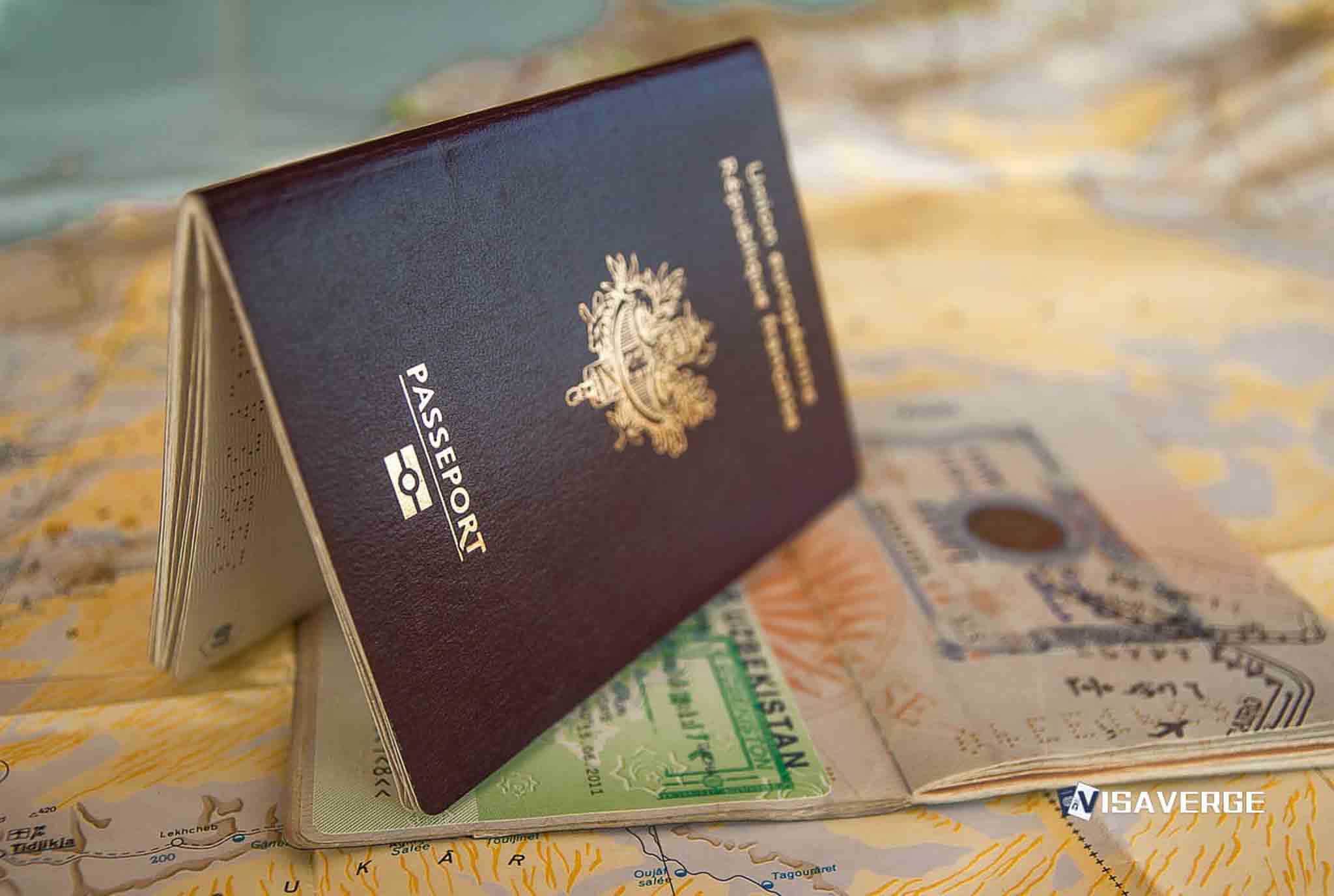
Under the old process, a border officer could stamp a passport to mark arrival or departure. Under EES, the same crossing now generates a digital record tied to the traveler’s document and biometric profile, a shift designed to replace paper evidence of movement with an electronic trail.
Spain’s completion of the rollout means travelers arriving through Spanish airports, ports, and land crossings now pass through EES procedures rather than manual stamping. In practical terms, the country no longer operates a mixed model at its border points for covered entries and exits.
That change carries the clearest effect for first-time travelers under the new system. They must provide fingerprints and facial biometrics, and border checks can take longer than before while the record is created.
Returning travelers with an existing EES record may still face checks, but first-time registration is the step most likely to add time. During heavy travel periods, even a few extra minutes per person can build into longer lines.
The numbers from the first six months also put a hard figure on enforcement at the border. The 32,000 blocked arrivals or refusals show that the system is not only recording movements but also serving as an operational filter at the external frontier.
No breakdown accompanies that total, but the figure gives a sense of scale in the first half-year of use. Across a border area as large as Schengen, that is one of the earliest measurable outcomes attached directly to the new digital system.
The Entry/Exit System covers short stays by non-EU nationals across the Schengen external borders. Its scope is broad because Schengen spans 29 countries, which means a common border process now applies across a large shared travel area rather than country-by-country stamping practices.
For passengers, the most visible difference comes at the inspection point. Manual stamps have ended for covered entries and exits, and biometric enrollment has become part of the first crossing under EES.
That makes preparation more straightforward but not necessarily faster. A traveler who falls within the system should expect longer checks than before, especially on a first trip after the full launch, and should expect officers to collect fingerprints and a facial image as part of registration.
The data collected under EES is narrower than broad surveillance language often suggests, but it is still more extensive than a stamp in a passport. Border authorities record passport details, where and when a person entered, where and when that person exited, and the biometric identifiers used to tie those movements to a single traveler.
In operational terms, the tradeoff is clear in the first months. Digital recording replaces manual stamping and creates the basis for automated checks later, but the first capture of biometrics adds time at the front end.
That tension has shaped the early experience at airports already dealing with concentrated passenger flows. When many first-time users reach control points together, the system can slow processing and produce queue pressure, particularly during peak travel windows.
Spain’s status adds weight because it is one of Europe’s main gateways for international tourism and short-stay travel. With all Spanish border points now operating under EES, passengers entering Schengen through Spain should assume the new process applies from the start of their trip.
They should also assume that a passport stamp will not serve as proof of entry or exit for covered travel. The system now creates that record electronically, replacing the old visual marker that travelers often checked immediately after crossing.
The first six months have therefore produced two headline effects at once: a measurable number of blocked arrivals and a visible change in the mechanics of crossing the border. One speaks to enforcement, the other to passenger flow.
Both stem from the same redesign. EES replaces a manual, officer-stamped record with a digital file linked to document data, fingerprints, and facial biometrics, and it does so across the full Schengen external border rather than in a limited pilot zone.
The rollout timetable shows how closely the EU managed that transition. Agreement came on May 19, 2025, the legal text followed on July 18, 2025, the regulation took effect on July 26, 2025, the phased start began on October 12, 2025, and full operation arrived on April 10, 2026.
By the time the system reached that last date, the old stamp-based method for covered entries and exits had ended. Travelers entering under EES now meet a border process built around digital capture and biometric verification rather than ink marks and manual review alone.
That leaves border agencies with a narrower practical task in the months ahead: managing queues and explaining the new process clearly enough that first-time users arrive ready for biometric collection. The first half-year has already shown where friction emerges, with blocked arrivals recorded in the tens of thousands and extra minutes at inspection points carrying through to crowded terminals.
At Spain’s borders, the shift is no longer theoretical. Every covered crossing now runs through the Entry/Exit System, and every first-time non-EU national subject to it enters Schengen through a process that is digital from the first scan.